Mobile Identity Management Market
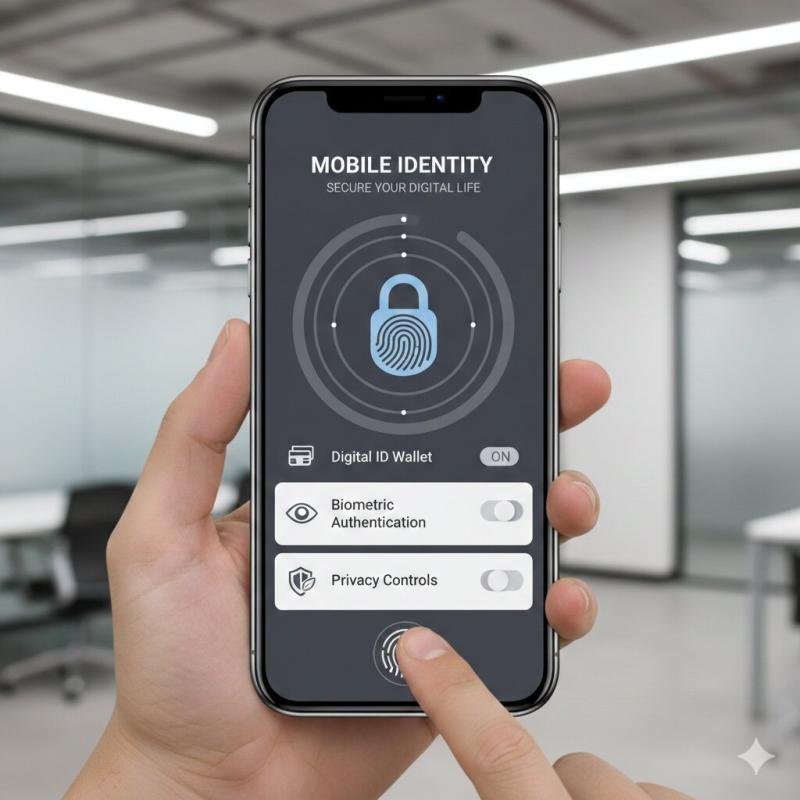
The Mobile Identity Management Market reached approximately US$ 4.09 billion in 2024 and is expected to grow to around US$ 16.97 billion by 2030, expanding with a CAGR of approximately 26.8 % from 2024 to 2030 as organizations increasingly prioritize secure and seamless mobile authentication and identity verification solutions.
Growth is supported by increasing demand across key applications such as multi-factor authentication, biometric identity verification (including fingerprint and facial recognition), mobile access management, and secure credentialing for enterprise and consumer services, driven by the rising adoption of smartphones and mobile devices for business workflows, remote access needs, and digital services, along with growing cybersecurity threats and stringent data privacy regulations that necessitate robust identity protection. Mobile identity management solutions help reduce fraud, safeguard sensitive data, and streamline secure access across sectors such as IT & telecommunications, BFSI, healthcare, retail, and government, fostering broad adoption of cloud-based and hybrid secure identity platforms globally.
Download your exclusive sample report today (corporate email gets priority access):
https://www.datamintelligence.com/download-sample/mobile-identity-management-market?sindhuri
Mobile Identity Management Market: Competitive Intelligence
Microsoft Corporation, IBM Corporation, Okta, Inc., Ping Identity (a UnifyID company), Cisco Systems, Inc., Google LLC, Oracle Corporation, Auth0 (a subsidiary of Okta), SecureAuth Corporation, and OneLogin (a One Identity company), and others.
The Mobile Identity Management Market is strongly driven by leading players such as Microsoft, IBM, Okta, Ping Identity, and Cisco, who provide advanced mobile identity and access management solutions that secure user authentication, authorization, and digital identity across mobile platforms, applications, and IoT ecosystems. Their offerings spanning multi-factor authentication (MFA), biometric identity verification, single sign-on (SSO), secure token services, and risk-based adaptive access help enterprises mitigate identity-related security risks, improve user experience, and comply with regulatory mandates. Growing adoption of mobile enterprise applications, increasing threats from phishing and credential compromise, and rapid digital transformation across industries are key factors fueling market growth.
These companies’ complementary strengths enterprise identity and cloud security portfolios from Microsoft and IBM; identity-as-a-service (IDaaS) and converged access solutions from Okta and Auth0; adaptive authentication and risk-based access from Ping Identity and SecureAuth; secure network and VPN integration from Cisco and Google; comprehensive database and identity platform support from Oracle; and unified access management across hybrid environments from OneLogin are enhancing competitive positioning globally. Strategic focus areas include biometric and passwordless authentication, mobile-first identity frameworks, AI-driven threat detection and risk scoring, integration with zero-trust security architectures, partnerships with mobile OS vendors and device manufacturers, and expansion of identity governance and administration (IGA) to strengthen mobile security and user trust across enterprise ecosystems.
Get Customization in the report as per your requirements:
https://www.datamintelligence.com/customize/mobile-identity-management-market?sindhuri
Recent Key Developments – United States & North America
✅ January 2026: Apple expanded its mobile identity management features by enabling Passkeys and Secure Enclave-based authentication across more services, strengthening password-less and phishing-resistant login flows on iOS devices.
✅ February 2026: The National Institute of Standards and Technology (NIST) updated mobile authentication guidance (SP 800-63 series), recommending broader adoption of mobile-centric identity proofing and cryptographic authentication methods in government and enterprise systems.
✅ 2025: Large U.S. enterprises accelerated deployment of mobile identity management solutions that unify device-based authentication, contextual risk scoring, and single sign-on (SSO) reducing credential theft and improving user experience across mobile apps.
Recent Key Developments – Europe & UK
✅ July 2025: The UK’s Gov.uk Verify successor initiative integrated mobile identity proofing and eIDAS-aligned mobile authentication standards, empowering citizens to use smartphones for secure access to public and private digital services.
✅ Mid-2025: GDPR-focused mobile identity suites with advanced consent management and data minimization controls were adopted by European enterprises to enhance compliance while enabling seamless mobile logins.
✅ 2025: European banks widely deployed mobile identity orchestration platforms that leverage behavioral biometric signals and device integrity checks to combat fraud and improve digital banking security.
Recent Key Developments – Asia-Pacific
✅ 2025: India’s digital ID ecosystem (Aadhaar) expanded mobile authentication use cases via IRIS and face biometrics tied to mobile apps, enabling secure login for banking, healthcare, and e-government services.
✅ Late 2025: Japan’s Ministry of Internal Affairs & Communications released mobile identity best practices for financial institutions, encouraging multi-factor authentication combining device, biometric, and contextual risk signals.
✅ 2025: Australia and Singapore launched pilot programs for mobile digital identity wallets that support sovereign identity, consented attribute sharing, and mobile-first KYC for public services and fintech.
Recent Key Developments – Product & Technology Innovation
✅ Decentralized Identity (DID) Integrations: Leading IAM/CIAM platforms introduced support for verifiable credentials and decentralized IDs, enabling users to carry portable identity attributes in mobile wallets without centralized credential exchange.
✅ Biometric & Behavioral Authentication: Mobile identity tools increasingly embed on-device biometrics (face/iris/fingerprint) and behavioral analytics to continuously verify user intent and detect spoofing in real time.
✅ Contextual Risk Engines: Next-gen mobile identity management now uses AI-driven risk scoring based on device posture, location signals, network context, and usage patterns to adapt authentication requirements dynamically.
✅ 1. M&A / Strategic Developments
Cybersecurity & IAM Portfolio Expansion
Okta (2025) – Continued expansion of its mobile-first identity platform, enhancing adaptive multi-factor authentication (MFA) and device trust capabilities for enterprise mobility.
Microsoft – Strengthened mobile identity capabilities within Microsoft Entra (formerly Azure AD), integrating conditional access and mobile endpoint security across enterprise ecosystems.
Thales Group – Expanded digital identity and SIM-based authentication offerings, particularly in telecom-driven mobile identity verification solutions.
Ping Identity – Focused on enhancing decentralized identity frameworks and passwordless authentication technologies for mobile environments.
✅ 2. New Product Launches & Technology Developments
Passwordless & Biometric Authentication
2025 saw increased deployment of passwordless authentication solutions, leveraging biometrics (fingerprint, facial recognition) and device-based credentials to enhance security while improving user experience.
Decentralized Identity (DID) & Digital Wallet Integration
Growing integration of decentralized identity frameworks and digital identity wallets, enabling users to securely manage and verify credentials via smartphones without centralized data storage.
Mobile Device Trust & Conditional Access
Advanced solutions now incorporate real-time device posture assessment, ensuring that only compliant and secure mobile devices can access enterprise systems.
AI-Driven Threat Detection
Vendors are embedding AI-powered anomaly detection and behavioral analytics into mobile IAM platforms to detect suspicious login attempts and prevent account takeovers.
✅ 3. R&D & Innovation Trends
Zero-Trust Architecture Adoption
Mobile identity management solutions are increasingly aligned with zero-trust security models, requiring continuous authentication and contextual risk evaluation.
eSIM & SIM-Based Authentication
Innovation around SIM-based identity verification and eSIM authentication mechanisms is gaining traction, especially in telecom-driven digital ID ecosystems.
Cross-Platform Identity Federation
Research efforts are focused on improving interoperability across Android, iOS, and enterprise environments to ensure seamless federated identity management.
Regulatory-Driven Compliance Enhancements
Increased compliance requirements (e.g., financial sector regulations, data privacy laws) are accelerating development of identity governance and audit-ready authentication frameworks.
Segments Covered in the Mobile Identity Management Market:
By Authentication
The market is segmented into Single-Factor Authentication 40% and Multi-Factor Authentication 60%, with multi-factor authentication (MFA) dominating due to increasing security concerns, regulatory compliance requirements, and rising cyber threats. Single-factor authentication is still used for basic access and low-risk applications. MFA adoption is growing across enterprises to enhance identity verification and prevent unauthorized access.
By Component
Components include Biometric 55% and Non-biometric 45%, with biometric solutions dominating due to their accuracy, ease of use, and adoption in mobile devices for secure authentication. Non-biometric solutions such as OTPs, SMS codes, and PINs continue to grow, particularly in banking and retail applications. Technological advancements in fingerprint, face, and iris recognition are driving adoption.
By Deployment
Deployment modes include Cloud 65% and On-premise 35%, with cloud-based solutions dominating due to scalability, reduced IT infrastructure costs, and ease of integration across mobile platforms. On-premise solutions remain significant in highly regulated industries such as government and banking, where data control is critical. Cloud adoption is rising with the digital transformation of enterprises.
By Enterprise Size
Enterprise sizes include Large Enterprises 55% and Small and Medium-Sized Enterprises (SMEs) 45%, with large enterprises dominating due to higher adoption budgets, complex IT infrastructures, and stringent compliance requirements. SMEs are increasingly adopting cloud-based mobile identity solutions to improve security and simplify access management. Flexible subscription models support SME adoption.
By Application
Applications include IT & Telecom 20%, Banking 18%, Healthcare 15%, Retail 12%, Government & Defense 10%, Travel 10%, and Others 15%, with IT & telecom dominating due to the need for secure access to mobile networks and enterprise systems. Banking and healthcare are rapidly adopting mobile identity management to secure transactions and patient data. Government, retail, and travel sectors are increasingly integrating solutions to enhance user authentication and compliance.
Buy Now & Unlock 360° Market Intelligence:
https://www.datamintelligence.com/buy-now-page?report=mobile-identity-management-market?sindhuri
By Region
North America – 35% Share
North America leads with 35% share, driven by high digital adoption, robust IT infrastructure, and early implementation of mobile identity solutions. Large enterprises dominate adoption, with multi-factor and biometric authentication widely used. Government initiatives and regulatory compliance accelerate growth.
Europe – 25% Share
Europe holds 25% share, supported by strong cybersecurity regulations, digital transformation initiatives, and growing adoption in banking, IT, and healthcare sectors. Cloud-based and biometric solutions dominate. Large enterprises lead adoption, with SMEs gradually increasing usage.
Asia Pacific – 20% Share
Asia Pacific accounts for 20% share, driven by the growth of mobile devices, expanding digital services, and rising cybersecurity awareness in countries such as China, India, Japan, and Australia. Multi-factor authentication dominates. Both SMEs and large enterprises are increasing adoption.
Request for 2 Days FREE Trial Access:
https://www.datamintelligence.com/reports-subscription?sindhuri
✅ Competitive Landscape
✅ Technology Roadmap Analysis
✅ Sustainability Impact Analysis
✅ KOL / Stakeholder Insights
✅ Consumer Behavior & Demand Analysis
✅ Import-Export Data Monitoring
✅ Live Market & Pricing Trends
Contact Us –
Company Name: DataM Intelligence
Contact Person: Sai Kiran
Email: Sai.k@datamintelligence.com
Phone: +1 877 441 4866
Website: https://www.datamintelligence.com
About Us –
DataM Intelligence is a Market Research and Consulting firm that provides end-to-end business solutions to organizations from Research to Consulting. We, at DataM Intelligence, leverage our top trademark trends, insights and developments to emancipate swift and astute solutions to clients like you. We encompass a multitude of syndicate reports and customized reports with a robust methodology.
Our research database features countless statistics and in-depth analyses across a wide range of 6300+ reports in 40+ domains creating business solutions for more than 200+ companies across 50+ countries; catering to the key business research needs that influence the growth trajectory of our vast clientele.
This release was published on openPR.