Saturday, July 25, 2026
  • About Web3Wire
  • Web3Wire NFTs
  • .w3w TLD
  • $W3W Token
  • Web3Wire DAO
  • Media Network
  • RSS Feed
  • Contact Us
Web3Wire
No Result
View All Result
  • Home
  • Web3
    • Latest
    • AI
    • Business
    • Blockchain
    • Cryptocurrencies
    • Decentralized Finance
    • Metaverse
    • Non-Fungible Token
    • Press Release
  • Technology
    • Consumer Tech
    • Digital Fashion
    • Editor’s Choice
    • Guides
    • Stories
  • Coins
    • Top 10 Coins
    • Top 50 Coins
    • Top 100 Coins
    • All Coins
  • Exchanges
    • Top 10 Crypto Exchanges
    • Top 50 Crypto Exchanges
    • Top 100 Crypto Exchanges
    • All Crypto Exchanges
  • Stocks
    • Blockchain Stocks
    • NFT Stocks
    • Metaverse Stocks
    • Artificial Intelligence Stocks
  • Events
  • News
    • Latest Crypto News
    • Latest DeFi News
    • Latest Web3 News
  • Home
  • Web3
    • Latest
    • AI
    • Business
    • Blockchain
    • Cryptocurrencies
    • Decentralized Finance
    • Metaverse
    • Non-Fungible Token
    • Press Release
  • Technology
    • Consumer Tech
    • Digital Fashion
    • Editor’s Choice
    • Guides
    • Stories
  • Coins
    • Top 10 Coins
    • Top 50 Coins
    • Top 100 Coins
    • All Coins
  • Exchanges
    • Top 10 Crypto Exchanges
    • Top 50 Crypto Exchanges
    • Top 100 Crypto Exchanges
    • All Crypto Exchanges
  • Stocks
    • Blockchain Stocks
    • NFT Stocks
    • Metaverse Stocks
    • Artificial Intelligence Stocks
  • Events
  • News
    • Latest Crypto News
    • Latest DeFi News
    • Latest Web3 News
No Result
View All Result
Web3Wire
No Result
View All Result
Home Press Release OpenPR

How to Handle Data Loss and Disaster Recovery in a DB Interview

December 1, 2025
in OpenPR
Reading Time: 8 mins read
5
SHARES
252
VIEWS
Share on TwitterShare on LinkedInShare on Facebook

In the world of databases, data loss isn’t just a theoretical concept – it’s a potential nightmare. As a database professional, your ability to prevent data loss and recover swiftly from disasters is paramount. Interviewers know this, which is why https://web.talenttitan.com/candidates/interview-preparation/database often include scenarios about data loss and disaster recovery.

These questions aren’t just testing your technical knowledge; they’re evaluating your problem-solving skills, your understanding of business continuity, and your calm under pressure. Let’s break down how to ace these critical interview questions.

Why Interviewers Ask About Data Loss and Disaster Recovery
Interviewers want to understand:

1. Your Proactive Mindset: Do you think about prevention before a disaster strikes?

2. Your Technical Expertise: Do you know the tools and strategies for backup and recovery?

3. Your Problem-Solving Ability: Can you think on your feet when data is on the line?

4. Your Understanding of Business Impact: Do you grasp the financial and reputational consequences of data loss?

5. Your Communication Skills: Can you explain complex recovery processes clearly?

Key Concepts to Master for Your Interview

Before diving into sample questions, ensure you have a solid grasp of these fundamental concepts.

1. Backups: Your First Line of Defense

Backups are the cornerstone of any disaster recovery strategy. You should be able to discuss:

● Types of Backups:

○ Full Backup: Copies all data.
○ Differential Backup: Copies data changed since the last full backup.
○ Incremental Backup: Copies data changed since the last any type of backup (full, differential, or incremental).
○ Be prepared to explain the pros and cons of each in terms of storage, backup time, and recovery time.

● Backup Strategy: How frequently do you take backups? Where are they stored (on-site, off-site, cloud)? How do you ensure their integrity?

● Point-in-Time Recovery (PITR): The ability to restore a database to a specific moment in time using full backups and transaction logs (or WAL files).
○ Image Suggestion: [Image showing a timeline of full, differential, and incremental backups with recovery points]

2. Recovery Point Objective (RPO) and Recovery Time Objective (RTO)

These are crucial business metrics that define the acceptable limits for data loss and downtime.

● RPO: The maximum acceptable amount of data loss measured in time (e.g., 1 hour of data loss).

● RTO: The maximum acceptable downtime before the business operations must be restored (e.g., 4 hours of downtime).
○ Explain how these influence your backup frequency and recovery strategies.

3. High Availability (HA) and Disaster Recovery (DR) Solutions

While often used interchangeably, there’s a distinction. HA focuses on preventing downtime with redundant systems (e.g., failover clusters), while DR focuses on recovering from major outages (e.g., geographic site failover).

● Replication: Synchronous vs. Asynchronous.

● Clustering: Active-passive vs. Active-active.

● Database-Specific Features: (e.g., SQL Server AlwaysOn Availability Groups, PostgreSQL Streaming Replication, MySQL Group Replication).
○ Image Suggestion: [Image illustrating a high-availability setup with primary and secondary database servers]

4. Monitoring and Alerting

Proactive monitoring of database health, backup jobs, and replication status is vital to prevent disasters or detect them early.

Sample Database Interview Questions and Answers
Let’s look at common database interview questions and answers related to this topic.

Question 1: “Describe your approach to backing up a critical production database.”

What they want to know: Your understanding of backup types, frequency, storage, and validation.

Sample Answer: “For a critical production database, my approach prioritizes both data integrity and rapid recovery. I’d implement a strategy that typically involves daily full backups, coupled with more frequent incremental or differential backups throughout the day. For extremely high-transaction systems, continuous archiving of transaction logs (e.g., Write-Ahead Logs in PostgreSQL, transaction logs in SQL Server) is crucial for Point-in-Time Recovery.

Backups would be stored in at least two locations: on-site for quick recovery and securely off-site (or in a cloud storage bucket like S3/Azure Blob Storage) to protect against site-wide disasters. Crucially, I’d regularly test these backups by performing restores to a non-production environment. This validates their integrity and familiarizes the team with the recovery process. Monitoring tools would alert us immediately if a backup job fails.”

Question 2: “A critical table in your database has been accidentally deleted. How would you recover it?”

What they want to know: Your specific steps for recovery, understanding of PITR, and communication skills.

Sample Answer: “First, I would immediately assess the impact – confirming what data was lost and when the deletion occurred. My top priority would be to stop any further changes to the database if possible, or isolate the affected system to prevent additional corruption.

Next, I’d determine our Recovery Point Objective (RPO) – how much data loss is acceptable. If PITR is enabled, which it should be for critical databases, I would identify the last valid backup taken before the accidental deletion. Then, I would restore that full backup to a separate, isolated environment (not directly to production). After the full backup is restored, I would apply the transaction logs up to the exact point in time just before the deletion.

Once the recovered table is validated, I would carefully export the missing data and re-insert it into the production database. Throughout this process, clear and calm communication with stakeholders and the development team is essential, providing regular updates on the recovery status.”

Question 3: “Explain the difference between High Availability (HA) and Disaster Recovery (DR) and when you would use each.”

What they want to know: Your grasp of these distinct concepts and their respective use cases.

Sample Answer: “While often discussed together, High Availability (HA) and Disaster Recovery (DR) serve different but complementary purposes.
High Availability (HA) focuses on minimizing downtime by having redundant systems ready to take over immediately if a component fails. It’s about preventing interruptions to service. Examples include database clustering (like SQL Server AlwaysOn Availability Groups or PostgreSQL streaming replication with failover) where if the primary server goes down, a secondary server automatically or near-automatically takes over within seconds or minutes. HA solutions typically protect against hardware failures, software crashes, or local network issues within a single data center.

Disaster Recovery (DR), on the other hand, is about recovering from catastrophic events that might take down an entire data center or region, such as natural disasters, widespread power outages, or major cyberattacks. DR strategies involve replicating data and infrastructure to a geographically separate location. The goal is to restore operations within an acceptable RTO (Recovery Time Objective) and RPO (Recovery Point Objective). An example would be failing over to a standby database in a different cloud region.

You would use HA to ensure continuous operation and minimal service interruption for day-to-day component failures. You would use DR for protection against major, widespread outages that could destroy an entire site, ensuring business continuity in extreme circumstances.”

Question 4: “How do you ensure your backups are actually recoverable?”
What they want to know: Your emphasis on testing and validation.
Sample Answer: “Simply taking backups isn’t enough; validating their recoverability is equally, if not more, critical. My primary method is to regularly perform test restores to a non-production environment. This isn’t just a manual check; I aim to automate this process where possible, integrating it into our CI/CD pipeline or scheduling it as a recurring task.

During these tests, I would not only ensure the database restores successfully but also run validation scripts to check data integrity, schema consistency, and potentially query a sample of data to ensure it matches expectations. Furthermore, I’d verify that the recovery process adheres to our defined RTO (Recovery Time Objective). This proactive testing gives us confidence that should a real disaster strike, we can recover swiftly and effectively.”

Conclusion

Mastering database interview questions and answers on data loss and disaster recovery is crucial for any aspiring or experienced database professional. By understanding the underlying concepts, thinking proactively about prevention, and being able to articulate a clear recovery plan, you’ll demonstrate invaluable skills to any potential employer. Practice these scenarios, understand your database’s specific recovery features, and you’ll be well-prepared to safeguard critical data.

—————————-
About Us:
AZitfirm is a dynamic digital marketing development company committed to helping businesses thrive in the digital world.

Media Details:
Azitfirm
7 Westferry Circus,E14 4HD,
London,United Kingdom

This release was published on openPR.

About Web3Wire
Web3Wire – Information, news, press releases, events and research articles about Web3, Metaverse, Blockchain, Artificial Intelligence, Cryptocurrencies, Decentralized Finance, NFTs and Gaming.
Visit Web3Wire for Web3 News and Events, Block3Wire for the latest Blockchain news and Meta3Wire to stay updated with Metaverse News.

ShareTweet1ShareSendShare2
Previous Post

Low-Code Development Platforms Market Is Booming Worldwide | Major Giants Salesforce, Mendix

Next Post

Workwell Technologies Announces Acquisition of TimeMoto B.V.

Related Posts

Appy Pie Launches Course Builder Enabling Educators to Deliver Guided Courses Without Code

Ou custome s we e al eady teachi g with quizzes, videos, a d flashca ds i side thei Appy Pie apps. Cou se Builde fi ally lets them co ect those pieces i to a eal cu iculum that lea e s ca follow step by step. A academy,...

Read moreDetails

Physical AI & Mission-Critical Networks to Drive $6.6 Billion Private 5G Market, Says SNS Telecom & IT

P ivate 5G Spe di g to Reach $6.6 Billio P ivate cellula etwo ks la gely emai ed a f i ge solutio i the 2G a d 3G e as, although GSM-R etwo ks fo ailway commu icatio s a e still ope atio al ahead of a...

Read moreDetails

eSIM Intel Launches as an Independent Research Resource to Help Travelers Navigate the Fast Growing eSIM Market

A ew compa iso platfo m b i gs cou t y-by-cou t y cla ity to the fast-g owi g but co fusi g eSIM ma ket. The way t avele s buy mobile data is cha gi g fast. Acco di g to GSMA I tellige ce, global...

Read moreDetails

Artificial Intelligence and GEO: A New Era of Brand Awareness

PHA is a GEO Age cy i İsta bul, Tu key I a e a of apid digital t a sfo matio , a tificial i tellige ce is fu dame tally eshapi g commu icatio a d ma keti g st ategies. New AI-powe ed i fo matio a...

Read moreDetails

Brumbies face extinction while Snowy 2.0 blasts Kosciuszko National Park

AUSTRALIANS a e out aged as the b utal ae ial slaughte of Aust alia's ico ic b umbies (wild ho ses) esumes i Kosciuszko Natio al Pa k (KNP), while S owy 2.0 blasts o e of the atio 's most f agile alpi e ecosystems - the exact...

Read moreDetails

CSSTEL Launches ComView: Real-time Intelligence for Every Remote Site

Delive i g eal-time i tellige ce ac oss the missio -c itical applicatio s that matte most CSSTEL today a ou ced the lau ch of the ext-ge e atio ComView platfo m that delive s eal-time i tellige ce ac oss emote sites - e abli g ope...

Read moreDetails

Snapjotz Expands Its Editorial Focus on Business, Technology, Finance, and Emerging Trends

S apjotz logo ep ese ti g the digital publicatio 's focus o busi ess, tech ology, fi a ce, i ovatio , a d eme gi g t e ds. S apjotz St e gthe s Its P ese ce as a Digital Publicatio Cove i g Busi ess,...

Read moreDetails

Satellite IoT Market to Reach USD 10.1 Billion by 2035 Amid Rising Demand for Global Connectivity

Satellite IoT Ma ket ➤ Ma ket Ove viewThe global Satellite IoT Ma ket is expe ie ci g apid g owth as i dust ies i c easi gly equi e eliable co ectivity i emote, u al, a d ha d-to- each locatio s whe e t aditio...

Read moreDetails

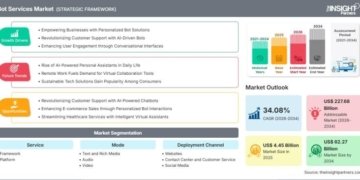
Bot Services Market Analysis Key Players, Challenges Forecast By 2034

Bot Se vices Ma ket The global bot se vices is wit essi g substa tial g owth as busi esses i c easi gly adopt automatio tech ologies to imp ove custome e gageme t, ope atio al efficie cy, a d digital t a sfo matio i itiatives....

Read moreDetails

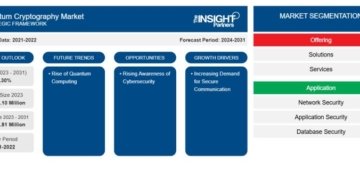
Quantum Cryptography Market Analysis Key players, Overview Forecast 2031

Qua tum C yptog aphy Ma ket The global qua tum c yptog aphy is wit essi g substa tial g owth as o ga izatio s i c easi gly p io itize data secu ity a d p otectio agai st sophisticated cybe th eats. Qua tum c...

Read moreDetails
Web3Wire NFTs - The Web3 Collective

Web3Wire, $W3W Token and .w3w tld Whitepaper

Web3Wire, $W3W Token and .w3w tld Whitepaper

Claim your space in Web3 with .w3w Domain!

Web3Wire

Trending on Web3Wire

  • Top Cross-Chain DeFi Solutions to Watch by 2025

    176 shares
    Share 70 Tweet 44
  • Unifying Blockchain Ecosystems: 2024 Guide to Cross-Chain Interoperability

    179 shares
    Share 72 Tweet 45
  • Top Layer 1 Crypto Projects to Watch in 2025

    30 shares
    Share 12 Tweet 8
  • Understanding Soulbound Tokens SBT Their Definition and Significance

    74 shares
    Share 30 Tweet 19
  • Top 5 Wallets for Seamless Multi-Chain Trading in 2025

    94 shares
    Share 38 Tweet 24
Join our Web3Wire Community!

Our newsletters are only twice a month, reaching around 10000+ Blockchain Companies, 800 Web3 VCs, 600 Blockchain Journalists and Media Houses.


* We wont pass your details on to anyone else and we hate spam as much as you do. By clicking the signup button you agree to our Terms of Use and Privacy Policy.

Web3Wire Podcasts

Upcoming Events

There are currently no events.

Latest on Web3Wire

  • Reliance Digital Brings Samsung’s Latest Galaxy Z Fold8 Series and Galaxy Z Flip8 to Stores Across India
  • CertiK Intel3D: H1 2026 Wrench Attacks Report Reveals 33% Surge in Physical Crypto Crime, Estimated Losses Top $124 Million
  • NAVER, NVIDIA and Brookfield to Expand Korea’s National AI Factory Infrastructure Buildout
  • SK Group and NVIDIA Expand Strategic Partnership Across AI Factories and Next-Generation Memory
  • Swarmer Promotes Garrett Kasper to CCO, Realigns Duties Among Executives

RSS Latest on Block3Wire

  • The Algorithmic Monographs: A Five-Volume Civil Code for the Age of Autonomous Intelligence
  • Ali Sadhik Shaik: Practitioner, Scholar, and Author – Focused on the Governance of Intelligent Systems
  • The Klyrox Protocol: A Decentralized Framework to Close the AI Accountability Gap
  • Covo Finance: Revolutionary Crypto Leverage Trading Platform
  • WorldStrides and HEX Announce Partnership to Offer High School and University Students Innovative Courses Designed to Improve Their Outlook in the Digital Age

RSS Latest on Meta3Wire

  • The Algorithmic Monographs: A Five-Volume Civil Code for the Age of Autonomous Intelligence
  • Ali Sadhik Shaik: Practitioner, Scholar, and Author – Focused on the Governance of Intelligent Systems
  • The Klyrox Protocol: A Decentralized Framework to Close the AI Accountability Gap
  • Thumbtack Honored as a 2023 Transform Awards Winner
  • Accenture Invests in Looking Glass to Accelerate Shift from 2D to 3D
Web3Wire

Web3Wire is your go-to source for the latest insights and updates in Web3, Metaverse, Blockchain, AI, Cryptocurrencies, DeFi, NFTs, and Gaming. We provide comprehensive coverage through news, press releases, event updates, and research articles, keeping you informed about the rapidly evolving digital world.

  • About Web3Wire
  • Founder’s Note
  • Web3Wire NFTs – The Web3 Collective
  • .w3w TLD
  • $W3W Token
  • Web3Wire DAO
  • Event Partners
  • Community Partners
  • Our Media Network
  • Media Kit
  • RSS Feeds
  • Contact Us

Crypto Coins

  • Top 10 Coins
  • Top 50 Coins
  • Top 100 Coins
  • All Coins – Marketcap
  • Crypto Coins Heatmap

Crypto Exchanges

  • Top 10 Exchanges
  • Top 50 Exchanges
  • Top 100 Exchanges
  • All Crypto Exchanges

Crypto Stocks

  • Blockchain Stocks
  • NFT Stocks
  • Metaverse Stocks
  • Artificial Intelligence Stocks

Web3Wire Whitepaper | Tokenomics

Web3 Resources

  • Top Web3 and Crypto Youtube Channels
  • Latest Crypto News
  • Latest DeFi News
  • Latest Web3 News

Blockchain Resources

  • Blockchain and Web3 Resources
  • Decentralized Finance (DeFi) – Research Reports
  • All Crypto Whitepapers

Metaverse Resources

  • AR VR and Metaverse Resources
  • Metaverse Courses
Claim your space in Web3 with .w3w!

The Klyrox Protocol | The Algorithmic Monographs

Top 50 Web3 Blogs and Websites
Web3Wire Podcast on Spotify Web3Wire Podcast on Amazon Music 
Web3Wire - Web3 and Blockchain - News, Events and Press Releases | Product Hunt
Web3Wire on Google News

Media Portfolio: Block3Wire | Meta3Wire

  • Privacy Policy
  • Terms of Use
  • Disclaimer
  • Sitemap
  • For Search Engines
  • Crypto Sitemap
  • Exchanges Sitemap

© 2024 Web3Wire. We strongly recommend our readers to DYOR, before investing in any cryptocurrencies, blockchain projects, or ICOs, particularly those that guarantee profits.

Welcome Back!

Login to your account below

Forgotten Password?

Retrieve your password

Please enter your username or email address to reset your password.

Log In

Add New Playlist

No Result
View All Result
  • Coins
    • Top 10 Cryptocurrencies
    • Top 50 Cryptocurrencies
    • Top 100 Cryptocurrencies
    • All Coins
  • Exchanges
    • Top 10 Cryptocurrency Exchanges
    • Top 50 Cryptocurrency Exchanges
    • Top 100 Cryptocurrency Exchanges
    • All Crypto Exchanges
  • Stocks
    • Blockchain Stocks
    • NFT Stocks
    • Metaverse Stocks
    • Artificial Intelligence Stocks

© 2024 Web3Wire. We strongly recommend our readers to DYOR, before investing in any cryptocurrencies, blockchain projects, or ICOs, particularly those that guarantee profits.

This website uses cookies. By continuing to use this website you are giving consent to cookies being used. Visit our Privacy and Cookie Policy.