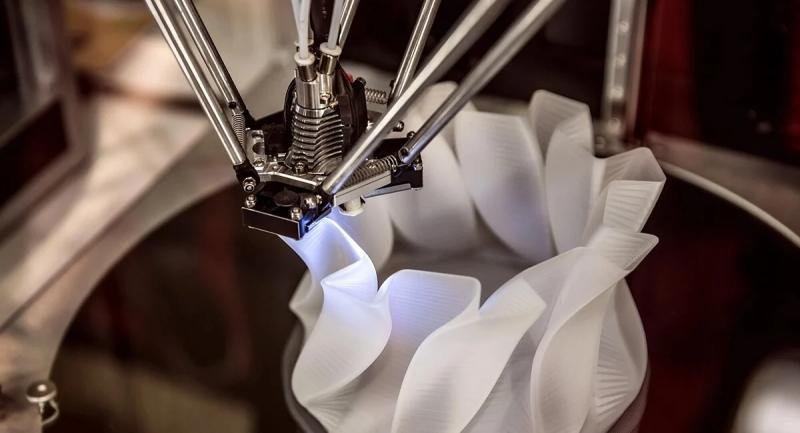
4D Printing Market
A recent report published by Infinium Global Research highlights robust growth prospects for the global 4D printing market, driven by rapid advancements in additive manufacturing and smart materials. According to the study, the market was valued at USD 221.57 million in 2023 and is projected to reach USD 1,638.18 million by 2032, expanding at a compound annual growth rate (CAGR) of 26.94% during the forecast period from 2024 to 2032.
Get A Sample Copy of Research Report: https://www.infiniumglobalresearch.com/form/2126?name=Sample
4D printing represents the next evolution of 3D printing by introducing time-based functionality through the use of smart materials that can change shape or properties in response to external stimuli such as heat, light, moisture, or magnetic fields. This capability enables the creation of dynamic, self-assembling, and adaptive structures, unlocking significant opportunities across industries including healthcare, aerospace, automotive, and consumer goods.
The report notes that increasing adoption of shape memory polymers, hydrogels, and advanced composites is a key growth driver, as manufacturers seek lightweight, durable, and multifunctional components. In healthcare, 4D printing is gaining traction for applications such as adaptive implants, stents, and tissue scaffolds that can respond to patient-specific anatomy and biological conditions. Similarly, aerospace and automotive sectors are leveraging the technology to develop morphing and high-strength components.
From a materials perspective, shape memory polymers dominate the market, accounting for approximately 40% of total revenue, due to their versatility, cost-effectiveness, and compatibility with existing 3D printing processes. In terms of applications, healthcare and medical devices lead the market with a 35-38% share, while aerospace and automotive applications are witnessing rapid growth. Fused Deposition Modeling (FDM) remains the most widely used technology, supported by its scalability and compatibility with smart polymers, although SLA and Direct Ink Writing (DIW) are increasingly adopted for high-precision applications.
Regionally, North America holds the largest market share at around 35-37%, supported by advanced manufacturing infrastructure, strong R&D investment, and early adoption of smart materials in the U.S. and Canada. Meanwhile, the Asia Pacific region is expected to register the fastest growth, fueled by rising investments in industrial automation, aerospace, and automotive manufacturing, particularly in China, Japan, and South Korea.
Request for Customization: https://www.infiniumglobalresearch.com/form/2126?name=Customization
Despite its strong growth outlook, the market faces challenges such as high initial investment costs, complex design requirements, and limited standardization of 4D printing materials. However, ongoing R&D initiatives, integration of AI and IoT technologies, and growing interest in soft robotics and bioprinting are expected to mitigate these barriers and create new growth opportunities.
The report also highlights recent industry developments, including Stratasys Ltd.’s January 2024 launch of advanced smart material printers capable of producing complex morphing structures, underscoring the accelerating pace of innovation in the 4D printing ecosystem.
Overall, the global 4D printing market is poised for significant expansion as innovations in materials science, AI-driven design, and additive manufacturing continue to converge, enabling wider adoption across multiple end-use industries.
Contact Us:
info@infiniumglobalresearch.com
Infinium Global Research LLP
Ravet, Pune
412101
About us:
Infinium Global Research also formally introduces IGR Creatives by Infinium – a dedicated strategic branding, creative intelligence, and market positioning arm built to empower clients with insights-driven branding, communications, and content solutions tailored to domestic and international markets.
IGR Creatives by Infinium offers a unique blend of market intelligence and creative strategy. Its core value propositions to companies operating (or planning to operate) in the sectors include:
• Insight-led Branding & Messaging:
• Localization & Cultural Fit:
• Strategic Positioning in Domestic Markets:
• Go-to-Market Content & Collateral:
• Consistent Brand Architecture Across Regions:
By integrating IGR’s deep domain research expertise with creative storytelling and execution, IGR Creatives becomes a bridge between “what the data says” and “how the brand speaks.
This release was published on openPR.