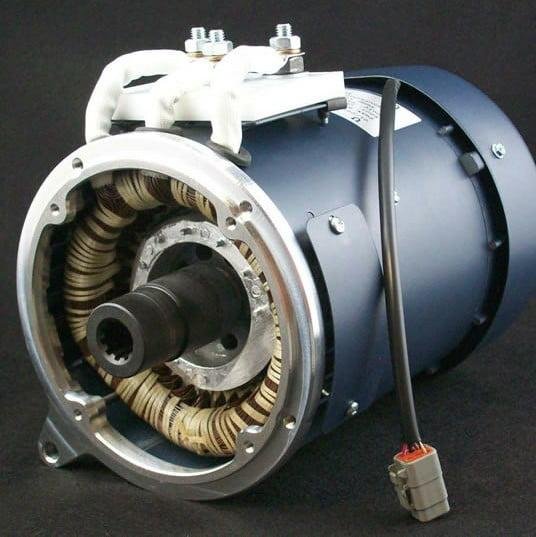
Electric Vehicle Induction Motors
[391 Pages Report] The Global Electric Vehicle (EV) Induction Motors Market is experiencing a strategic renaissance as the automotive industry seeks to de-risk its supply chains. While Permanent Magnet Synchronous Motors (PMSM) have dominated the last decade due to efficiency, they rely heavily on rare earth metals (Neodymium, Dysprosium) primarily sourced from China. The Induction Motor (Asynchronous Motor) uses electromagnets instead of permanent magnets, offering a robust, low-cost, and geopolitical-proof alternative. As of 2026, the market is defined by the “Dual-Motor” trend: OEMs are increasingly using a PMSM on the rear axle for efficiency and an Induction Motor on the front axle for power boosts, leveraging the induction motor’s unique ability to “coast” freely without creating drag when not in use.
Market Dynamics & Future:
Innovation: Growth is fueled by “Copper Rotor Technology,” replacing traditional aluminum rotors with die-cast copper to significantly reduce electrical resistance and heat loss, narrowing the efficiency gap between induction and permanent magnet motors.
Operational Shift: There is a decisive move toward “Secondary Axle Deployment.” In All-Wheel Drive (AWD) EVs, induction motors are becoming the standard choice for the assist axle because they can be turned off instantly to save energy during highway cruising, unlike permanent magnets which always create magnetic drag.
Distribution: Tier-1 Integration is the primary channel, with suppliers delivering fully integrated “E-Axles” (Motor + Inverter + Gearbox) that house compact induction units tailored for specific vehicle platforms.
Future Outlook: The market will be defined by “Supply Chain Sovereignty,” as Western automakers prioritize induction technology to meet local content requirements (like the US Inflation Reduction Act) that penalize foreign-sourced critical minerals.
Drivers, Restraints, Challenges, and Opportunities Analysis:
Market Drivers:
The Rare Earth Crisis: Volatile pricing and geopolitical control over rare earth magnets are forcing OEMs to diversify. Induction motors use steel and copper-abundant, stable commodities-making them the “safe haven” technology.
Cost Efficiency: Induction motors are significantly cheaper to manufacture than PM motors. For mass-market “budget” EVs, the lower Bill of Materials (BOM) cost is a massive economic driver.
Robustness & Reliability: Induction motors are rugged, withstand high temperatures better, and have no risk of demagnetization over time, making them ideal for heavy-duty commercial EVs and performance cars.
Market Restraints:
Lower Efficiency & Range: Generally, induction motors are less efficient than PM motors at low speeds and city driving. Relying solely on them can reduce an EV’s range by 5-10%, exacerbating range anxiety.
Size and Weight: To achieve the same power output as a PM motor, an induction motor typically needs to be larger and heavier, creating packaging challenges in compact vehicles.
Key Challenges:
Thermal Management: Induction motors generate heat in the rotor (which PM motors do not). Cooling a spinning rotor inside a sealed casing requires complex engineering solutions like oil-spray cooling or hollow-shaft liquid cooling.
Torque Density: Achieving the “snap” acceleration consumers expect is harder with induction motors. optimizing the torque-to-weight ratio to compete with PM motors remains a technical hurdle.
Future Opportunities:
Commercial Fleets (Trucks/Buses): Weight is less of a constraint for electric trucks. The durability and low maintenance cost of induction motors make them the perfect fit for the long-haul trucking sector.
High-Speed Performance: Induction motors actually perform better than PM motors at very high RPMs (highway speeds). Positioning them as the “Autobahn Motor” for high-performance German sedans is a growing niche.
*******
If you want to get Sample PDF of this report then email us on aman.jain@marketresearcorridor.com
*******
Market Segmentation:
By Type:
Squirrel Cage Induction Motor (Dominant)
Slip Ring Induction Motor
By Application:
Passenger Cars (BEV, PHEV)
Commercial Vehicles (Buses, Trucks, Vans)
Industrial Vehicles (Forklifts, AGVs)
By Installation Position:
Primary Traction Motor (Main drive)
Secondary/Assist Motor (AWD configurations)
By Voltage Class:
Low Voltage (48V – 96V)
High Voltage (400V – 800V)
By End User:
Automotive OEMs
Tier 1 Suppliers
Aftermarket
Region:
North America
U.S.
Canada
Mexico
Europe
U.K.
Germany
France
Italy
Spain
Rest of Europe
Asia Pacific
China
India
Japan
South Korea
Australia
Rest of Asia Pacific
South America
Brazil
Argentina
Rest of South America
Middle East and Africa
Saudi Arabia
UAE
Egypt
South Africa
Rest of Middle East and Africa
Competitive Landscape:
Top Motor Manufacturers & Tier 1s:
Nidec Corporation (E-Axle portfolio)
BorgWarner Inc.
ZF Friedrichshafen AG
Magna International
Valeo (Siemens eAutomotive)
Tesla, Inc. (In-house manufacturing for Model S/X/Cybertruck assist)
Bosch
Continental AG
Hitachi Astemo
Regional Trends:
The global market is segmented into North America, Europe, Asia-Pacific, Latin America, and the Middle East & Africa.
North America (Legacy & Innovation): Dominates the market innovation, largely due to Tesla’s historic use of induction motors and the current push for “Made in USA” supply chains. The US market favors induction motors for large electric SUVs and pickup trucks where power and towing capacity are paramount.
Europe (Green Manufacturing): Growth is driven by sustainability. European OEMs (like Audi and Mercedes-Benz) favor induction motors because they avoid the environmental damage associated with rare earth mining, aligning with the EU’s strict lifecycle carbon regulations.
Asia-Pacific (Cost & Volume): The fastest-growing region. While China controls the magnet market, Indian and Southeast Asian manufacturers are adopting induction motors to keep EV prices low for mass-market adoption, avoiding the premium costs of PM technology.
*******
Get your Sample PDF to email us on aman.jain@marketresearcorridor.com
*******
Market Dynamics and Strategic Insights
The “Coasting” Advantage: The most strategic feature of induction motors is their ability to de-energize and spin freely. In dual-motor EVs, the PM motor handles daily driving, but the Induction motor sits on the second axle, waiting. When the driver stomps the pedal, it wakes up instantly. When cruising, it sleeps with zero drag.
800-Volt Architectures: As EVs move to 800V systems for faster charging, induction motors are proving more robust against the high voltage spikes (dv/dt) that can damage the insulation in magnet-based motors.
Retrofitting & Conversion: The induction motor is the “crate engine” of the EV world. Its simplicity makes it the top choice for companies converting old ICE fleets (buses, classic cars) into electric vehicles.
Material Independence: Strategic planners view induction motors as an insurance policy. If geopolitical tensions cut off rare earth supplies, manufacturers with induction motor lines can keep building cars, while those relying 100% on magnets will halt production.
Contact Us:
Avinash Jain
Market Research Corridor
Phone : +1 518 250 6491
Email: Sales@marketresearchcorridor.com
Address: Market Research Corridor, B 502, Nisarg Pooja, Wakad, Pune, 411057, India
About Us:
Market Research Corridor is a global market research and management consulting firm serving businesses, non-profits, universities and government agencies. Our goal is to work with organizations to achieve continuous strategic improvement and achieve growth goals. Our industry research reports are designed to provide quantifiable information combined with key industry insights. We aim to provide our clients with the data they need to ensure sustainable organizational development.
This release was published on openPR.