Skill Gaming Market
Market Outlook and Forecast
The skill gaming market is emerging as one of the most dynamic segments within the global digital entertainment ecosystem, driven by rapid advancements in mobile technology, increasing internet penetration, and evolving consumer preferences toward interactive and competitive gaming experiences. Unlike traditional chance-based gaming, skill gaming emphasizes player expertise, strategy, and decision-making, making it increasingly popular among a wide demographic of users.
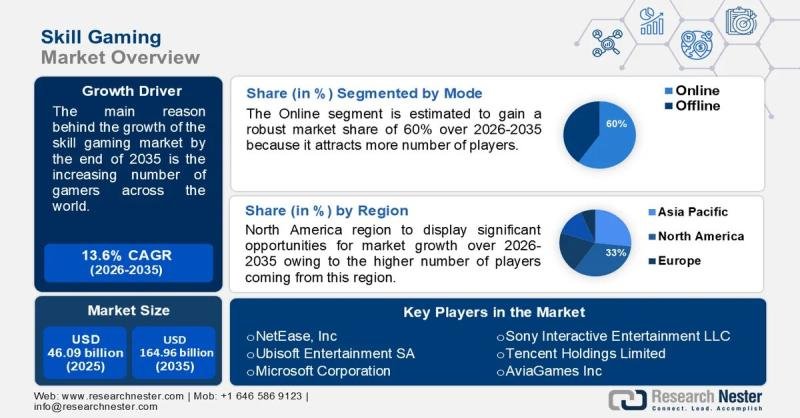
In 2025, the global skill gaming market is valued at USD 46.09 billion, reflecting strong participation across mobile, desktop, and console-based platforms. By 2035, the market is projected to reach USD 164.96 billion, supported by the widespread adoption of smartphones, the proliferation of esports culture, and the integration of real-money gaming models. During the 2026-2035 period, the market is expected to grow at a CAGR of 13.6%, highlighting significant expansion opportunities across both developed and emerging economies.
The increasing accessibility of high-speed internet and affordable smartphones has significantly lowered entry barriers for players worldwide. As a result, skill gaming platforms are witnessing a surge in user engagement, particularly among younger demographics. Additionally, the rise of digital payment systems has facilitated seamless transactions, enabling real-money competitions and in-game purchases that enhance user experience.
Another key driver of the skill gaming market is the growing popularity of esports and competitive gaming. Platforms offering skill-based games such as fantasy sports, puzzle games, card games, and strategy-based competitions are attracting millions of users globally. The integration of social features, live tournaments, and reward-based systems is further enhancing player engagement and retention.
➤ Request Free Sample PDF Report @ https://www.researchnester.com/sample-request-5670
Regional Performance Highlights
North America is expected to dominate the skill gaming market, accounting for approximately 33% of the global market share by 2035. The region benefits from a mature gaming ecosystem, high smartphone penetration, and strong consumer spending on digital entertainment. The United States, in particular, is a major hub for skill-based gaming platforms and esports tournaments, supported by favorable regulatory frameworks in certain states.
Europe represents a significant market characterized by diverse gaming preferences and increasing adoption of digital gaming platforms. Countries such as the United Kingdom, Germany, and France are witnessing steady growth in skill gaming participation. Regulatory clarity around online gaming and data protection is encouraging platform operators to expand their presence across the region. Additionally, the popularity of strategy-based and card games is contributing to market growth.
Asia Pacific is projected to hold around 27% of the global market share by 2035, driven by a large and rapidly growing gaming population. Countries such as India, China, Japan, and South Korea are key contributors to regional growth. The rise of mobile-first gaming ecosystems, coupled with increasing digital literacy, is fueling the adoption of skill gaming platforms. In India, for example, fantasy sports and real-money gaming apps have gained widespread popularity, supported by a young and tech-savvy population.
➤ Gain access to expanded insights on competitive strategies, market size, and regional analysis. View our Skill Gaming Market Report Overview here: https://www.researchnester.com/reports/skill-gaming-market/5670
Market Segmentation
From a platform perspective, the online segment is expected to dominate the skill gaming market, accounting for approximately 60% of the total market share by 2035. Online skill gaming platforms offer convenience, accessibility, and a wide variety of game options, making them highly attractive to users. Mobile applications and web-based platforms enable players to participate in real-time competitions, tournaments, and multiplayer games from anywhere. The growth of cloud gaming and cross-platform integration is further enhancing the online gaming experience. Players can seamlessly switch between devices, access real-time leaderboards, and engage in social gaming communities. Monetization models such as in-app purchases, subscriptions, and entry fees for tournaments are also driving revenue growth in this segment.
The board-based segment continues to hold relevance, particularly among traditional gaming enthusiasts and social players. Board-based skill games such as chess, carrom, and other strategy-based formats are increasingly being digitized, bridging the gap between physical and online gaming experiences. These games emphasize cognitive skills, strategic thinking, and social interaction, making them popular across various age groups. Hybrid gaming models that combine physical board games with digital interfaces are also gaining traction. These innovations are enhancing user engagement by offering immersive and interactive gaming experiences.
➤ Discover how the Skill Gaming Market is evolving globally – access your free sample report → https://www.researchnester.com/sample-request-5670
Top Market Trends
1. Rapid Growth of Mobile-First Skill Gaming Platforms
One of the most prominent trends in the skill gaming market is the shift toward mobile-first platforms. With the widespread availability of smartphones and affordable data plans, mobile gaming has become the primary mode of access for users worldwide.
Skill gaming apps are increasingly optimized for mobile devices, offering intuitive interfaces, quick gameplay sessions, and real-time multiplayer features. The success of fantasy sports platforms and mobile-based card games highlights the growing dominance of mobile gaming in the industry.
2. Integration of Real-Money Gaming and Digital Payments
The integration of real-money gaming models is transforming the skill gaming landscape. Players can participate in tournaments, compete for cash prizes, and engage in competitive gaming environments that reward skill and performance.
Secure digital payment systems and fintech innovations are enabling seamless transactions, enhancing user trust and platform credibility. However, this trend also brings regulatory challenges, as governments seek to establish frameworks to govern real-money gaming activities.
3. Emergence of Esports and Competitive Gaming Ecosystems
Esports has become a major growth driver for the skill gaming market, attracting millions of viewers and participants globally. Competitive gaming tournaments, live streaming, and influencer-driven content are creating new revenue streams and engagement opportunities.
Skill-based games are increasingly being integrated into esports ecosystems, offering players opportunities to compete at professional levels. Sponsorships, advertising, and media rights are further contributing to the commercialization of esports.
4. Regulatory Evolution and Legal Clarity
Regulation remains a critical factor shaping the skill gaming market. Governments across different regions are working to differentiate between skill-based and chance-based gaming, leading to evolving legal frameworks.
In countries like India, regulatory developments are playing a crucial role in determining the growth trajectory of the market. Clear and consistent regulations are expected to encourage investment and innovation while ensuring consumer protection.
➤ Get the full details on the latest company launches, investments, and M&A in the Skill Gaming Market. Download your free sample report → https://www.researchnester.com/sample-request-5670
Recent Company Developments
The skill gaming market has witnessed significant activity over the past year, with leading companies focusing on expansion, innovation, and strategic partnerships.
1. Dream Sports (Dream11) expanded its fantasy gaming platform by introducing new sports categories and enhancing user engagement through advanced analytics and personalized experiences.
2. Skillz Inc. announced strategic partnerships with game developers to expand its portfolio of competitive skill-based games and improve platform scalability.
3. Zynga Inc. launched new skill-based mobile games and enhanced its live gaming features to attract a broader audience.
4. Electronic Arts Inc. continued to invest in competitive gaming modes and esports integration across its popular game franchises.
5. Tencent Holdings Ltd. strengthened its presence in the skill gaming market through investments in gaming studios and the development of advanced gaming technologies.
➤ Request Free Sample PDF Report @ https://www.researchnester.com/sample-request-5670
Contact Data
AJ Daniel
Corporate Sales, USA
Research Nester
77 Water Street 8th Floor, New York, 10005
Email: info@researchnester.com
USA Phone: +1 646 586 9123
Europe Phone: +44 203 608 5919
About Research Nester
Research Nester is a one-stop service provider with a client base in more than 50 countries, leading in strategic market research and consulting with an unbiased and unparalleled approach towards helping global industrial players, conglomerates and executives for their future investment while avoiding forthcoming uncertainties. With an out-of-the-box mindset to produce statistical and analytical market research reports, we provide strategic consulting so that our clients can make wise business decisions with clarity while strategizing and planning for their forthcoming needs and succeed in achieving their future endeavors. We believe every business can expand to its new horizon, provided a right guidance at a right time is available through strategic minds.
This release was published on openPR.