IoT Devices Market
Market Size and Growth:
The Global IoT Devices Market size reached US$ 130.88 billion in 2024 and is expected to reach US$ 522.79 billion by 2032, growing with a CAGR of 18.90% during the forecast period 2025-2032.
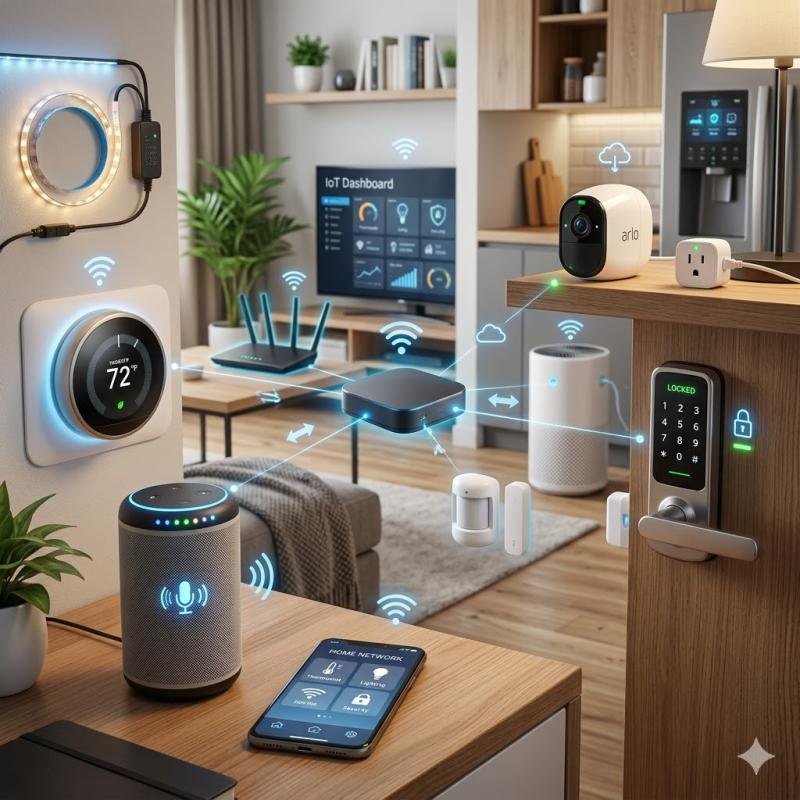
The IoT Devices Market refers to the global industry involved in the development, production, and deployment of interconnected physical devices embedded with sensors, software, and communication technologies that enable them to collect, exchange, and analyze data over the internet. These devices are widely used across sectors such as healthcare, manufacturing, smart homes, agriculture, transportation, and energy management. The market includes hardware components, connectivity modules, and integrated platforms that support real-time monitoring, automation, and data-driven decision-making in both consumer and industrial applications.
Request for Executive Sample Report (Get Higher Priority for Corporate Email ID): https://datamintelligence.com/download-sample/iot-devices-market?sz
Recent Key Developments of United States:
✅ February 2026: Major deployments of 5G-enabled IoT sensors in smart grids enhanced energy management, cutting outage risks by enabling faster grid responses. Government incentives drove widespread utility sector rollout.
✅ January 2026: US manufacturers accelerated IIoT adoption with new edge computing integrations for real-time factory monitoring, boosting predictive maintenance efficiency. This built on ongoing Industry 4.0 pushes amid supply chain pressures.
✅ December 2025: Healthcare IoT devices saw FDA approvals for wearable monitors with AI analytics, improving remote patient tracking in aging populations.
✅ November 2025: Automotive firms launched connected vehicle platforms using V2X IoT for traffic optimization, reducing urban congestion in pilot cities.
Recent Key Developments of Japan:
✅ February 2026: Industrial robots integrated advanced IoT modules in Kansai factories, supporting real-time AI-driven automation under manufacturing hubs’ digital transformation.
✅ January 2026: Japan’s “Society 5.0” initiative expanded with precision agriculture IoT sensors for livestock monitoring, aiding rural productivity amid labor shortages.
✅ December 2025: Smart city projects in Tokyo deployed energy-harvesting IoT sensors for infrastructure, aligning with urbanization and sustainability goals.
✅ November 2025: Automotive IoT advancements featured high-precision sensors for autonomous driving tests, driven by 5G rollout and robotics innovation.
List of the Key Players in the IoT Devices Market:
Apple Inc.
Cisco Systems Inc
Google Inc. (Alphabet)
Samsung Electronics Co. Limited
LG Electronics
Siemens AG
Honeywell International Inc.
Sony Corporation
Amazon.com, Inc.
Robert Bosch GMBH
Speak to Our Analyst and Get Customization in the report as per your requirements: https://datamintelligence.com/customize/iot-devices-market?sz
Market Dynamics:
Market Drivers
One of the major drivers of the IoT devices market is the rapid digital transformation across industries. Organizations are increasingly adopting connected devices to collect real-time data, optimize operations, and improve decision-making processes. The expansion of 5G networks, cloud computing, and artificial intelligence technologies is also enabling faster and more reliable connectivity between devices. Additionally, the growing demand for smart home technologies, wearable devices, and industrial automation solutions continues to accelerate the deployment of IoT devices worldwide.
Market Restraints
Despite its strong growth potential, the IoT devices market faces several challenges. Data security and privacy concerns remain major barriers, as connected devices often transmit sensitive information that can be vulnerable to cyber threats. High initial deployment costs, complex integration with existing IT infrastructure, and the need for standardized communication protocols can also slow adoption, particularly among small and medium-sized enterprises. Furthermore, managing large volumes of device data and ensuring interoperability between different IoT platforms presents ongoing operational challenges for organizations.
Market Opportunities
The market offers significant opportunities due to the rapid expansion of smart cities, connected healthcare, and Industry 4.0 initiatives. Governments and enterprises are increasingly investing in IoT-enabled infrastructure such as smart transportation systems, energy management platforms, and urban monitoring networks. The integration of IoT with emerging technologies like edge computing, artificial intelligence, and advanced analytics is expected to unlock new applications and improve device intelligence. Additionally, the rising demand for remote monitoring, predictive maintenance, and intelligent automation across sectors such as healthcare, manufacturing, and agriculture presents substantial growth opportunities for IoT device manufacturers and solution providers.
Market Segmentation:
The IoT Devices Market is commonly segmented based on product type, end-user industry, and technology/application, reflecting the wide range of connected devices used across industries. By product type, the market includes consumer IoT devices, industrial IoT devices, healthcare IoT devices, automotive IoT devices, smart city devices, and agricultural IoT solutions. Consumer IoT devices such as smart home systems, wearable health trackers, and connected appliances represent the largest segment due to widespread adoption in households. Industrial IoT devices, including sensors, controllers, and monitoring systems used in manufacturing and logistics, are among the fastest-growing segments as companies deploy connected equipment for predictive maintenance, real-time monitoring, and automation. Healthcare IoT devices, such as remote patient monitoring tools and connected medical equipment, are expanding rapidly as healthcare providers increasingly adopt digital health technologies.
From an end-user perspective, the market is divided into residential, commercial, industrial, and government or utilities sectors. The residential segment is driven by demand for smart home technologies including connected lighting, security systems, and home automation platforms. The industrial segment holds a major share due to increasing adoption of IoT-enabled sensors, robotics, and asset tracking systems across manufacturing, logistics, and energy industries. In addition, sectors such as transportation, healthcare, retail, and smart infrastructure use IoT devices for applications like fleet management, patient monitoring, supply-chain optimization, and urban traffic management. These diverse applications demonstrate the broad role of IoT devices in enabling real-time data collection and operational efficiency across industries.
Looking For Full Report? Get it Here: https://www.datamintelligence.com/buy-now-page?report=iot-devices-market
Regional Insights:
Regionally, North America remains one of the most mature markets for IoT devices due to strong technology infrastructure, high adoption of connected devices, and the presence of major technology companies. Enterprises in the region are actively deploying IoT solutions for industrial automation, smart buildings, and connected healthcare systems. Strong investments in research and development and rapid integration of advanced technologies further strengthen the region’s position in the global IoT ecosystem.
Asia-Pacific is the fastest-growing region in the IoT devices market, supported by rapid industrialization, growing consumer electronics adoption, and government initiatives promoting smart cities and digital infrastructure. Countries such as China, India, Japan, and South Korea are investing heavily in connected technologies, 5G networks, and intelligent manufacturing systems. The region’s large manufacturing base and expanding internet connectivity are expected to drive substantial growth in IoT device deployments.
Europe represents another important market, characterized by strong adoption of IoT solutions in automotive, manufacturing, and smart building sectors. The region’s focus on energy efficiency, digital transformation, and Industry 4.0 initiatives is encouraging organizations to adopt connected devices for monitoring, automation, and operational optimization. Meanwhile, Latin America and the Middle East & Africa are emerging markets where IoT adoption is increasing gradually due to improvements in digital infrastructure, smart city investments, and growing demand for connected services in sectors such as agriculture, logistics, and utilities.
Unlock 360° Market Intelligence with DataM Subscription Services: https://www.datamintelligence.com/reports-subscription
People Also Ask:
◆ How big is the IoT Devices Market in 2026?
◆ What is the projected growth rate of the IoT Devices Market through 2033?
◆ Who are the key players in the IoT Devices Market?
◆ Which region is expected to dominate the industry during the forecast period?
Contact Us –
Company Name: DataM Intelligence
Contact Person: Sai Kiran
Email: Sai.k@datamintelligence.com
Phone: +1 877 441 4866
Website: https://www.datamintelligence.com
About Us –
DataM Intelligence is a Market Research and Consulting firm that provides end-to-end business solutions to organizations from Research to Consulting. We, at DataM Intelligence, leverage our top trademark trends, insights and developments to emancipate swift and astute solutions to clients like you. We encompass a multitude of syndicate reports and customized reports with a robust methodology.
Our research database features countless statistics and in-depth analyses across a wide range of 6300+ reports in 40+ domains creating business solutions for more than 200+ companies across 50+ countries; catering to the key business research needs that influence the growth trajectory of our vast clientele.
This release was published on openPR.