As artificial intelligence begins to reshape education systems worldwide, influence is increasingly defined not by institutional scale but by structural design and timing.
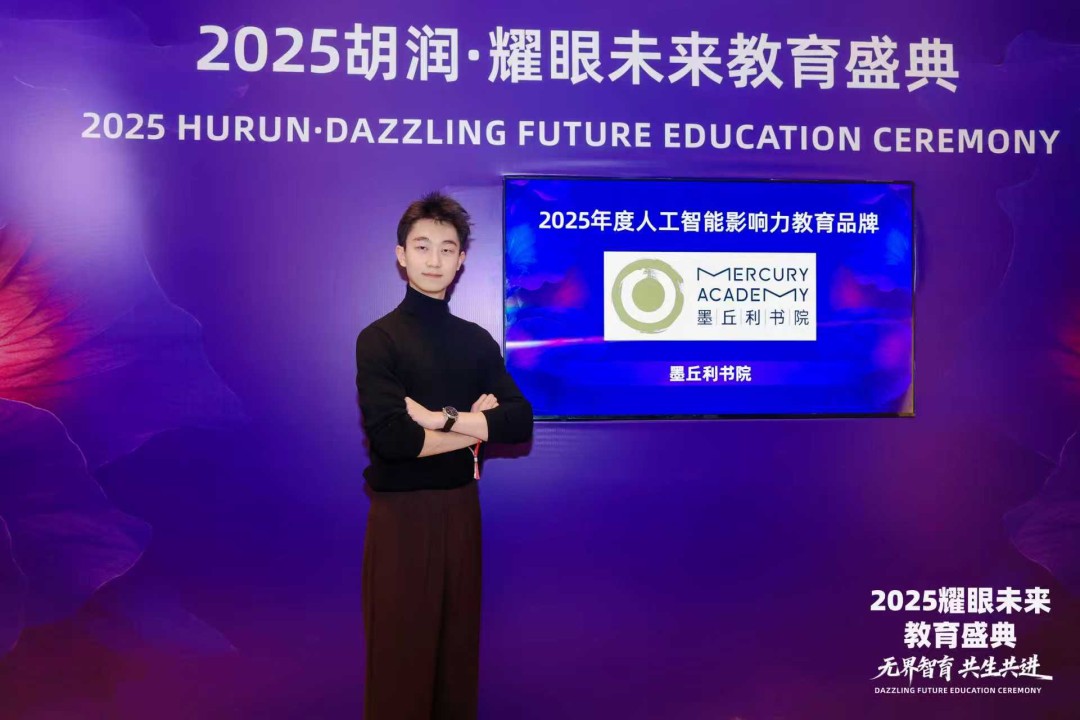
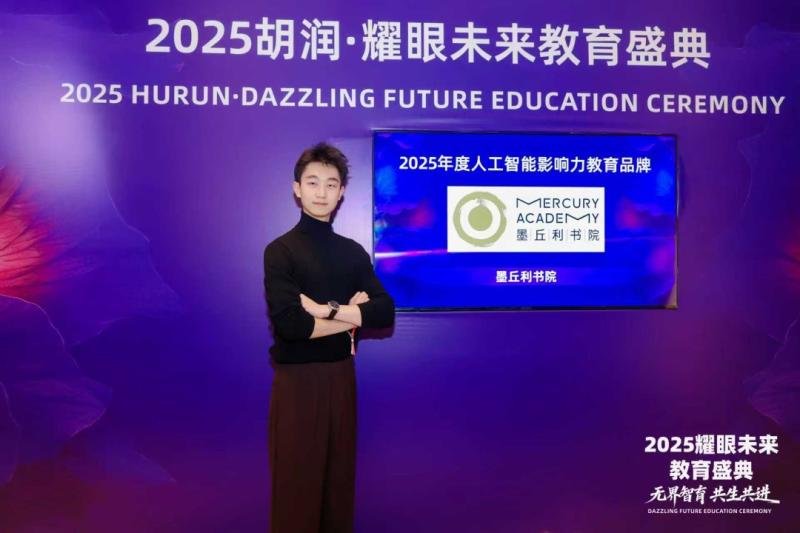
This week, Mercury Academy, an AI-driven education initiative founded by 19-year-old entrepreneur Yingxi Tang, was awarded “AI-Driven Education Brand of the Year” at the Hurun Dazzling Future Education Ceremony-a summit more commonly associated with global business leaders, high-growth companies and emerging innovators.
Image: https://www.globalnewslines.com/uploads/2026/01/306cbe90bfc6625fac03a17c3a8ee2ad.jpg
For a school brand launched less than one year ago, the recognition is notable less for its ceremonial value than for what it signals about how education models are beginning to evolve in the AI era.
Cross-System Recognition in a Compressed Timeframe
The Hurun award marks the sixth national or international-level education recognition received by Mercury Academy or its founder within a short period.
Previous acknowledgements include Forbes China International Education Impact Person of the Year-awarded to Tang as the youngest recipient on record-along with education brand and collaboration awards from Forbes China, Sohu Education, and China National Radio.
These institutions operate across distinct evaluation frameworks, spanning commercial media, public broadcasting, internet education platforms and global wealth research organisations. Their convergence around a single early-stage education initiative suggests growing institutional attention toward new education architectures rather than incremental reform.
Image: https://www.globalnewslines.com/uploads/2026/01/000fcb07c27e2bc02e7f99ee4b442dad.jpg
Why Hurun Took Notice
Hurun’s education recognitions traditionally prioritise innovation capacity, long-term industry relevance and international scalability. Mercury Academy’s model aligns closely with these criteria through its integration of:
1. AI-driven learning diagnostics and personalised pathways,
2. Systematised project-based learning (PBL),
3. Cross-city and cross-context learning environments,
4. And an emerging digital learning infrastructure.
Unlike many institutions where artificial intelligence functions as a supplementary tool, Mercury Academy positions AI as a foundational system-used to map student capabilities, generate adaptive learning trajectories and match learners with real-world projects.
Industry analysts increasingly describe such organisations not as schools in the conventional sense, but as early-stage education infrastructure platforms.
From Institutions to Learning Systems
Observers within China’s education sector have characterised Mercury Academy as a system-level experiment rather than a conventional brand.
Three features distinguish its approach.
First, learning is not anchored to a single campus. Instead, urban spaces, rural sites, online environments and industry contexts are treated as distributed learning settings.
Second, curriculum design emphasises problem-solving in authentic contexts-ranging from sustainability and energy systems to cultural heritage and technology-rather than linear subject progression.
Third, students are positioned as participants in real-world problem resolution, reflecting a broader shift from content delivery toward capability development.
This framework aligns with policy discussions in China that increasingly prioritise interdisciplinary learning, digital literacy and applied competencies alongside academic outcomes.
Timing Over Age
While Tang’s age has drawn attention, analysts argue that timing is the more consequential factor.
2025 is widely regarded as the first year in which artificial intelligence begins to exert structural influence on education systems, rather than serving as an auxiliary enhancement. Organisations designed with AI at their core may therefore hold advantages over legacy institutions attempting retrofitting.
Within Mercury Academy, AI currently operates in three principal roles: as a learning coach generating adaptive pathways and feedback; as a teacher-support system assisting with diagnostics and differentiation; and as core infrastructure embedded across educational products.
From an industry perspective, this places the organisation closer to future-facing education enterprises than to upgraded versions of existing schools.
An Early Signal, Not a Conclusion
The Hurun award does not represent maturity. It represents early recognition.
Whether Mercury Academy scales successfully remains uncertain. Yet its rapid emergence and the diversity of institutional observers now engaging with it suggest that the criteria by which education organisations are evaluated are already shifting.
In an AI-driven era, educational influence may increasingly be defined not by the size of institutions but by the architecture of learning systems designed to navigate complexity and uncertainty.
Media Contact
Company Name: Mercury Academy
Contact Person: Communications Office
Email: Send Email [http://www.universalpressrelease.com/?pr=yingxi-tangs-mercury-academy-signals-early-structural-shift-in-aidriven-education]
Country: China
Website: http://www.mercuryacademy.com/
Legal Disclaimer: Information contained on this page is provided by an independent third-party content provider. GetNews makes no warranties or responsibility or liability for the accuracy, content, images, videos, licenses, completeness, legality, or reliability of the information contained in this article. If you are affiliated with this article or have any complaints or copyright issues related to this article and would like it to be removed, please contact retract@swscontact.com
This release was published on openPR.