Remote Sensing
Market Overview:
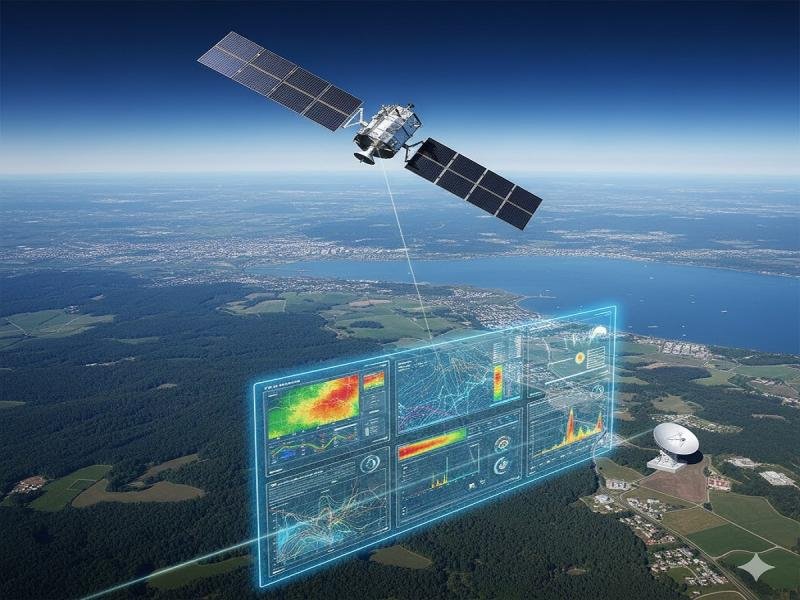
The global Remote Sensing Market is projected to grow at a CAGR of 15.2% during the forecast period (2024-2031). Remote sensing is a technology used to detect and monitor physical characteristics of the Earth’s surface and atmosphere by measuring reflected and emitted radiation from a distance, typically via satellites, drones, or aircraft.
Get a Free Sample PDF Of This Report (Get Higher Priority for Corporate Email ID):-https://www.datamintelligence.com/download-sample/remote-sensing-market?Juli
Specialized sensors and cameras capture high-resolution images, allowing researchers, governments, and enterprises to “sense” critical environmental and geographic information without direct contact. The data obtained through remote sensing plays a vital role in applications such as:
Geography: Mapping terrain, monitoring land use, and studying topographical changes.
Agriculture: Crop monitoring, soil analysis, yield prediction, and precision farming.
Oceanography: Tracking ocean currents, monitoring marine ecosystems, and mapping coastal areas.
Environmental Monitoring: Disaster detection and management, climate change analysis, and pollution tracking.
Market Snapshot (2024-2031):
CAGR (2024-2031): 15.2%
Fastest Growing Asia-Pacific
Largest Market: North America
Recent Industry Developments:
✅ February 2026 – USA: Planet Labs Inc. launched its next-generation Earth observation satellites equipped with higher-resolution imaging sensors and AI-driven analytics. These satellites provide faster monitoring of crop health, deforestation, and urban expansion for commercial and government clients.
✅ December 2025 – Germany: Airbus Defence and Space unveiled a new hyperspectral imaging satellite platform designed to enhance precision agriculture and environmental monitoring. The system enables improved soil, vegetation, and water quality assessment at regional and global scales.
✅ October 2025 – Japan: NEC Corporation introduced an AI-integrated aerial remote sensing platform capable of real-time disaster monitoring and damage assessment. The platform uses drones combined with satellite imagery to provide emergency response agencies with actionable data within hours of natural disasters.
✅ August 2025 – USA: Lockheed Martin expanded its remote sensing services with a constellation of nanosatellites focused on maritime surveillance and intelligence. The initiative aims to provide commercial shipping and defense sectors with continuous monitoring of vessel movement and coastal activity.
✅On January 31, 2023, Cairo, the growing global Geo-data specialist, announced to the exhibition its innovative and patented remote sensing technology QuickVision. The new technology includes a smart camera and QR code-like patterns that assist in subsea structure installation and drilling operations at the 7th edition of the Egypt Petroleum Show.
✅On December 5, 2022, Hexagon’s Safety, Infrastructure & Geospatial division and OSASI Technos Inc. came together to deliver next-generation disaster management and monitoring solutions. Governments can identify, predict and simulate approaching disasters due to wide-area remote monitoring systems with 3D visualization capabilities, improving their ability to prepare for and respond to emergencies. The news was made public at a signing ceremony held today as part of the Belgian Economic Mission to Japan.
Buy Now & Unlock 360° Market Intelligence:-https://www.datamintelligence.com/buy-now-page?report=remote-sensing-market?Juli
Key Players:
DigitalGlobe, Northrop Grumman Corporation, Esri, General Dynamics Mission Systems, Inc, Lumasense Technologies, Inc., Thales Group, Leica Geosystems Holdings AGHexagon AB, Lockheed Martin Corporation orbital Insight, Planet Labs Inc.
Market Segmentation:
By Technology: The market is categorized into active and passive remote sensing technologies. Active remote sensing, such as LiDAR and RADAR systems, emits signals to detect objects and terrain, providing high-precision data even in low-light or cloudy conditions. Passive remote sensing relies on natural energy sources like sunlight to capture reflected or emitted radiation from the Earth’s surface, commonly used in optical and multispectral imaging. Active systems accounted for a significant share of the market due to their capability to operate under all weather conditions, while passive systems remain popular for environmental monitoring and large-scale agricultural applications.
By Platform: Remote sensing platforms include satellites and aerial systems. Satellite-based platforms dominate the market, providing global coverage and consistent data for applications such as climate monitoring, defense, and urban planning. Aerial systems, including drones and manned aircraft, are increasingly adopted for localized mapping, precision agriculture, infrastructure inspections, and disaster assessment, thanks to their flexibility, higher resolution imaging, and lower operational costs.
By Application: The remote sensing market serves multiple sectors. In agriculture & living resources, it is used for crop health monitoring, land use analysis, and resource management. Disaster management relies on remote sensing for real-time tracking of floods, wildfires, earthquakes, and other natural calamities. Infrastructure applications include urban planning, transportation networks monitoring, and energy facility inspections. Military & intelligence utilize remote sensing for surveillance, reconnaissance, and geospatial intelligence. Additionally, weather and climate monitoring is supported by satellite data for forecasting, climate change analysis, and environmental studies.
Speak to Our Analyst and Get Customization in the report as per your requirements:-https://www.datamintelligence.com/customize/remote-sensing-market?JUli
Market Dynamics:
Rising Demand for Satellite-Based Imaging and Mapping
The growing need for accurate, real-time data is driving the adoption of satellite-based imaging and mapping across multiple industries. Remote sensing enables precise monitoring of crop health, yield prediction, and soil moisture levels, helping farmers optimize crop management decisions. This leads to higher productivity, better resource allocation, and improved profitability. Companies are investing heavily to expand their presence in the agriculture sector. For instance, in March 2022, Agribazaar launched a ‘remote sensing crop model’ aimed at implementing precision farming for approximately 1 million additional farmers over the following year.
High Equipment and Service Costs Limit Market Growth
Despite its advantages, the remote sensing market faces challenges due to the high cost of equipment and services. The price of a remote sensing satellite ranges widely-from US$10-50 million for smaller Earth observation satellites to several hundred million dollars for advanced platforms. Additionally, remote sensing software costs vary from a few hundred dollars for basic desktop solutions to several thousand dollars for cloud-based, AI-integrated platforms. These high capital and operational expenditures can hinder adoption, particularly for smaller enterprises or developing regions.
Regional Insights:
North America dominates the global remote sensing market, accounting for a significant share in 2024. The region’s leadership is driven by advanced space programs, substantial defense spending, and early adoption of satellite and aerial technologies. The U.S., in particular, leads due to agencies like NASA, NOAA, and the Department of Defense investing heavily in remote sensing satellites, LiDAR mapping, and AI-enabled geospatial analytics. Canada also contributes through environmental monitoring programs and precision agriculture initiatives. Strong government funding and the presence of major market players like Northrop Grumman, Lockheed Martin, and Orbital Insight support the region’s growth.
Europe holds the second-largest market share, propelled by countries such as Germany, France, and the U.K. Investments in satellite imaging programs, environmental monitoring, and infrastructure development are key drivers. European organizations benefit from the European Space Agency (ESA) initiatives, fostering collaboration in Earth observation and remote sensing applications. Companies like Airbus Defence & Space, Thales Group, and Hexagon AB play pivotal roles in advancing technology adoption.
Asia-Pacific is expected to witness the fastest growth during the forecast period, with a CAGR exceeding 16%. Nations including China, Japan, India, and South Korea are investing heavily in remote sensing technologies for agriculture, disaster management, urban planning, and defense. Rapid industrialization, expansion of smart city projects, and government-supported satellite programs are driving demand. Companies like Planet Labs, Leica Geosystems, and Hexagon are capitalizing on the rising need for high-resolution imaging and real-time monitoring solutions.
FAQ’s
1. What is remote sensing used for?
Remote sensing uses satellites and aircraft to collect data about Earth’s surface and atmosphere. This data is used in geography, agriculture, environmental monitoring, and more.
2. How does remote sensing benefit agriculture?
Remote sensing provides farmers with data on crop health, yield prediction, and soil moisture. This allows them to make informed decisions for increased productivity and profitability.
📌 Request for 2 Days FREE Trial Access: https://www.datamintelligence.com/reports-subscription
☛ Power your decisions with real-time competitor tracking, strategic forecasts, and global investment insights all in one place.
✅ Competitive Landscape
✅ Sustainability Impact Analysis
✅ KOL / Stakeholder Insights
✅ Unmet Needs & Positioning, Pricing & Market Access Snapshots
✅ Market Volatility & Emerging Risks Analysis
✅ Quarterly Industry Report Updated
✅ Live Market & Pricing Trends
✅ Import-Export Data Monitoring
☛ Have a look at our Subscription Dashboard: https://www.youtube.com/watch?v=x5oEiqEqTWg?Juli
Contact Us –
Company Name: DataM Intelligence
Contact Person: Sai Kiran
Email: Sai.k@datamintelligence.com
Phone: +1 877 441 4866
Website: https://www.datamintelligence.com
About Us –
DataM Intelligence is a Market Research and Consulting firm that provides end-to-end business solutions to organizations from Research to Consulting. We, at DataM Intelligence, leverage our top trademark trends, insights and developments to emancipate swift and astute solutions to clients like you. We encompass a multitude of syndicate reports and customized reports with a robust methodology.
Our research database features countless statistics and in-depth analyses across a wide range of 6300+ reports in 40+ domains creating business solutions for more than 200+ companies across 50+ countries; catering to the key business research needs that influence the growth trajectory of our vast clientele.
This release was published on openPR.