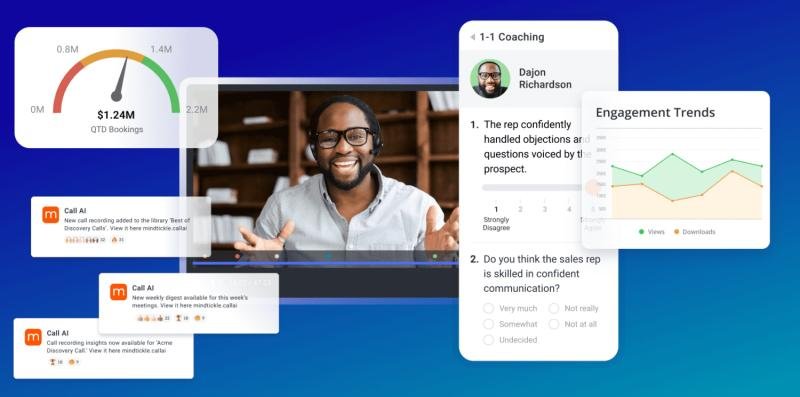
The Sales Coaching Software Market is estimated to be worth USD 55.93 Billion in 2024 and is projected to reach a value of USD 90.74 Billion by 2030, growing at a fast CAGR of 8.4% during the outlook period 2025-2030.
Request Sample @ https://virtuemarketresearch.com/report/sales-coaching-software-market/request-sample
The sales coaching software market has been steadily gaining traction, supported by the growing recognition that effective sales performance depends on continuous learning and personalized coaching. One of the key long-term market drivers has been the global shift toward digital transformation in sales processes. Organizations are increasingly depending on data-driven insights and AI-powered platforms to identify skill gaps, measure team performance, and provide tailored coaching programs. These tools not only enhance productivity but also standardize sales excellence across geographically dispersed teams. The demand has further expanded as enterprises seek consistent, measurable, and scalable ways to improve sales efficiency and achieve higher conversion rates.
The COVID-19 pandemic had a significant influence on how businesses approached sales coaching. Before the pandemic, in-person training sessions and workshops were the primary ways to enhance sales capabilities. However, the global lockdowns and remote work culture accelerated the adoption of virtual coaching solutions. Companies that once relied on physical sessions quickly turned to digital platforms to maintain employee engagement and training continuity. This shift created an unprecedented boost in demand for online sales coaching software, as teams required tools that could integrate seamlessly with video conferencing, CRM systems, and analytics dashboards. Even after restrictions lifted, businesses realized the long-term benefits of hybrid and remote coaching models, leading to permanent structural changes in how organizations manage sales enablement and skill development.
A short-term driver influencing the sales coaching software market today is the rapid integration of generative AI and machine learning technologies. These technologies allow software platforms to deliver real-time feedback, personalized content recommendations, and predictive performance analytics. Sales managers can now use automated insights to guide coaching sessions more efficiently, identify strengths and weaknesses faster, and tailor improvement plans to individual representatives. This technological leap has simplified the process of assessing performance data, leading to a short-term surge in demand from both small businesses and large enterprises seeking to modernize their sales operations quickly.
An emerging opportunity within the market lies in the rising demand from small and medium-sized enterprises (SMEs) looking to build structured sales training programs without incurring the high costs of traditional coaching. Many SMEs operate in competitive environments where customer acquisition and retention are critical for survival. Sales coaching software offers them affordable access to high-quality training, performance analytics, and peer learning systems. The scalability and subscription-based models of modern platforms make them accessible even to startups with limited budgets. As more SMEs embrace remote and hybrid work arrangements, the adoption of cloud-based coaching solutions is likely to expand rapidly, opening new growth avenues for market players.
A notable trend shaping the current landscape is the increasing focus on gamified learning and personalized engagement. Organizations are moving away from one-size-fits-all training sessions to more interactive and adaptive learning paths. Gamification features such as scoreboards, badges, and challenges are being incorporated to make coaching more engaging and results-oriented. This not only boosts employee participation but also enhances retention of critical sales techniques. Personalized learning modules powered by AI allow users to focus on specific skills relevant to their role or performance gaps. This trend reflects a broader shift toward making sales coaching more experiential, continuous, and integrated into daily workflows rather than periodic training sessions.
Together, these dynamics illustrate a market evolving to meet modern business demands. The long-term push toward digital transformation continues to shape the foundation of the industry, while the lessons learned during COVID-19 have solidified remote coaching as a standard practice. In the near term, innovation in artificial intelligence and automation is creating faster, smarter, and more personalized coaching environments. Meanwhile, the democratization of advanced tools is enabling smaller enterprises to compete with larger firms on a level playing field. As gamification and personalization continue to redefine engagement, the sales coaching software market stands poised for sustained expansion, blending technology and human insight to transform how sales professionals learn, perform, and succeed.
Segmentation Analysis:
By Type: Cloud-Based, Web-Based
The sales coaching software market by type is divided into cloud-based and web-based platforms. The largest in this segment is the cloud-based type, as organizations increasingly rely on flexible, scalable, and remotely accessible solutions that align with hybrid work models. Cloud-based systems offer seamless updates, integrated analytics, and cost-efficient deployment, allowing sales teams to access coaching tools from any location. Enterprises are drawn to their ability to handle large datasets securely while enabling real-time collaboration between managers and employees. The fastest-growing segment during the forecast period is the web-based segment, supported by companies seeking lighter, browser-accessible solutions without extensive installation needs. Web-based models provide compatibility across devices, making them appealing to smaller teams and cost-conscious organizations. As businesses expand across global markets, these platforms are gaining attention for their convenience and user-friendly interfaces. The shift toward platform independence and easy integration with CRM and communication tools contributes to this segment’s rapid growth. Together, both types play a crucial role in shaping how companies deliver continuous sales coaching while balancing accessibility, performance, and affordability in an increasingly digital business environment.
Enquire Before Buying @ https://virtuemarketresearch.com/report/sales-coaching-software-market/enquire
By Application: Large Enterprises, SMEs
The sales coaching software market by application is categorized into large enterprises and SMEs. The largest in this segment is the large enterprises category, owing to their extensive sales teams, global operations, and continuous focus on structured training programs. These organizations invest heavily in intelligent coaching systems that combine AI-driven insights, real-time feedback, and customized training content. The ability to track performance across multiple teams and regions encourages large enterprises to adopt advanced coaching platforms integrated with their existing systems. On the other hand, the fastest-growing segment during the forecast period is the SMEs segment, fueled by their increasing awareness of digital transformation and the need for affordable skill development solutions. SMEs benefit from subscription-based and scalable software models that eliminate the need for costly infrastructure. As competition intensifies, small businesses are leveraging coaching tools to empower their limited sales staff, improve customer interaction, and optimize conversion strategies. This shift reflects how cloud-enabled, cost-effective software options are helping SMEs enhance productivity, performance, and overall growth. As digital solutions become more accessible, SMEs are expected to continue driving momentum in this segment through fast adoption and experimentation with flexible platforms.
Regional Analysis:
The sales coaching software market by region includes North America, Europe, Asia-Pacific, South America, and the Middle East & Africa. The largest in this segment is North America, driven by the strong presence of advanced technology providers and a mature digital infrastructure that supports large-scale adoption. The region’s emphasis on data analytics, artificial intelligence, and integrated sales management systems has created fertile ground for innovation in coaching solutions. Major enterprises across the U.S. and Canada are continuously investing in AI-driven training systems to improve salesforce efficiency and retention. Meanwhile, the fastest-growing region during the forecast period is the Asia-Pacific region. Rapid business expansion, increasing digitization of sales operations, and a surge in tech-savvy SMEs are accelerating adoption across countries like India, China, Japan, and Australia. The region’s growing reliance on e-learning and remote collaboration tools has further enhanced the need for intelligent coaching systems. Local vendors are expanding offerings tailored for regional languages and business needs, adding to market diversity. This fast-paced digital evolution, supported by economic growth and rising enterprise competitiveness, positions Asia-Pacific as a dynamic hub for future developments in the sales coaching software market.
Latest Industry Developments:
• Vertical specialization through industry-specific coaching playbooks: Sales coaching vendors are creating tailored coaching modules for verticals such as technology, healthcare, finance, and manufacturing to address domain-specific selling motions and compliance constraints. These playbooks include scripted objection handling, regulatory checklists, and product demonstration templates aligned to sector KPIs. The trend enables faster onboarding and higher relevance of coaching by reflecting real-deal scenarios and credible use cases that salespeople encounter daily. Buyers benefit from reduced custom content development time, while vendors capture higher-value contracts by offering measurable, role-based curricula that speak directly to industry requirements and buyer personas. Adoption often follows pilot validation.
• Platform-driven certification and accredited credentialing programs: Market players are embedding formal certification paths within software to validate sales competencies and tie learning to career progression. These programs offer tiered assessments, proctored exams, and digital credentials that salespeople can display on professional profiles and internal directories. Employers use certifications to benchmark skill levels, align compensation, and design promotion pipelines tied to verifiable outcomes. Vendors partner with training organizations and industry bodies to increase credibility, which encourages adoption by enterprises seeking standardized measures of coaching effectiveness and a transparent skills taxonomy across global workforces. This also supports talent mobility across regions globally.
• Consolidation through strategic acquisitions to expand content and capabilities: Companies are pursuing targeted mergers and acquisitions to acquire content libraries, instructional design teams, and complementary technologies such as sales enablement or analytics platforms. The trend accelerates time-to-market for new features, broadens vertical coverage, and secures intellectual property that differentiates offerings. Acquisitions help vendors scale customer bases quickly, add localized curricula, and bundle services that appeal to enterprise procurement cycles. Buyers often prefer consolidated suites to reduce vendor sprawl, making acquisition-driven roadmaps a common route for market share expansion and rapid entry into adjacent segments. This strategy also fuels cross-selling and upselling motions.
Buy Now @ https://virtuemarketresearch.com/checkout/sales-coaching-software-market
About Us:
“Virtue Market Research stands at the forefront of strategic analysis, empowering businesses to navigate complex market landscapes with precision and confidence. Specializing in both syndicated and bespoke consulting services, we offer in-depth insights into the ever-evolving interplay between global demand and supply dynamics. Leveraging our expertise, businesses can identify emerging opportunities, discern critical trends, and make decisions that pave the way for future success.”
103 Kumar Plaza,SRPF Road,
Ramtekadi,Pune,
Maharashtra – 411013
Virtue Market Research stands at the forefront of strategic analysis, empowering businesses to navigate complex market landscapes with precision and confidence. Specializing in both syndicated and bespoke consulting services, we offer in-depth insights into the ever-evolving interplay between global demand and supply dynamics. Leveraging our expertise, businesses can identify emerging opportunities, discern critical trends, and make decisions that pave the way for future success.”
This release was published on openPR.