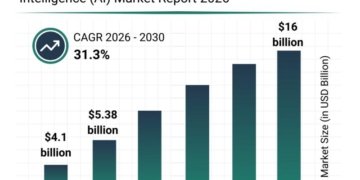
According to the report published by Virtue Market Research in Global Procurement Data Intelligence Market was valued at USD 4.08 Billion in 2024 and is projected to reach USD 15.80 Billion by 2030, growing at a robust CAGR of 25.3% during the forecast period (2025-2030).
Request Sample Copy of this Report @ https://virtuemarketresearch.com/report/procurement-data-intelligence-market/request-sample
As global enterprises increasingly rely on data-driven decision-making, procurement data intelligence has become an essential tool to optimize supply chain operations, control spending, and mitigate business risks. The integration of advanced analytics, artificial intelligence (AI), and cloud computing is transforming traditional procurement into a strategic function that enables predictive insights and performance optimization.
A major long-term driver for this market is the rapid adoption of AI and predictive analytics in enterprise procurement systems. Organizations are moving away from manual and reactive processes, seeking intelligent platforms that deliver real-time visibility into supplier performance, cost structures, and risk exposure. These systems empower procurement teams to make data-backed strategic sourcing decisions and achieve significant cost savings. As global supply chains become more complex, businesses are adopting data intelligence to build resilience and agility against economic uncertainties and disruptions.
The COVID-19 pandemic accelerated digital transformation across industries, highlighting the vulnerability of unoptimized supply chains. During this period, organizations realized the importance of accurate data and intelligent analytics in managing supplier dependencies, inventory shortages, and contract compliance. Post-pandemic, the focus has shifted toward resilience and risk reduction through intelligent automation. This has fueled large-scale investments in procurement intelligence tools that leverage machine learning for predictive maintenance, real-time monitoring, and scenario modeling, ensuring continuity and competitive advantage.
In the short term, the demand for cloud-based analytics platforms is emerging as a significant market driver. Enterprises are increasingly adopting cloud deployment models for their scalability, ease of integration, and lower infrastructure costs. Cloud platforms enable teams to manage analytics applications without the need for complex backend systems, enhancing efficiency and reducing implementation timelines. The resulting flexibility and cost optimization are encouraging even small and mid-sized enterprises to invest in cloud-driven procurement intelligence solutions.
A major opportunity lies in the rising adoption among SMEs (Small and Medium-Sized Enterprises). As competitive pressure intensifies, SMEs are leveraging procurement analytics to gain insights into supplier performance, spending efficiency, and contract management. Affordable subscription-based models and AI-powered dashboards are helping smaller firms streamline procurement operations that were once limited to large enterprises. This democratization of data intelligence is expected to significantly expand the market’s reach during the coming years.
A key trend shaping the market is the integration of augmented analytics and advanced visualization tools. Platforms that combine artificial intelligence with augmented reality interfaces are providing interactive data representations that simplify complex analytics for users. These innovations are making data intelligence more intuitive, accessible, and actionable across industries. As a result, enterprises can make informed decisions faster, uncover hidden risks, and optimize procurement strategies in real time.
Global Procurement Data Intelligence Market Segmentation
By Component: Solution and Services
The market is divided into solutions and services. The solutions segment holds the largest share, with enterprises deploying tools such as Board 11, SAP Analytics Cloud, Tableau, Yellowfin B1, and QlikView to derive actionable insights from real-time and historical business data. Integration of AI and augmented analytics has enhanced visualization and decision-making efficiency, enabling organizations to move from descriptive to predictive procurement analysis. The services segment is the fastest-growing, driven by growing demand for implementation, training, and managed analytics support that ensure seamless integration and scalability.
By Deployment: Cloud and On-Premise
Based on deployment, the on-premise segment accounted for the largest market share in earlier years due to strong enterprise control over infrastructure and data security. However, the cloud deployment model is projected to be the fastest-growing during the forecast period, supported by its scalability, cost-efficiency, and ability to integrate analytics tools easily. Cloud platforms allow enterprises to enhance productivity, reduce operational costs, and streamline deployment timelines, accelerating adoption across industries.
By Enterprise Size: Large Enterprises and SMEs
Large enterprises dominate the market owing to their substantial IT budgets and focus on enterprise-wide analytics integration. These organizations utilize data intelligence to gain a holistic view of procurement performance, compliance, and risk. Meanwhile, small and medium-sized enterprises (SMEs) are the fastest-growing segment, increasingly adopting analytics tools to enhance efficiency, optimize resources, and improve client satisfaction through targeted marketing and procurement automation.
By Vertical: BFSI, Retail & eCommerce, Telecom & IT, Manufacturing, Healthcare & Life Science, Energy & Utilities, Government & Defence
Among these, the Telecom & IT sector holds a significant share, as rising data volumes and competitive market dynamics drive demand for procurement analytics solutions. Telecom operators utilize these tools to optimize network costs, manage vendors, and improve customer experience. The Healthcare & Life Science sector is also witnessing strong growth, leveraging data intelligence for supply chain optimization and compliance tracking. Manufacturing and BFSI sectors continue to adopt these technologies to reduce operational inefficiencies and enhance risk management.
By Application: Supply Chain Analytics, Risk Analytics, Spend Analytics, Demand Forecasting, Contract Management, Vendor Management, Category Management
The Supply Chain Analytics segment dominates, helping organizations enhance operational efficiency through real-time insights on supplier performance, inventory levels, and demand forecasting. It enables businesses to make informed decisions regarding procurement optimization, supplier collaboration, and transportation planning. Meanwhile, Spend Analytics and Risk Analytics are rapidly emerging as critical tools for financial optimization and fraud detection, contributing to cost transparency and better governance.
Read More @ https://virtuemarketresearch.com/report/procurement-data-intelligence-market
Regional Analysis:
North America leads the market in terms of revenue, driven by rapid technological adoption, advanced infrastructure, and the presence of key players such as Microsoft, Oracle, and Tableau. The Asia-Pacific (APAC) region is expected to be the fastest-growing, powered by startup ecosystems and rapid digitalization in countries like China, Japan, and India. Governments and businesses in APAC are embracing analytics tools to enhance procurement transparency and competitiveness. Meanwhile, Europe continues to experience steady growth due to government support for data infrastructure and big-data investments, particularly in the UK, France, and Germany.
Latest Industry Developments
• AI-powered visualization and augmented analytics: Companies are embedding AI-driven augmented analytics into procurement platforms to improve predictive accuracy and simplify visualization for business users. These technologies enhance data comprehension and accelerate strategic sourcing decisions.
• Cloud transformation and hybrid architecture: Enterprises are transitioning from on-premise systems to hybrid and cloud environments for greater agility, cost savings, and real-time collaboration. Vendors are focusing on scalable cloud-native procurement intelligence platforms to meet enterprise needs.
• Rising focus on SME digital enablement: Vendors are tailoring procurement analytics solutions for small and medium enterprises, offering modular, subscription-based pricing and simplified dashboards that enhance resource utilization and competitiveness.
customize the Full Report Based on Your Requirements @ https://virtuemarketresearch.com/report/procurement-data-intelligence-market/customization
contact Us:
Virtue Market Research
Kumar Plaza, #103, SRPF Rd, Ramtekadi, Pune, Maharashtra 411013, India
About Us
“Virtue Market Research stands at the forefront of strategic analysis, empowering businesses to navigate complex market landscapes with precision and confidence. Specializing in both syndicated and bespoke consulting services, we offer in-depth insights into the ever-evolving interplay between global demand and supply dynamics. Leveraging our expertise, businesses can identify emerging opportunities, discern critical trends, and make decisions that pave the way for future success.”
This release was published on openPR.