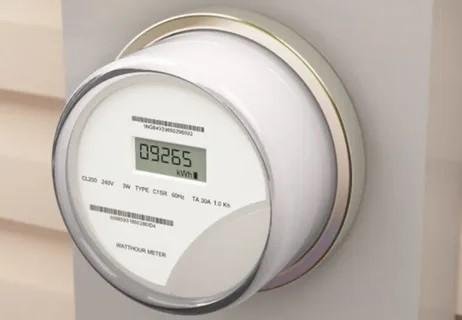
RF Smart Electric Meter Market
The RF Smart Electric Meter Market is entering a transformative decade. Valued at USD 10.1 billion in 2025, the market is forecast to grow to USD 26.1 billion by 2035, expanding at a robust CAGR of 9.9%. This growth highlights the pivotal role RF-enabled meters are playing in modernizing grids, enabling real-time data exchange, and helping consumers make smarter energy choices.
A Connected Future for Energy Management
Growing investments in smart grid modernization, demand response programs, and regulatory mandates have fueled widespread adoption of RF smart electric meters. These devices, unlike traditional analog systems, offer two-way communication between utilities and customers, providing immediate visibility into consumption trends. For households and businesses alike, this means real-time billing, improved outage management, and greater control over energy costs.
Get Ahead with Our Report: Request Your Sample Now!
https://www.futuremarketinsights.com/reports/sample/rep-gb-22571
At the same time, utilities benefit from streamlined operations, faster fault detection, and enhanced demand forecasting-an essential feature as energy networks evolve to accommodate renewable integration and electric mobility.
Quick Market Stats
Market Value (2025): USD 10.1 billion
Market Value (2035): USD 26.1 billion
Forecast CAGR (2025-2035): 9.9%
Leading Application Segment (2025): Residential (38%)
Top Growth Regions: North America, Asia-Pacific, Europe
Key Players: Itron, Inc., Landis+Gyr, Aclara, Siemens AG, Schneider Electric, GE, Honeywell, Sensus
Why the Market is Growing
The adoption of RF smart meters is being powered by:
Grid modernization mandates: Governments across North America, Europe, and Asia-Pacific are rolling out programs to replace legacy systems with smart metering infrastructure.
Consumer demand: Households increasingly seek tools to monitor and optimize their energy usage, reducing bills and carbon footprints.
Technology innovation: Over-the-air updates, AI-powered analytics, and integration with home energy management systems have significantly lowered lifecycle costs.
Collaborations: Manufacturers, telecom providers, and analytics companies are working together to build holistic energy ecosystems.
As utilities and consumers aim for sustainability, intelligent metering has become the backbone of decarbonization and demand optimization initiatives.
Segmental Insights
1. Residential Application Dominance
The residential sector is projected to hold 38% of market share in 2025, making it the leading application segment. Homeowners benefit from interactive portals and mobile apps that track usage patterns, while utilities enjoy reduced operational expenses through remote meter reading.
Incentive schemes supporting household smart meter rollouts have further strengthened adoption, especially as energy prices fluctuate and consumers prioritize efficient consumption.
2. Artificial Neural Network Integration
Artificial neural network components are expected to contribute 37% of market revenue in 2025. These AI-driven features detect anomalies, forecast loads, and support fraud detection-all in real time at the grid’s edge. Utilities are increasingly leveraging AI-based meters to improve predictive maintenance and distributed energy resource management, making this segment a key differentiator in the coming decade.
3. Industrial Manufacturing Leadership
The industrial manufacturing segment is set to account for 31% of market share in 2025. For manufacturers, smart meters deliver critical real-time monitoring to cut utility costs, support compliance, and align with sustainability initiatives. Granular data insights help optimize processes, reduce peak demand charges, and enable predictive maintenance.
4. Single-Phase Meters Lead the Way
By 2025, single-phase smart meters are forecast to capture 42% of the market. Their affordability and scalability make them ideal for residential and small business applications, where power demands are moderate but connectivity requirements are rising.
Regional Outlook
The RF smart electric meter market is gaining traction worldwide, with different regions contributing unique drivers:
China (CAGR 13.4%) and India (CAGR 12.4%) are leading adoption with nationwide smart grid rollouts.
Germany (11.4%) and France (10.4%) are modernizing grids to support EU decarbonization goals.
The USA (8.4%) continues to expand its smart grid footprint, particularly with demand response programs.
Brazil (7.4%) is seeing gradual uptake as utilities look to curb non-technical losses and modernize distribution systems.
Competitive Landscape
The market is driven by both established leaders and emerging innovators.
Itron, Landis+Gyr, Aclara, Siemens AG, and Schneider Electric continue to dominate with large-scale deployments and global reach.
New players, particularly those focusing on AI-powered metering solutions, IoT-enabled communication protocols, and cybersecurity-enhanced systems, are entering the market to address evolving consumer and regulatory needs.
These players are not only manufacturing devices but also offering end-to-end platforms that combine hardware, cloud integration, and advanced analytics. This transformation is turning RF smart meters into central intelligence assets for modern utilities.
Exhaustive Market Report: A Complete Study
https://www.futuremarketinsights.com/reports/rf-smart-electric-meter-market
Key Market Trends
Grid Modernization: RF mesh networking is enabling two-way communication for faster outage detection and improved diagnostics.
Cloud Integration: Utilities are leveraging RF smart meters for dynamic pricing, predictive alerts, and automated demand response.
Cybersecurity: With connectivity comes risk, and manufacturers are embedding advanced protections to ensure data integrity and privacy.
Sustainability Alignment: Smart meters are becoming critical tools in reducing emissions and meeting energy efficiency mandates.
Outlook: A Decade of Opportunities
The RF Smart Electric Meter Market is at the intersection of technology innovation, regulatory pressure, and consumer empowerment. For established manufacturers, the challenge lies in scaling up deployments and embedding advanced analytics into existing systems. For new entrants, the opportunities are immense-whether through AI integration, software platforms, or tailored solutions for emerging markets.
As governments, utilities, and consumers increasingly prioritize energy efficiency and sustainability, RF smart meters will play a defining role in shaping the grids of the future. By 2035, these devices will not just record consumption but will act as intelligent nodes, helping utilities optimize supply, empower consumers, and accelerate the transition toward a greener energy economy.
Future Market Insights Inc.
Christiana Corporate, 200 Continental Drive,
Suite 401, Newark, Delaware – 19713, USA
T: +1-845-579-5705
For Sales Enquiries: sales@futuremarketinsights.com
Website: https://www.futuremarketinsights.com
Future Market Insights, Inc. (ESOMAR certified, recipient of the Stevie Award, and a member of the Greater New York Chamber of Commerce) offers profound insights into the driving factors that are boosting demand in the market. FMI stands as the leading global provider of market intelligence, advisory services, consulting, and events for the Packaging, Food and Beverage, Consumer Technology, Healthcare, Industrial, and Chemicals markets. With a vast team of 400 analysts worldwide, FMI provides global, regional, and local expertise on diverse domains and industry trends across more than 110 countries.
This release was published on openPR.