Neuromorphic Computing Chips Market
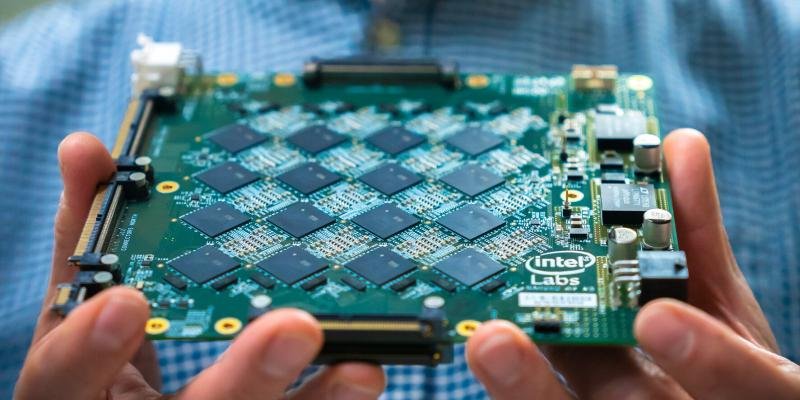
[291 Pages Report] The Neuromorphic Computing Chips Market represents the most radical architectural shift in computing since the invention of the transistor. While traditional computers (Von Neumann architecture) separate memory and processing-creating a “bottleneck” that wastes massive amounts of energy moving data back and forth-neuromorphic chips mimic the human brain. They integrate storage and computation into the same unit (neurons and synapses) and process information via “Spikes” (event-driven signals) rather than continuous data streams. As of late 2025, this market is exiting the academic lab and entering commercial deployment, driven by the desperate need for “Green AI” hardware that can run complex workloads at the Edge (drones, wearables, satellites) using milliwatts of power rather than the kilowatts required by standard GPUs.
Market Dynamics & Future:
Innovation: Growth is fueled by the maturation of Spiking Neural Networks (SNNs), a new class of AI algorithms that only consume power when a “spike” (event) occurs, offering energy efficiency orders of magnitude superior to deep learning.
Operational Shift: There is a decisive move toward “Event-Based Sensing,” particularly in machine vision. Instead of processing every frame of a video (mostly static data), neuromorphic sensors only process pixels that change, enabling ultra-fast reaction times for autonomous vehicles.
Distribution: IP Licensing Models are becoming the primary channel, where neuromorphic architecture (like BrainChip’s Akida) is licensed to System-on-Chip (SoC) manufacturers to embed “brain-like” capabilities into standard consumer electronics.
Future Outlook: The market will be defined by Memristor Technology, new non-volatile memory components that act like biological synapses, allowing chips to “learn” and adapt in real-time hardware without needing connection to a central cloud.
Click Here, Download a Free Sample Copy of this Market: https://marketresearchcorridor.com/request-sample/15841/
Drivers, Restraints, Challenges, and Opportunities Analysis:
Market Drivers:
The AI Energy Crisis: With global data center energy usage skyrocketing due to Generative AI, there is an urgent mandate to adopt hardware that is 100x more energy-efficient. Neuromorphic chips offer this efficiency for inference tasks.
Edge AI Latency: Autonomous robots and drones require sub-millisecond reaction times that cloud processing cannot provide. Neuromorphic chips process data instantly at the sensor level (in-memory computing).
Sensor Fusion: The ability of neuromorphic chips to process noisy, unstructured data from multiple senses (vision, audio, tactile) simultaneously-just like a brain-makes them ideal for advanced robotics.
Market Restraints:
Lack of Standard Software: Unlike standard AI (which uses PyTorch/TensorFlow), programming SNNs is notoriously difficult. The lack of a unified software stack (like NVIDIA’s CUDA) for neuromorphic chips deters developers.
Hardware Cost & Yield: Manufacturing non-Von Neumann architectures, especially those using novel materials like Phase Change Memory (PCM), currently suffers from lower yields and higher costs than standard silicon.
Key Challenges:
Accuracy Gap: While energy-efficient, SNNs historically struggled to match the raw accuracy of standard Deep Learning networks in tasks like image classification. Closing this “Accuracy vs. Efficiency” gap is the primary technical hurdle.
Benchmarking: It is difficult to compare neuromorphic chips against standard CPUs/GPUs because they function differently (asynchronous vs. synchronous), making marketing claims hard for buyers to verify.
Future Opportunities:
Brain-Chip Interfaces: As Brain-Computer Interfaces (BCIs) advance, neuromorphic chips are the ideal processor to decode the “spiking” signals of biological neurons, creating a seamless bridge between biological and silicon intelligence.
Space Exploration: The extreme power constraints and radiation hardness requirements of space missions make neuromorphic processors the perfect candidate for Mars rovers and deep-space satellites.
Get to know more about this Report: https://marketresearchcorridor.com/schedule-the-call/
Market Segmentation:
By Offering:
Hardware (Processors, Co-processors, Memory)
Software (SNN Algorithms, Development Kits)
By Architecture:
Spiking Neural Networks (SNN)
Signal Processing
Image Recognition
By Deployment:
Edge Computing (Mobile, IoT, Robotics)
Cloud Computing (Data Center Acceleration)
By Application:
Image & Video Processing (Event Cameras)
Audio Processing (Smart Speakers)
Predictive Maintenance (Vibration Analysis)
Autonomous Navigation (Drones/Cars)
By End User:
Aerospace & Defense
Automotive
Industrial Automation
Consumer Electronics
Healthcare (Prosthetics)
Region:
North America
U.S.
Canada
Mexico
Europe
U.K.
Germany
France
Italy
Spain
Rest of Europe
Asia Pacific
China
India
Japan
South Korea
Australia
Rest of Asia Pacific
South America
Brazil
Argentina
Rest of South America
Middle East and Africa
Saudi Arabia
UAE
Egypt
South Africa
Rest of Middle East and Africa
Competitive Landscape:
Top Tech Giants (R&D Leaders):
Intel Corporation (Loihi 2 / Kapoho Point)
IBM Corporation (NorthPole / TrueNorth)
Samsung Electronics (MRAM-based in-memory computing)
Sony Corporation (Event-based Vision Sensors)
Pure-Play Neuromorphic Innovators:
BrainChip Holdings Ltd (Akida – Commercial Edge AI)
Prophesee (Metavision – Event Cameras)
SynSense (Sub-milliwatt processors)
Innatera
Geronimo AI
General Vision
Regional Trends:
The global market is segmented into North America, Europe, Asia-Pacific, Latin America, and the Middle East & Africa.
North America (Innovation Engine): Dominates the market, driven by heavy R&D spending from Intel and IBM, and government grants (DARPA/IARPA) for developing low-power chips for defense drones. The U.S. is the primary hub for software developers trying to c-r-a-c-k the code of SNN programming.
Europe (Visionary Research): Growth is shaped by the legacy of the “Human Brain Project.” Europe is a leader in Event-Based Vision, with companies like Prophesee (France) redefining how machines “see” by mimicking the human retina.
Asia-Pacific (Manufacturing & Application): The fastest-growing region for deployment. Japan (Sony) and China are integrating neuromorphic sensors into industrial robots and smart city surveillance cameras to reduce bandwidth costs and improve reaction speeds.
Market Dynamics and Strategic Insights
The “Always-On” Paradigm: The strategic value of neuromorphic chips is their ability to stay “Always-On” (listening for a wake word or watching for movement) on a coin-cell battery for years. This creates new markets for smart home sensors that never need charging.
Hybrid AI: The near-term strategy involves “Hybrid” systems-using a neuromorphic chip to handle sensory data at the edge (filtering out noise), and waking up a powerful GPU only when deep analysis is needed, optimizing the total system energy.
Tactile Sensing: Beyond vision, the market is expanding into “Electronic Skin.” Neuromorphic chips are being used in prosthetics to give robots the sense of touch, processing tactile spikes just like human nerves do.
Commoditization of Intelligence: As neuromorphic IP becomes cheaper and integrated into standard microcontrollers, low-level AI (like voice recognition) will become a commodity feature included in everything from toasters to lightbulbs.
Get A Report Copy of this Market: https://marketresearchcorridor.com/request-sample/15841/
Contact Us:
Avinash Jain
Market Research Corridor
Phone : +1 518 250 6491
Email: Sales@marketresearchcorridor.com
Address: Market Research Corridor, B 502, Nisarg Pooja, Wakad, Pune, 411057, India
About Us:
Market Research Corridor is a global market research and management consulting firm serving businesses, non-profits, universities and government agencies. Our goal is to work with organizations to achieve continuous strategic improvement and achieve growth goals. Our industry research reports are designed to provide quantifiable information combined with key industry insights. We aim to provide our clients with the data they need to ensure sustainable organizational development.
This release was published on openPR.