Market Overview
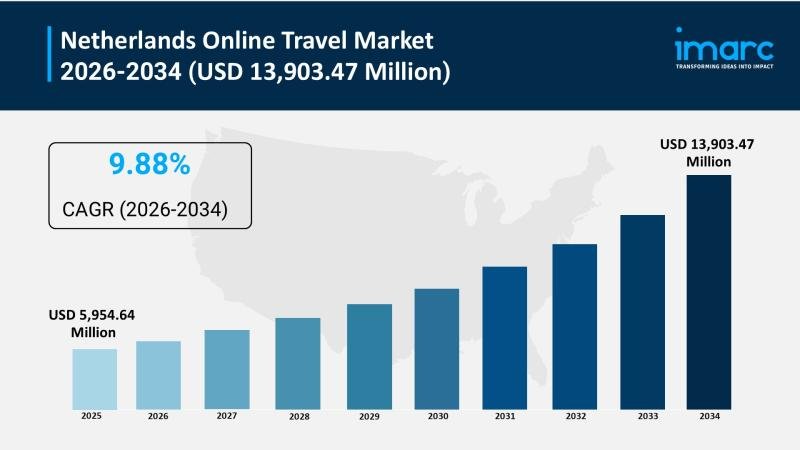
The Netherlands online travel market reached a size of USD 5,954.64 Million in 2025. It is projected to grow and reach USD 13,903.47 Million by 2034, based on a forecast period from 2026 to 2034 with a growth rate of 9.88%. Growth is driven by rising digital adoption, user-friendly mobile booking platforms, and a shift towards customized travel planning. Increasing popularity among younger consumers and enhanced digital infrastructure further support market expansion. For more details, visit the Netherlands online travel market
How AI is Reshaping the Future of Netherlands Online Travel Market
AI-powered travel assistants have been introduced by multiple Dutch travel apps, delivering real-time updates and personalized itinerary suggestions based on user preferences and weather conditions, enhancing the convenience and engagement of travelers.
The integration of AI into hybrid travel apps consolidates multiple services such as accommodation, transit, dining, and event ticketing into a single platform, reflecting traveler preferences for streamlined experiences.
Enhanced digital payments infrastructure supports AI-driven personalized services, as contactless mobile wallets and tap-to-pay cards become standard across transport and tourism sectors, fostering seamless cash-free transactions.
AI algorithms analyze rich data from digital payment systems to improve personalization and customer satisfaction on travel booking platforms, aiding competitiveness in the market.
Government initiatives, like the integration of contactless systems in all major public transit networks, provide a robust digital framework that supports AI innovations in travel planning and payment.
AI applications help travel companies retain users by offering end-to-end travel support from planning to post-arrival assistance, increasing platform engagement and loyalty.
Grab a sample PDF of this report: https://www.imarcgroup.com/netherlands-online-travel-market/requestsample
Market Growth Factors
Digital payments are significantly strengthening the digital travel experience in the Netherlands. Contactless payment options, including mobile wallets and tap-to-pay cards, have become ubiquitous across transportation services, accommodations, and tourist attractions. The government’s integration of contactless systems in public transit networks such as metro, tram, and intercity trains has facilitated faster commuting and reduced dependency on physical tickets, enhancing traveler convenience. Hotels, museums, and attractions widely adopt QR code-based and mobile checkout systems. This advancement encourages seamless cash-free transactions, supports user trust in digital platforms, and generates richer data insights that enable personalized services and improved customer satisfaction.
Increasing legal and consumer pressure is driving enhanced transparency within the online travel market. A notable legal action initiated by Dutch consumer groups against an online travel platform for inflated hotel prices due to contractual rate restrictions has raised industry-wide awareness about pricing transparency. Smaller platforms are now eliminating restrictive clauses and adopting clearer pricing models, which benefits both hotels and consumers by providing more flexible pricing and reducing hidden fees. This legal momentum and evolving consumer expectations for fairness reshape competitive dynamics, boosting user confidence and fostering a more open, competitive booking environment.
Online travel platforms in the Netherlands are evolving into multifunctional ecosystems beyond simple booking services. Many apps now integrate accommodation, transit options, city guides, dining recommendations, and event ticketing into a single user interface. Innovations such as AI-powered travel assistants introduced in Dutch travel apps offer real-time recommendations and itinerary management tailored to user preferences. Supported by advanced mobile infrastructure and the increasing influence of digital-first generations like Gen Z and millennials, these all-in-one platforms enhance traveler convenience and engagement. This integrated service approach offers companies a competitive advantage, helping to retain customers and strengthen market presence.
Market Segmentation
Service Type
Transportation
Travel Accommodation
Vacation Packages
Platform
Mobile
Desktop
Mode of Booking
Online Travel Agencies (OTAs)
Direct Travel Suppliers
Age Group
22-31 Years
32-43 Years
44-56 Years
Above 56 Years
Province
Noord-Holland
Zuid Holland
Noord-Brabant
Gelderland
Utrecht
Others
Key Players
Prosus
Despegar
Koninklijke Jaarbeurs
Recent Developement & News
January 2025: Dutch multinational Prosus announced the acquisition of Despegar, a leading online travel agency in Latin America, enhancing its global presence and emphasizing digital innovation for expanding market reach.
January 2025: Royal Dutch event organiser Koninklijke Jaarbeurs launched the Travel & Tech trade event during Dutch Travel Week, spotlighting digital transformation in travel technology, including AI, VR/AR, and cybersecurity.
March 2025: The Netherlands government completed integration of contactless payment systems across all major public transit networks, facilitating faster commutes and pushing the adoption of cashless travel experiences.
Note: If you require any specific information that is not covered currently within the scope of the report, we will provide the same as a part of the customization.
Ask an analyst for your customized sample: https://www.imarcgroup.com/request?type=report&id=38557&flag=C
Contact Us
IMARC Group,
134 N 4th St. Brooklyn, NY 11249, USA,
Email: sales@imarcgroup.com,
Tel No: (D) +91 120 433 0800,
United States: +1-201-971-6302
About Us
IMARC Group is a global management consulting firm that helps the world’s most ambitious changemakers to create a lasting impact. The company provide a comprehensive suite of market entry and expansion services. IMARC offerings include thorough market assessment, feasibility studies, company incorporation assistance, factory setup support, regulatory approvals and licensing navigation, branding, marketing and sales strategies, competitive landscape and benchmarking analyses, pricing and cost research, and procurement research.
This release was published on openPR.