Coaxial Cable Market
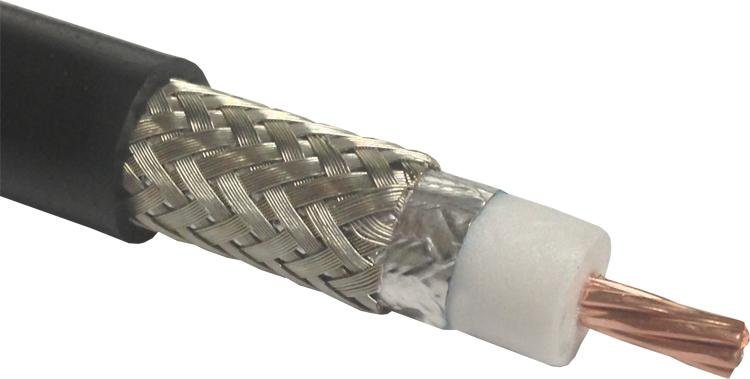
The coaxial cable market plays a critical role in the global telecommunications and broadcast infrastructure. Coaxial cables, known for their durability and high-frequency transmission capabilities, are used to transmit video, data, and voice signals across a variety of applications. These cables feature a central conductor, insulating layer, metallic shield, and protective outer jacket, which together provide robust signal transmission with minimal interference. Their ability to maintain signal integrity over long distances has kept them relevant even as newer technologies continue to emerge.
Get Sample Report: – https://www.futuremarketinsights.com/reports/sample/rep-gb-4610
The market was valued at approximately USD 35,558.39 Million in 2025 and is projected to reach USD 46,413.74 Million by 2035, growing at a compound annual growth rate (CAGR) of 2.7% during the forecast period.
The increasing reliance on digital communication systems has strengthened the demand for high-quality transmission media. From television and internet connections in homes to sophisticated defense communication networks and industrial automation systems, the coaxial cable market remains a foundational element in modern communication ecosystems. Despite the growth of fiber optics, coaxial cables continue to thrive, particularly in applications that demand affordability, flexibility, and reliability.
Market Trends
One of the most prominent trends in the coaxial cable market is the integration of hybrid networks that combine coaxial and fiber-optic technologies. This approach allows service providers to deliver high-speed broadband while leveraging existing coaxial infrastructure. This is especially significant in last-mile connectivity, where replacing coaxial networks with fiber may not be cost-effective or practical.
Another notable trend is the rise in demand for high-definition (HD) and ultra-high-definition (UHD) content. With more consumers and businesses seeking high-resolution video streaming and data-intensive applications, the need for cables capable of handling greater bandwidth and signal clarity is growing. Coaxial cables, with their ability to support high-frequency signals, continue to meet this demand effectively.
The expansion of smart homes and the increasing use of connected devices have also influenced the coaxial cable market. Modern coaxial cables are being developed to support not only television and broadband internet but also home security systems, automation controls, and integrated audio-video systems, making them integral to smart living environments.
Driving Forces Behind Market Growth
The sustained growth of the coaxial cable market is driven by several key factors. One of the most significant is the global rise in data consumption, fueled by internet penetration, video streaming, and the proliferation of digital devices. To meet this demand, service providers are investing in upgrading their existing infrastructure, which includes extensive coaxial cabling networks.
The increasing demand for high-speed internet in both urban and rural areas also contributes to market growth. Governments and private enterprises are deploying coaxial cable-based broadband solutions, especially in regions where fiber-optic deployment is logistically or economically challenging. These efforts are creating new opportunities for cable manufacturers and service providers alike.
Furthermore, the growing defense and aerospace sectors are boosting the need for rugged and high-performance cables. Coaxial cables are widely used in military communication systems, radar installations, and aerospace applications due to their resilience and performance in extreme conditions. Their reliability under pressure makes them an essential component in critical communication environments.
Challenges and Opportunities
While the coaxial cable market continues to grow, it is not without challenges. The most significant hurdle is competition from fiber-optic technology, which offers greater bandwidth and faster data transmission over longer distances. As more industries and municipalities adopt fiber-optic solutions, coaxial cables must evolve to maintain their market relevance.
Another challenge lies in the physical limitations of coaxial cables, such as signal attenuation over long distances and susceptibility to electromagnetic interference if not properly shielded. These issues can impact performance and lead to increased maintenance costs if not addressed through quality manufacturing and proper installation.
Despite these challenges, the coaxial cable market has numerous opportunities to explore. The continued expansion of 5G networks, for instance, requires extensive backhaul infrastructure. Coaxial cables, particularly in hybrid fiber-coaxial (HFC) systems, can play a key role in supporting these high-speed networks. Additionally, the growth of cable television networks in developing regions creates significant market potential.
There are also innovation opportunities in cable design and materials. Manufacturers are investing in lightweight, low-loss, and environmentally resistant cables that offer superior performance while minimizing installation and maintenance costs. These advancements are helping coaxial cables compete effectively with emerging alternatives.
Recent Industry Developments
Recent developments in the coaxial cable market highlight the industry’s ongoing evolution and resilience. Manufacturers are increasingly introducing cables that support higher frequencies and deliver improved shielding performance. These innovations are being driven by the need to support modern communication protocols and the increasing volume of data traffic.
Additionally, companies are expanding their product portfolios to include environmentally friendly and flame-retardant coaxial cables. This aligns with global sustainability goals and meets the stringent safety standards of modern buildings and industrial environments.
The industry has also seen a rise in strategic partnerships between cable manufacturers and telecommunications providers. These collaborations aim to co-develop infrastructure projects, streamline supply chains, and implement cost-effective solutions that benefit both end users and providers. With governments around the world investing in digital infrastructure projects, such developments are poised to have a lasting impact on the coaxial cable market.
Regional Analysis
The coaxial cable market is geographically diverse, with strong demand across multiple regions. North America leads in terms of market share, driven by a mature telecom infrastructure, high broadband penetration, and strong consumer demand for digital entertainment and communication services. The region also benefits from significant investments in defense and aerospace, further boosting coaxial cable applications.
In Europe, the market continues to grow steadily, supported by digital transformation initiatives, increased internet usage, and a focus on smart city development. Countries like Germany, the UK, and France are investing in communication infrastructure upgrades, creating sustained demand for high-performance coaxial cables.
Asia-Pacific is emerging as the fastest-growing region in the coaxial cable market. Rapid urbanization, industrial growth, and the expanding middle-class population are driving increased demand for television services, broadband internet, and mobile communications. China, India, Japan, and South Korea are at the forefront, with large-scale infrastructure projects and strong government support for connectivity initiatives.
Latin America and the Middle East & Africa are also witnessing gradual growth. Although these regions face economic and infrastructural challenges, the increasing adoption of digital services and improved access to communication networks are paving the way for future market expansion.
Explore In-Depth Analysis-Click Here to Access the Report:- https://www.futuremarketinsights.com/reports/coaxial-cable-market
Competitive Outlook
The competitive landscape of the coaxial cable market is characterized by the presence of both global leaders and regional players. These companies compete on factors such as product quality, pricing, innovation, and customer support. As the market grows more competitive, firms are focusing on differentiation through advanced technology and custom solutions tailored to specific industry needs.
Product development remains a key focus area. Companies are investing in R&D to create coaxial cables that deliver higher performance, lower losses, and enhanced flexibility. This allows them to cater to evolving customer demands in sectors like telecommunications, aerospace, defense, and entertainment.
Strategic mergers, acquisitions, and joint ventures are also shaping the market. These activities enable companies to expand their market presence, diversify their product portfolios, and strengthen their technological capabilities. Furthermore, regional expansion is a common growth strategy, with firms entering emerging markets to capture new customer segments.
Top Companies
• Nexans SA
• Southwire Company LLC.
• L-Com Global Connectivity
• Alpha Wire
• Coleman Cables & Wire Inc.
• Sumitomo Electric Industries Ltd.
• Trigiant Group Ltd.
• Zhuhai Hansen Technology Co. Ltd.
• MegaPhase
• Silex System Telecom
The coaxial cable market can be segmented based on application, cable type, and end-user industry. By application, the market includes video distribution, internet data transmission, telecommunication, military communication, and medical imaging. Among these, video distribution and broadband internet represent the largest segments due to widespread use in residential and commercial settings.
In terms of cable type, the market includes hardline coaxial cables, triaxial cables, twin-axial cables, and RG-6/RG-59 variants. Each type serves different performance needs and installation environments. Hardline cables, for example, are used in long-distance transmission and broadcast applications, while RG-6 cables are common in residential television setups.
By end-user, the market spans sectors such as telecommunications, military and aerospace, healthcare, automotive, and energy. The telecommunications industry remains the largest consumer of coaxial cables, driven by ongoing infrastructure upgrades and the expansion of broadband networks. The military and aerospace sectors demand specialized cables with enhanced durability and performance.
In conclusion, the coaxial cable market continues to demonstrate resilience and adaptability in an evolving communication landscape. With increasing data consumption, technological advancements, and the integration of hybrid networks, coaxial cables are poised to remain an essential component in global connectivity for years to come.
Semiconductors Industry Analysis Reports: –
Fiber Optic Gyroscope Market Size and Share Forecast Outlook 2025 to 2035
https://www.futuremarketinsights.com/reports/fiber-optics-gyroscope-market
Embedded Hypervisor Market Size, Share, and Demand Forecast 2025 to 2035
https://www.futuremarketinsights.com/reports/embedded-hypervisor-market
I2C Bus Market Size, Share, and Forecast Outlook from 2025 to 2035
https://www.futuremarketinsights.com/reports/i2c-bus-market
Wide Bandgap Semiconductors Market Outlook 2025 to 2035
https://www.futuremarketinsights.com/reports/wide-bandgap-semiconductors-market
Coaxial Cable Market Outlook 2025 to 2035
https://www.futuremarketinsights.com/reports/coaxial-cable-market
Future Market Insights Inc.
Christiana Corporate, 200 Continental Drive,
Suite 401, Newark, Delaware – 19713, USA
T: +1-347-918-3531
For Sales Enquiries: sales@futuremarketinsights.com
Website: https://www.futuremarketinsights.com
Future Market Insights, Inc. (ESOMAR certified, recipient of the Stevie Award, and a member of the Greater New York Chamber of Commerce) offers profound insights into the driving factors that are boosting demand in the market. FMI stands as the leading global provider of market intelligence, advisory services, consulting, and events for the Packaging, Food and Beverage, Consumer Technology, Healthcare, Industrial, and Chemicals markets. With a vast team of over 400 analystsworldwide, FMI provides global, regional, and local expertise on diverse domains and industry trends across more than 110 countries.
This release was published on openPR.