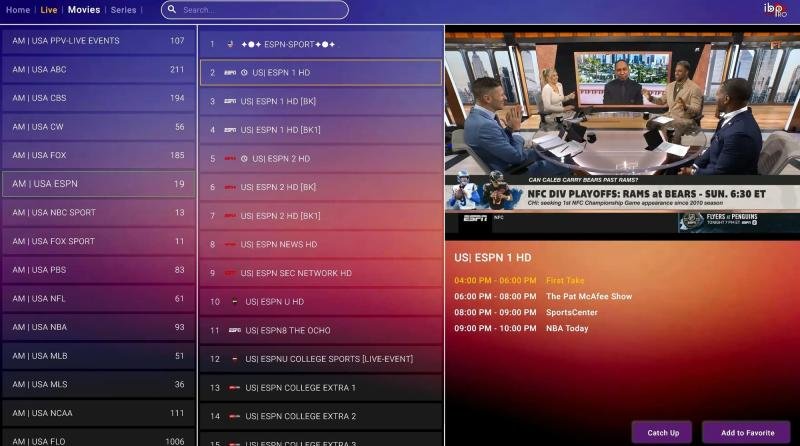
IPTV User Interface
Growing number of cord-cutters turn to internet-based television for flexible access to live sports, Canadian channels, and on-demand content
Toronto, Canada – January 16, 2025 – More and more Canadian households are ditching their cable boxes and making the switch to Internet Protocol Television (IPTV). The appeal is pretty straightforward: flexible plans, better picture quality, and the freedom to watch what you actually want without paying for a hundred channels you’ll never touch. As cord-cutting picks up speed across the country, people are getting smarter about what they look for in an IPTV provider-everything from content quality and device compatibility to whether the service is actually legal.
So what exactly is IPTV? Instead of receiving TV signals through traditional cable or satellite infrastructure, IPTV delivers programming over your internet connection. That means you can stream live TV channels, browse on-demand libraries, and catch up on recorded shows directly on your smart TV, streaming box, phone, or tablet. For Canadians, this opens up access to familiar channels like CBC, CTV, Global, and Citytv, plus sports heavyweights like TSN and Sportsnet-all without the equipment fees or multi-year contracts that cable companies love to lock you into.
Sports fans and anyone who cares about picture quality have been particularly quick to jump on board. A lot of IPTV services now deliver 4K and HD streaming, let you watch on several screens at once, and run servers in both Canada and the US to keep buffering to a minimum. Some providers are even promising 99.9 percent uptime and using anti-buffering tech to make sure your stream doesn’t freeze right when Connor McDavid is about to score or during the final minutes of a tight NFL game.
“Canadian consumers just aren’t interested in paying for bloated cable packages anymore,” said a streaming industry analyst who follows the Canadian market. “IPTV lets people pick plans that actually fit how they watch TV-whether that’s live sports, shows from back home if they’re immigrants, or just binge-watching the latest series. The technology has gotten good enough that you’re not really sacrificing anything compared to cable.”
That said, the IPTV world in Canada can get a bit murky, especially when it comes to what’s legal and what’s not. The CRTC oversees broadcasting standards here, and legitimate IPTV providers are supposed to have proper licensing deals with content owners. There’s a real difference between legal services that pay for distribution rights and operate in the open, versus sketchy operations offering impossibly cheap prices that might land you in legal hot water or just stop working one day.
Privacy matters too. Some Canadians use VPNs to protect their online activity or access content that’s geo-blocked, though that shouldn’t be a substitute for choosing a legitimate provider in the first place. Legal services usually offer clear terms, straightforward billing, and actual customer support you can reach at 3 a.m. when something goes wrong-all things you won’t find with fly-by-night operations.
For Canadians researching their options, independent comparisons have become valuable resources. A recent in-depth review titled “Best IPTV Service Providers 2025: I Tested 12 Services So You Don’t Have To,” published at https://www.iptvjetstream.com/blog/iptv-service, you can visit their website at https://www.iptvjetstream.com , this article evaluates a dozen IPTV providers specifically for Canadian viewers. The review examines factors including channel selection, streaming quality, device compatibility, customer service responsiveness, and legal standing, providing a side-by-side assessment that helps consumers navigate an increasingly crowded marketplace.
Pricing models are all over the map. Monthly plans give you flexibility if you want to try before you commit, while yearly subscriptions usually come cheaper if you’re confident you’ve found the right fit. A lot of providers now throw in free trials-anywhere from a day to a week-plus money-back guarantees, which takes some of the risk out of switching. These trial periods are clutch for testing whether the picture quality holds up, if your favorite channels actually work reliably, and whether the interface makes sense before you hand over your credit card.
The content selection through Canadian IPTV services has gotten pretty impressive. Beyond local channels and major sports networks, you’re looking at huge libraries of movies, TV shows, and international programming. Soccer fans can catch European leagues and World Cup qualifiers, families can find something for everyone, and you typically get options for standard, HD, or 4K quality depending on your internet speed and what your TV can handle.
As things continue to evolve in the Canadian IPTV space, it looks like the providers that’ll stick around are the ones playing by the rules, delivering consistent quality, and treating customers fairly. If you’re thinking about cutting the cord, here’s what actually matters: make sure the provider is legal and follows Canadian broadcasting rules, double-check that the channels you care about are included, confirm it works with the devices you already have, look for trial periods or money-back guarantees, and make sure there’s real customer support if things go sideways.
The move from cable to IPTV isn’t just about new technology-it’s really about how we want TV to fit into our lives now. With more control over what you watch, better prices, and tech that actually works well, IPTV is genuinely changing how Canadians watch television, one household at a time.
CPI Center 44 2eme etage Rue du Porche
Québec
G1K 4G2
Canada
Area Le Maine
+1(716) 755-4036
arealemaine@gmail.com
Quebec 24/7 – Press Enterprise
Type: Digital news outlet
Focus: Quebec provincial news
Languages: French & English
Format: Website, mobile app, social media
Content
Team:
25 journalists
HQ in Montreal
Bureau in Quebec City
This release was published on openPR.