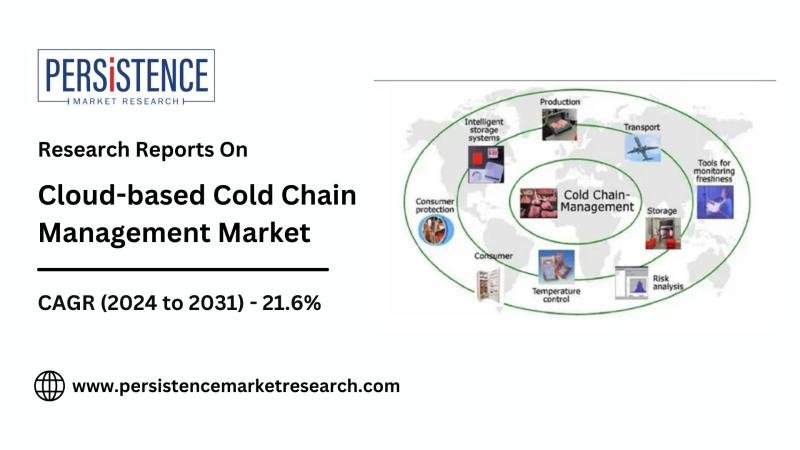
The global cloud-based cold chain management market is projected to grow from US$ 8.1 billion in 2024 to US$ 24.5 billion by 2031, driven by a robust CAGR of 21.6%. Advancements in IoT-enabled sensors, AI-powered systems, and predictive analytics are enhancing temperature and location monitoring, reducing spoilage, and improving decision-making. The food and beverages sector, with a significant share of 73.2%, is the primary application due to the increasing demand for fresh and perishable goods. North America, holding a projected 35.2% market share, leads in adoption, with substantial investments in cold chain infrastructure. Stringent global regulations, sustainability goals, and innovations like autonomous drones are further fueling market growth.
𝐆𝐞𝐭 𝐚 𝐒𝐚𝐦𝐩𝐥𝐞 𝐑𝐞𝐩𝐨𝐫𝐭: https://www.persistencemarketresearch.com/samples/35027
𝐈𝐧𝐜𝐫𝐞𝐚𝐬𝐢𝐧𝐠 𝐃𝐞𝐦𝐚𝐧𝐝 𝐟𝐨𝐫 𝐂𝐥𝐨𝐮𝐝-𝐁𝐚𝐬𝐞𝐝 𝐒𝐨𝐥𝐮𝐭𝐢𝐨𝐧𝐬 𝐢𝐧 𝐂𝐨𝐥𝐝 𝐂𝐡𝐚𝐢𝐧 𝐌𝐚𝐧𝐚𝐠𝐞𝐦𝐞𝐧𝐭
The cold chain market’s evolution is heavily influenced by the increasing adoption of cloud technologies across various industries. Cloud-based solutions provide cold chain operators with the ability to monitor and manage the temperature of goods in real time, minimizing risks associated with spoilage, damage, or wastage. This level of control is essential for industries dealing with perishable goods such as food, pharmaceuticals, and biotechnology, where maintaining precise temperature conditions is crucial for product quality and safety.
Cloud technologies enable stakeholders across the cold chain to gain access to centralized platforms that offer insights into data such as temperature, humidity, and location in real time. These platforms allow stakeholders to take quick corrective actions, improving efficiency, reducing costs, and ensuring compliance with regulatory standards.
𝐊𝐞𝐲 𝐃𝐫𝐢𝐯𝐞𝐫𝐬 𝐨𝐟 𝐆𝐫𝐨𝐰𝐭𝐡 𝐢𝐧 𝐭𝐡𝐞 𝐂𝐥𝐨𝐮𝐝-𝐁𝐚𝐬𝐞𝐝 𝐂𝐨𝐥𝐝 𝐂𝐡𝐚𝐢𝐧 𝐌𝐚𝐫𝐤𝐞𝐭
The market’s rapid expansion can be attributed to several factors driving the demand for cloud-based cold chain management solutions.
1. Rising Global Demand for Temperature-Sensitive Products: With the increasing global demand for perishable goods, particularly in food and pharmaceuticals, the need for robust cold chain logistics solutions has never been higher. The pharmaceutical industry, in particular, has seen an explosion in demand for cold chain storage solutions due to the rise of biologics, vaccines, and temperature-sensitive drugs.
2. Regulatory Compliance and Industry Standards: Stringent regulations governing the transport and storage of temperature-sensitive goods are pushing cold chain operators to adopt more sophisticated monitoring and control systems. Cloud-based cold chain solutions enable seamless compliance with regulations such as the Good Distribution Practices (GDP) and Good Manufacturing Practices (GMP), which are critical for industries like pharmaceuticals.
3. Advancements in IoT and Real-Time Monitoring: The integration of IoT devices with cloud computing has significantly improved real-time monitoring capabilities in the cold chain industry. IoT-enabled sensors can now transmit real-time data on the condition of goods, enabling proactive management of potential risks such as temperature fluctuations, humidity, or equipment malfunctions.
4. Cost Efficiency and Scalability: Cloud-based solutions reduce the need for on-premises infrastructure and manual interventions, thus lowering capital expenditures and operational costs for cold chain businesses. The scalability of cloud solutions also means companies can easily expand their operations as demand grows without having to invest in additional hardware or software.
𝐑𝐞𝐠𝐢𝐨𝐧-𝐖𝐢𝐬𝐞 𝐆𝐫𝐨𝐰𝐭𝐡 𝐓𝐫𝐞𝐧𝐝𝐬 𝐚𝐧𝐝 𝐌𝐚𝐫𝐤𝐞𝐭 𝐎𝐩𝐩𝐨𝐫𝐭𝐮𝐧𝐢𝐭𝐢𝐞𝐬
The cloud-based cold chain market is experiencing significant growth across various regions, each with its unique set of opportunities and challenges.
1. North America: North America is expected to be the largest market for cloud-based cold chain solutions due to the region’s advanced logistics infrastructure, stringent regulatory frameworks, and the growing need for cold storage in the pharmaceutical and food industries. The United States, in particular, is a leader in adopting cloud-based technologies for cold chain management. The rise in e-commerce and online grocery services also fuels the demand for advanced cold chain solutions in this region.
2. Europe: Europe is witnessing robust growth in the cloud-based cold chain market, driven by regulatory pressures on temperature-sensitive product transport and the increasing adoption of advanced technologies. The European Union’s regulatory policies, particularly in the pharmaceutical sector, push businesses to integrate real-time monitoring systems and digital solutions to maintain compliance.
3. Asia-Pacific: The Asia-Pacific region is anticipated to experience the highest growth rate during the forecast period. Rapid industrialization, an expanding middle class, and the growing demand for perishable goods in countries like China and India are driving the need for more efficient cold chain logistics. Additionally, increasing investments in healthcare and pharmaceuticals in this region are fueling the adoption of cloud-based cold chain management solutions.
4. Latin America and Middle East & Africa: In Latin America and the Middle East & Africa, the cloud-based cold chain market is in the early stages of development. However, the increasing adoption of digital technologies and improving cold chain infrastructure are expected to drive market growth in these regions in the coming years.
𝐓𝐞𝐜𝐡𝐧𝐨𝐥𝐨𝐠𝐢𝐜𝐚𝐥 𝐈𝐧𝐧𝐨𝐯𝐚𝐭𝐢𝐨𝐧𝐬 𝐢𝐧 𝐭𝐡𝐞 𝐂𝐥𝐨𝐮𝐝-𝐁𝐚𝐬𝐞𝐝 𝐂𝐨𝐥𝐝 𝐂𝐡𝐚𝐢𝐧 𝐌𝐚𝐫𝐤𝐞𝐭
As the cold chain industry increasingly embraces cloud-based solutions, several technological innovations are reshaping the landscape of cold chain management.
1. Blockchain Integration for Improved Transparency: Blockchain technology is being incorporated into cloud-based cold chain solutions to enhance data security, transparency, and traceability. By recording temperature and shipment data on a secure blockchain, stakeholders can ensure the integrity of data and reduce the risk of fraud or data manipulation.
2. Artificial Intelligence (AI) for Predictive Analytics: AI-powered predictive analytics tools integrated into cloud-based systems can forecast potential issues in the cold chain process, such as equipment failure or temperature deviations. This enables businesses to take preemptive actions, reducing downtime and improving efficiency.
3. Automation and Robotics: Cloud-based cold chain management systems are increasingly incorporating automation and robotics, particularly in cold storage facilities. Automated systems can monitor inventory levels, perform inspections, and even move goods within storage facilities, reducing labor costs and improving operational efficiency.
𝐂𝐡𝐚𝐥𝐥𝐞𝐧𝐠𝐞𝐬 𝐢𝐧 𝐭𝐡𝐞 𝐂𝐥𝐨𝐮𝐝-𝐁𝐚𝐬𝐞𝐝 𝐂𝐨𝐥𝐝 𝐂𝐡𝐚𝐢𝐧 𝐌𝐚𝐫𝐤𝐞𝐭
Despite the clear benefits and growing adoption of cloud-based cold chain solutions, the market faces several challenges that could impact its growth trajectory.
1. Data Privacy and Security Concerns: The increased reliance on cloud-based systems raises concerns about data security and privacy. Ensuring that sensitive data, such as shipment details and temperature logs, are protected from cyberattacks is a critical concern for stakeholders in the cold chain industry.
2. High Initial Implementation Costs: Although cloud-based solutions can reduce long-term operational costs, the initial setup and implementation of cloud technologies can be costly for small and mid-sized businesses. These businesses may find it challenging to invest in the infrastructure required for seamless cloud adoption.
3. Integration with Existing Systems: For many cold chain businesses, integrating cloud-based solutions with existing legacy systems can be a complex and resource-intensive process. Companies may face challenges in streamlining operations and ensuring seamless communication between new and old systems.
𝐂𝐨𝐧𝐜𝐥𝐮𝐬𝐢𝐨𝐧: 𝐀 𝐏𝐫𝐨𝐦𝐢𝐬𝐢𝐧𝐠 𝐅𝐮𝐭𝐮𝐫𝐞 𝐟𝐨𝐫 𝐭𝐡𝐞 𝐂𝐥𝐨𝐮𝐝-𝐁𝐚𝐬𝐞𝐝 𝐂𝐨𝐥𝐝 𝐂𝐡𝐚𝐢𝐧 𝐌𝐚𝐫𝐤𝐞𝐭
The cloud-based cold chain market is witnessing a dynamic phase of growth, driven by technological advancements, increasing demand for temperature-sensitive products, and the need for real-time, data-driven solutions. The projected market value of USD 24.5 billion by 2031, growing at a CAGR of 21.6%, reflects the enormous potential for cloud-based technologies to redefine cold chain management globally. As industries continue to seek efficiency, compliance, and scalability in their cold chain operations, the role of cloud technology will become even more central in ensuring the safe and efficient delivery of temperature-sensitive products across the world.
𝐑𝐞𝐚𝐝 𝐌𝐨𝐫𝐞 𝐓𝐫𝐞𝐧𝐝𝐢𝐧𝐠 “𝐏𝐌𝐑 𝐄𝐱𝐜𝐥𝐮𝐬𝐢𝐯𝐞 𝐀𝐫𝐭𝐢𝐜𝐥𝐞”:
https://www.linkedin.com/pulse/north-america-leads-global-thermal-spray-qlu5c
https://www.linkedin.com/pulse/north-americas-robust-supply-chain-boosts-9iamc
https://www.linkedin.com/pulse/north-america-leads-natural-language-understanding-sprcc
https://www.linkedin.com/pulse/asia-pacific-emerges-fastest-growing-communication-terzc
𝐂𝐨𝐧𝐭𝐚𝐜𝐭 𝐔𝐬:
Persistence Market Research
G04 Golden Mile House, Clayponds Lane
Brentford, London, TW8 0GU UK
USA Phone: +1 646-878-6329
UK Phone: +44 203-837-5656
Email: sales@persistencemarketresearch.com
Web: https://www.persistencemarketresearch.com
𝐀𝐛𝐨𝐮𝐭 𝐏𝐞𝐫𝐬𝐢𝐬𝐭𝐞𝐧𝐜𝐞 𝐌𝐚𝐫𝐤𝐞𝐭 𝐑𝐞𝐬𝐞𝐚𝐫𝐜𝐡:
At Persistence Market Research, we specialize in creating research studies that serve as strategic tools for driving business growth. Established as a proprietary firm in 2012, we have evolved into a registered company in England and Wales in 2023 under the name Persistence Research & Consultancy Services Ltd. With a solid foundation, we have completed over 3600 custom and syndicate market research projects, and delivered more than 2700 projects for other leading market research companies’ clients.
Our approach combines traditional market research methods with modern tools to offer comprehensive research solutions. With a decade of experience, we pride ourselves on deriving actionable insights from data to help businesses stay ahead of the competition. Our client base spans multinational corporations, leading consulting firms, investment funds, and government departments. A significant portion of our sales comes from repeat clients, a testament to the value and trust we’ve built over the years.
This release was published on openPR.