Advanced Recycling Technologies Market
The Global Advanced Recycling Technologies Market reached US$ 269.8 million in 2022 and is expected to reach US$ 6,381.0 million by 2031, growing with a CAGR of 48.5% during the forecast period 2024-2031.
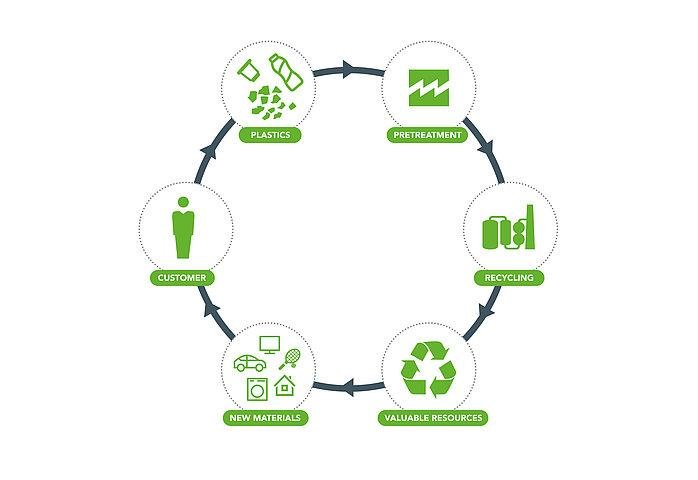
The market is rapidly expanding as industries pivot toward circular economy models and sustainable plastics management, fueled by stringent ESG regulations and corporate net-zero commitments. This growth reflects a fundamental shift in waste management and polymers sectors, moving away from linear production toward advanced chemical and enzymatic recycling processes that recover high-value materials with minimal environmental impact.
Get a Free Sample PDF Of This Report (Get Higher Priority for Corporate Email ID):- https://www.datamintelligence.com/download-sample/advanced-recycling-technologies-market?ram
Key Industry Developments
United States:
✅ November 2025: University at Buffalo (UB) launched a $2.75 million research initiative to develop advanced recycling technologies, including a high‐speed sorting‐testbed for plastics and novel valorisation pathways for discarded tires, funded through the REMADE Institute and U.S. Department of Energy to improve material recovery and circularity at scale.
✅ October 2025: Braskem advanced its next‐generation advanced‐recycling technology in the United States, demonstrating a pilot‐scale process that converts plastic waste into molecular building blocks (propylene, ethylene, and aromatics) for circular plastics, with plans to scale the reactor and commercialise globally by the early 2030s.
✅ March 2026: U.S. plastics producers and technology providers accelerated deployment of advanced recycling capacity under clarifying federal‐level regulatory signals, with America’s Plastic Makers and major chemical companies highlighting that pyrolysis‐based advanced recycling should be treated as manufacturing rather than waste disposal, supporting further investment in chemical‐recycling infrastructure.
Japan:
✅ November 2025: Avantium’s Releaf® PEF polymer received official CPBR approval for recycling in Japan’s PET‐bottle stream, enabling the plant‐based barrier polymer to be integrated into existing advanced recycling systems while maintaining high‐quality recycled PET output.
✅ September 2025: Kao Corporation piloted enzymatic recycling technology for polyester textiles at its Yokohama plant, using a proprietary hydrolysis process that reduces energy use by about 40% versus conventional melt‐based recycling and supports closed‐loop textile and packaging applications.
✅ August 2025: Unicharm expanded advanced recycling operations in Japan with government‐subsidised depolymerisation capabilities for absorbent hygiene‐product plastics, aiming to achieve 30% recycled content in select product lines by 2026 and aligning with Japan’s circular‐economy and single‐use‐plastic reduction targets.
Key Players:
Honeywell International Inc. | Chevron Phillips Chemical Company LLC | Synova | Erema Group | Brightmark | Sierra International Machinery | Metso Outotec Corporation | Machinex Industries Inc. | Vecoplan AG | Tomra Systems ASA
Strategic Leadership Analysis: Top 5 Key Players in Advanced Recycling Technologies Market 2026
-Honeywell International Inc.: Advanced the UOP Cyclar process for catalytic pyrolysis, enabling efficient conversion of mixed plastic waste into BTX aromatics and syngas for high-purity chemical recycling at industrial scale.
-Chevron Phillips Chemical Company LLC: Launched the Circular Solutions platform with pyrolysis-based depolymerization technology, processing post-consumer plastics into molecular feedstocks for virgin-quality polyethylene production.
-Brightmark: Deployed the Brightmark Nexus commercial-scale pyrolysis plant, transforming hard-to-recycle plastics into renewable diesel and circular waxes to divert millions of pounds of waste from landfills annually.
-Erema Group: Introduced the Vacurema PrimaLine system with integrated IR pre-drying and vacuum degassing, achieving 99% rPET purity for food-grade bottle-to-bottle recycling with enhanced IV retention.
-Tomra Systems ASA: Enhanced the TOMRA Insight AI platform for reverse vending machines, incorporating hyperspectral imaging and deep learning for 98% polymer identification accuracy in advanced deposit return systems.
Speak to Our Analyst and Get Customization in the report as per your requirements: https://www.datamintelligence.com/customize/advanced-recycling-technologies-market?ram
Main Drivers and Trends Shaping the Future of Advanced Recycling Technologies
-Regulatory Pressure and Circular Economy Mandates: Stringent global regulations on single‐use plastics, extended producer responsibility (EPR), and landfill‐diversion targets are pushing brand owners and chemical companies to adopt advanced recycling (chemical, biological, solvent‐based, and AI‐driven mechanical) to meet policy‐driven circular economy goals.
-Corporate Sustainability and ESG Targets: Fast‐moving consumer goods (FMCG), packaging, and automotive players are committing to high recycled‐content targets (e.g., 40% recycled plastics), driving demand for advanced recycling to produce virgin‐quality monomers and feedstocks compatible with existing production lines.
-Plastic Waste Overload and Infrastructure Gaps: Rising volumes of mixed, contaminated, and multi‐layered plastics that cannot be handled by conventional mechanical recycling are creating a structural need for advanced technologies such as pyrolysis, depolymerization, and gasification.
-Technological Convergence (AI, Digitalization, and Blockchain): AI‐driven sorting, process optimization, and predictive maintenance are improving yield and purity, while digital twins and blockchain enhance traceability of recycled content and chain‐of‐custody documentation for brands and regulators.
-Feedstock Diversification and High‐Value Outputs: Advanced recycling plants are increasingly targeting higher‐margin outputs such as naphtha, heavy gas oil, and wax residue for petrochemical and fuel applications, aligning with circular‐feedstock strategies and fossil‐forward substitution goals.
-Bio‐Based and Hybrid Polymers Integration: Growing interest in recycling bioplastics and polymer blends is spurring R&D into advanced technologies that can handle mixed fossil‐based and bio‐based streams, enabling a truly circular polymer ecosystem.
-Regional Policy‐Led Growth and Strategic Partnerships: Europe and North America lead market development due to strict plastic‐waste legislation, while Asia‐Pacific is emerging as a high‐growth region propelled by massive waste volumes and domestic infrastructure investment; cross‐industry consortia and technology‐brand partnerships are accelerating commercial‐scale deployment.
-Market Hurdles: High capital intensity, feedstock collection and sorting challenges, technology scalability, and lack of harmonized standards for recycled content recognition and certification remain key constraints on widespread adoption of advanced recycling.
Regional Insights:
-North America: 42.01% (Largest share, driven by strong regulatory support for circular economy initiatives and investments in chemical and mechanical recycling infrastructure).
-Asia Pacific: 30% (Fastest growing at 9.25% CAGR, fueled by rapid industrialization, government policies on waste management, and recycling infrastructure in China, Japan, and India).
-Europe: 20% (Supported by digital education reforms and steady investment-wait, no, for recycling: policy incentives and infrastructure development).
Market Opportunities & Challenges: Advanced Recycling Technologies Market 2026
-Opportunities: Chemical recycling breakthroughs enable infinite-loop plastics from mixed waste, fueled by corporate net-zero pledges and EU’s mandatory recycled content quotas for bottles. Pyrolytic oil upgraders paired with biorefining hybrids attract “Circular Economy Credits” via ISO 59020 certifications, easing entry for scale-up innovators targeting multi-polymer streams.
-Challenges: Feedstock variability disrupts pyrolysis yields amid inconsistent municipal waste compositions, while capex barriers exceeding $200M per plant deter mid-tier adopters. Navigating patchy global PFAS regulations and virgin resin price volatility demands agile supply pacts with petrochemical majors.
Purchase Corporate License | Market Intelligence: https://www.datamintelligence.com/buy-now-page?report=advanced-recycling-technologies-market?ram
Market Segmentation Analysis:
-By Technology: Pyrolysis / Cracking Leads the Pack
Pyrolysis / cracking holds the largest share at 45%, driven by its ability to convert mixed plastic waste into hydrocarbon‐rich feedstocks compatible with existing petrochemical infrastructure.
Gasification follows at 25%, valued for syngas production suited to energy and chemical applications, especially in regions pushing waste‐to‐energy strategies.
Depolymerization accounts for 20%, preferred for high‐purity monomer recovery in PET and polyamide streams, while Others capture 10%, covering enzymatic and solvolysis routes still in early‐stage deployment.
Among technologies, Pyrolysis / Cracking has the highest market share.
-By Process Output: Naphtha Dominates Output Streams
Naphtha commands 40%, serving as a primary cracked feedstock for steam crackers and refineries, closely aligned with conventional petrochemical demand.
Heavy gas oil follows at 30%, used in fuel blending and refining, while wax residue holds 20%, mainly employed in lubricants and specialty waxes.
Others make up 10%, including syngas and specialty oils, offering niche but growing value in integrated circular‐economy projects.
Among outputs, Naphtha has the highest market share.
-By End‐User: Packaging Takes the Lead
Packaging holds 35%, driven by high plastic‐intensity packaging waste and brand‐owner commitments to recycled content and EPR schemes.
Building and construction follows at 20%, leveraging recycled polymers in profiles, pipes, and insulation, while automotive and consumer electronics together account for 25%, with automotive slightly larger due to mechanical‐grade r‐plastics.
Healthcare and Others share 20%, covering medical‐grade and specialty applications where regulatory and quality constraints moderate volume uptake.
Among end‐users, Packaging has the highest market share.
Unlock 360° Market Intelligence with DataM Subscription Services: https://www.datamintelligence.com/reports-subscription?ram
Power your decisions with real-time competitor tracking, strategic forecasts, and global investment insights all in one place.
✅ Competitive Landscape
✅ Sustainability Impact Analysis
✅ KOL / Stakeholder Insights
✅ Unmet Needs & Positioning, Pricing & Market Access Snapshots
✅ Market Volatility & Emerging Risks Analysis
✅ Quarterly Industry Report Updated
✅ Live Market & Pricing Trends
✅ Import-Export Data Monitoring
Have a look at our Subscription Dashboard: https://www.youtube.com/watch?v=x5oEiqEqTW
Contact Us –
Company Name: DataM Intelligence
Contact Person: Sai Kiran
Email: Sai.k@datamintelligence.com
Phone: +1 877 441 4866
Website: https://www.datamintelligence.com
About Us –
DataM Intelligence is a Market Research and Consulting firm that provides end-to-end business solutions to organizations from Research to Consulting. We, at DataM Intelligence, leverage our top trademark trends, insights and developments to emancipate swift and astute solutions to clients like you. We encompass a multitude of syndicate reports and customized reports with a robust methodology.
Our research database features countless statistics and in-depth analyses across a wide range of 6300+ reports in 40+ domains creating business solutions for more than 200+ companies across 50+ countries; catering to the key business research needs that influence the growth trajectory of our vast clientele.
This release was published on openPR.