Railway Connector Market
Market Overview
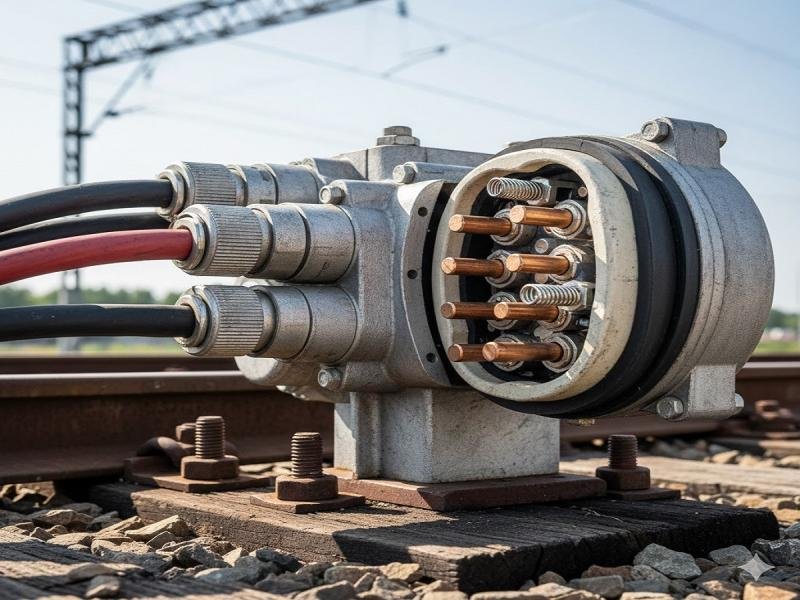
The global railway connector market reached US$ 0.99 billion in 2023, rising to US$ 1.03 billion in 2024, and is projected to reach US$ 1.72 billion by 2033, growing at a CAGR of 5.88% during the forecast period 2025-2033. Steady market growth is driven by the increasing use of railway connectors in high-speed rail, urban transit, freight networks, and signaling systems. Railway connectors including couplers, plug-in connectors, and modular interconnect solutions play a critical role in ensuring safe, reliable power transmission and data communication across rail networks. Expansion is further supported by innovations in durable materials, high-speed data connectivity, and modular designs, along with rising investments in railway electrification and smart infrastructure. Strategic partnerships among rail operators, connector manufacturers, and system integrators are also shaping the competitive landscape.
Get a Free Sample PDF Of This Report (Get Higher Priority for Corporate Email ID):-https://www.datamintelligence.com/download-sample/railway-connector-market?Juli
The United States is a leading market for railway connectors, driven by upgrades in freight networks, high-speed rail projects, and urban transit systems. The demand for high-reliability connectors in signaling, electrification, and passenger trains is increasing. Strong manufacturing capabilities, R&D initiatives, and close collaboration between operators and suppliers continue to position the U.S. as a market leader.
Japan is emerging as a key regional player, focusing on modernizing high-speed rail and urban transit infrastructure. In 2024, Japanese rail operators invested in advanced modular connectors for Shinkansen and metro systems to enhance safety, efficiency, and maintenance. Continued government support and strategic partnerships with global manufacturers are expected to accelerate the adoption of next-generation railway connectors across the country.
Recent Developments:
✅ December 2025 – Europe: A leading connector manufacturer launched a high-durability railway interconnect series optimized for high-speed trains, offering enhanced vibration resistance and long-term reliability under extreme operating conditions.
✅ October 2025 – North America: A major global supplier expanded its production facility to increase capacity for modular railway connectors, supporting growing demand from freight, signaling, and electrification projects.
✅ August 2025 – Asia-Pacific: A prominent rail technology company partnered with a regional infrastructure firm to deploy advanced plug-in railway connectors across urban transit networks, improving maintenance efficiency and system uptime.
Mergers & Acquisitions:
✅ November 2025 – Europe: A leading industrial components company acquired a regional railway connector specialist, expanding its product portfolio and strengthening its presence in the European rail infrastructure market.
✅ September 2025 – North America: A major electronics and interconnect solutions provider acquired a high-performance railway connector division from a global manufacturer to enhance its offerings for high-speed rail and urban transit systems.
✅ June 2025 – Asia-Pacific: A prominent rail systems integrator acquired a local modular connector manufacturer to support growth in electrification and signaling projects across Southeast Asian rail networks.
Buy Now & Unlock 360° Market Intelligence:-https://www.datamintelligence.com/buy-now-page?report=railway-connector-market?Juli
Key Players:
TE Connectivity, ITT Inc., Fischer Connectors, and Schaltbau GmbH.Market
Market Segmentation:
By Type
Power connectors dominate the railway connector market, accounting for approximately 35% of global revenue in 2024, driven by the growing demand for reliable power transmission in high-speed rail, urban transit, and freight networks. Data connectors hold around 25%, supporting high-speed communication, signaling, and onboard IT systems. Signal connectors contribute roughly 20%, ensuring safe and accurate control of train operations. RF/HF connectors make up the remaining 20%, facilitating wireless communications and specialized high-frequency applications in modern rail systems.
By Design
Circular connectors lead the market with an estimated 55%, favored for durability, vibration resistance, and ease of installation in harsh rail environments. Rectangular connectors account for about 45%, providing modularity and space-saving designs for dense connector layouts in signaling and onboard electronics.
By Connection Style
Wire-to-Wire (W2W) connectors hold the largest share at approximately 40%, used extensively for interconnecting power and signaling lines. Wire-to-Board (W2B) connectors represent around 35%, enabling compact connections to circuit boards in onboard systems. Board-to-Board (B2B) connectors contribute roughly 25%, supporting modular electronics and expansion in signaling and control equipment.
By End-User
OEMs account for the largest segment at 40%, as manufacturers of trains and rolling stock integrate high-performance connectors during production. Railway operators follow with 30%, driven by modernization and upgrades to existing fleets and infrastructure. Infrastructure providers represent approximately 20%, focusing on electrification, signaling, and trackside installations. The aftermarket segment contributes around 10%, encompassing maintenance, replacement, and retrofitting of connectors across global rail networks.
Speak to Our Analyst and Get Customization in the report as per your requirements:-https://www.datamintelligence.com/customize/railway-connector-market?Juli
(Single User Report: USD 4350 & One Year Database Subscription: USD 12K)
Regional Insights:
Europe accounted for approximately 32% of the global railway connector market in 2024 and is expected to maintain its leading position throughout the forecast period. This dominance is driven by extensive investments in high-speed rail, urban transit systems, and freight network modernization. Several European countries are actively upgrading rail signaling and electrification networks, which is increasing demand for advanced and reliable railway connectors. The region’s strong manufacturing base, regulatory support, and adoption of standardized connector solutions further reinforce its leadership in the global market.
North America is projected to be the fastest-growing region, supported by rising investments in urban transit expansion, high-speed rail projects, and freight network upgrades. The United States, in particular, is investing heavily in electrified tracks, signaling modernization, and modular connector systems to enhance operational efficiency and reliability. Expanding infrastructure projects and adoption of smart rail technologies continue to accelerate market growth in the region.
The Power Connectors segment remains the dominant product category due to its critical role in ensuring safe and reliable power transmission, data communication, and control across rail networks. Its widespread adoption across both passenger and freight rail systems highlights its importance in supporting technological advancements and the modernization of next-generation railway infrastructure.
Market Dynamics:
Driver: Technological Advancements in Durable, Modular, and High-Speed Connectors
Technological innovations in high-performance, durable, and modular railway connectors are driving market growth. Advanced power and signal connectors are becoming essential components of modern rail infrastructure, enabling safe power transmission, efficient signaling, and seamless data communication across rail networks. Manufacturers are accelerating innovation with modular designs that simplify installation, enhance reliability, and support the modernization of both passenger and freight rail systems. For example, U.S. rail operators have invested in modular, high-reliability connectors for signaling and electrification upgrades across urban and freight networks, demonstrating how infrastructure modernization is fueling the expansion and strategic importance of the railway connector market.
Restraint: High Initial Cost of Advanced Connectors and Installation
Despite their critical role, the adoption of advanced railway connectors is constrained by high upfront costs and technical complexities. High-quality, durable connectors, along with professional installation, require significant investment, which can limit deployment in cost-sensitive regions. Long project timelines, regulatory approvals, and rising raw material prices further increase overall costs. For instance, several urban transit and freight modernization projects in emerging markets have experienced delays or budget overruns due to the high cost and installation challenges of advanced connector systems. Without continued innovations in cost-effective designs, modular solutions, and supply chain optimization, high initial costs are expected to remain a significant restraint on sustainable market growth.
📌 Request for 2 Days FREE Trial Access: https://www.datamintelligence.com/reports-subscription
☛ Power your decisions with real-time competitor tracking, strategic forecasts, and global investment insights all in one place.
✅ Competitive Landscape
✅ Sustainability Impact Analysis
✅ KOL / Stakeholder Insights
✅ Unmet Needs & Positioning, Pricing & Market Access Snapshots
✅ Market Volatility & Emerging Risks Analysis
✅ Quarterly Industry Report Updated
✅ Live Market & Pricing Trends
✅ Import-Export Data Monitoring
☛ Have a look at our Subscription Dashboard: https://www.youtube.com/watch?v=x5oEiqEqTWg?Juli
Contact Us –
Company Name: DataM Intelligence
Contact Person: Sai Kiran
Email: Sai.k@datamintelligence.com
Phone: +1 877 441 4866
Website: https://www.datamintelligence.com
About Us –
DataM Intelligence is a Market Research and Consulting firm that provides end-to-end business solutions to organizations from Research to Consulting. We, at DataM Intelligence, leverage our top trademark trends, insights and developments to emancipate swift and astute solutions to clients like you. We encompass a multitude of syndicate reports and customized reports with a robust methodology.
Our research database features countless statistics and in-depth analyses across a wide range of 6300+ reports in 40+ domains creating business solutions for more than 200+ companies across 50+ countries; catering to the key business research needs that influence the growth trajectory of our vast clientele.
This release was published on openPR.