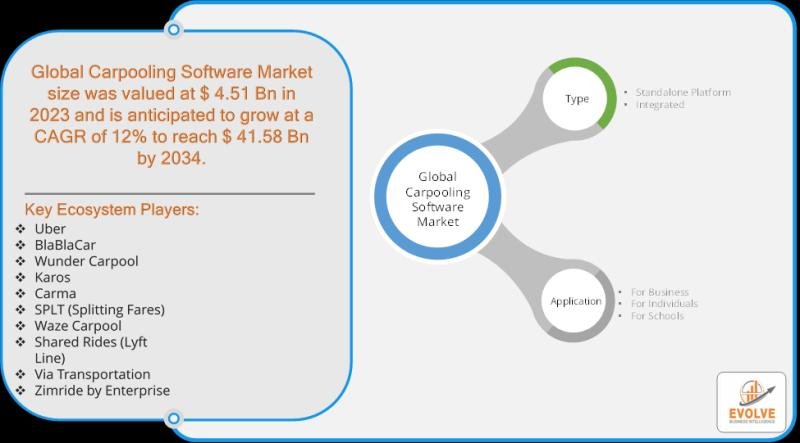
The Global Carpooling Software Market is poised for significant growth, driven by increasing urbanization, rising fuel costs, and a growing emphasis on sustainable transportation solutions. This market, which is part of the broader on-demand transportation sector, is projected to expand substantially in the coming years. Carpooling software offers a compelling solution to traffic congestion, high transportation costs, and environmental concerns, presenting a fertile ground for innovation and investment.
Download the full report now to discover market trends, opportunities, and strategies for success.
https://evolvebi.com/report/global-carpooling-software-market-analysis/
Problems Faced: Building Trust and Ensuring Safety
Despite its immense potential, the carpooling software market faces a crucial hurdle: the perception of a lack of user trust and significant safety concerns. Many individuals are hesitant to share rides with strangers due to worries about personal safety and privacy. Even with features like background checks and user verification, building widespread trust, particularly in less-regulated peer-to-peer setups, remains a challenge. Users are inherently cautious about sharing personal space with unknown individuals, which can hinder the wider adoption of carpooling solutions.
Proposed Solution: Enhancing Trust through Corporate Programs and Advanced Technology
To overcome these challenges and unlock the full potential of the carpooling software market, a multi-pronged approach focusing on enhancing trust and user experience is essential:
• Expansion of Corporate Carpooling Programs: Businesses can play a pivotal role by implementing robust corporate carpooling programs. These programs can integrate advanced safety features such as verified employee profiles, real-time ride tracking, and immediate emergency support. By operating within a more controlled and vetted environment, corporate carpooling can significantly alleviate safety concerns and build a foundation of trust among users.
• Leveraging AI and Machine Learning for Enhanced User Experience: Technological advancements, particularly in Artificial Intelligence (AI) and Machine Learning (ML), offer powerful solutions. AI and ML can be utilized to:
o Optimize Route Planning: Develop highly efficient algorithms for route optimization, minimizing travel time and fuel consumption.
o Improve Ride-Matching: Create more sophisticated ride-matching algorithms that consider user preferences, ratings, and shared interests, fostering a greater sense of compatibility and trust.
o Personalize User Experience: Offer personalized features and services based on user behavior and feedback, making the carpooling experience more seamless, reliable, and trustworthy. This could include personalized alerts, preferred driver/rider matching, and dynamic pricing.
Download the full report now to discover market trends, opportunities, and strategies for success.
https://evolvebi.com/report/global-carpooling-software-market-analysis/
US Tariff Implications on the Global Carpooling Software Market
While carpooling software itself is not directly subject to tariffs, the broader trade policies and tariffs, particularly those implemented by the US, can have indirect yet significant implications for the Global Carpooling Software Market.
• Increased Costs for Essential Components: US tariffs on imported components, especially from countries like China, can escalate the cost of critical hardware that underpins smart transportation solutions. This includes microchips, sensors, and other electronic components vital for in-vehicle systems, GPS technology, and mobile devices used in carpooling applications. Higher input costs can lead to increased operational expenses for software providers and potentially impact the affordability of hardware devices for end-users.
• Supply Chain Disruptions: Tariffs can disrupt global supply chains, leading to longer lead times for components and potentially affecting the development and deployment timelines of new carpooling technologies. Companies may need to diversify their sourcing, which can introduce complexities and initial delays.
• Reduced Global Competitiveness: US-based companies in the smart transportation sector may face a structural cost disadvantage compared to their international counterparts not subject to similar tariffs. This can impact their competitiveness in global markets, especially in cost-sensitive regions.
• Impact on Investment and Adoption: Uncertainty surrounding trade policies and tariffs can discourage venture capital and institutional investment in the carpooling software ecosystem. This increased financial and regulatory risk can lead startups and smaller manufacturers to delay expansion plans or product development. Additionally, increased costs for hardware or services due to tariffs can slow down the adoption rate of new technologies, particularly in price-sensitive markets.
In essence, while the carpooling software itself is digital, its reliance on a global supply chain for hardware and technology means that tariffs can indirectly influence its development costs, market prices, and ultimately, its widespread adoption and growth.
To understand further and explore opportunities in the Global Carpooling Software Market or any related industry, please share your queries/concern at info@evolvebi.com.
Evolve Business Intelligence
C-218, 2nd floor, M-Cube
Gujarat 396191
India
Email: sales@evolvebi.com
Website: https://evolvebi.com/
Evolve Business Intelligence is a market research, business intelligence, and advisory firm providing
innovative solutions to challenging pain points of a business. Our market research reports include data
useful to micro, small, medium, and large-scale enterprises. We provide solutions ranging from mere
data collection to business advisory.
Evolve Business Intelligence is built on account of technology advancement providing highly accurate
data through our in-house AI-modelled data analysis and forecast tool – EvolveBI. This tool tracks real-
time data including, quarter performance, annual performance, and recent developments from
fortune’s global 2000 companies.
This release was published on openPR.