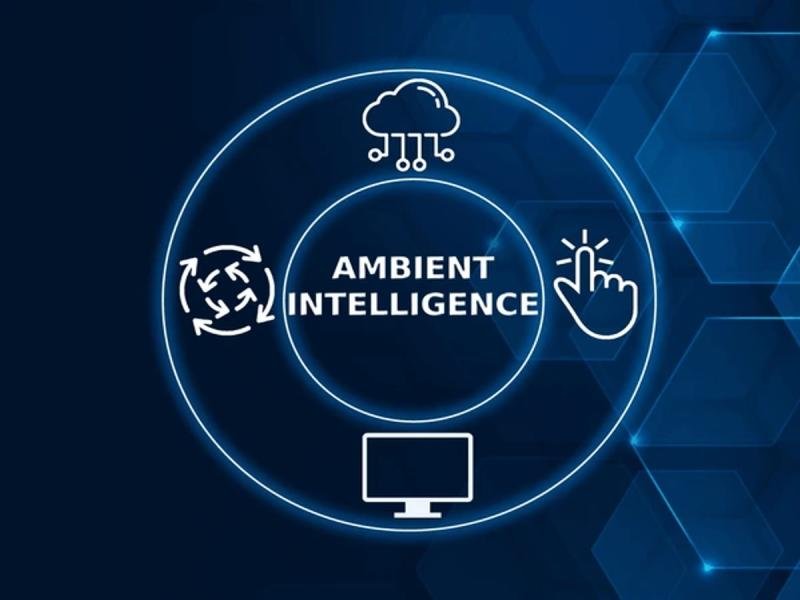
Ambient intelligence
The global ambient intelligence market was valued at $ 28.65 billion in 2024 and is projected to reach $ 182.23 billion by 2032, growing at a CAGR of 26.02%. Growth is driven by rising demand for smart environments across healthcare, retail, and urban infrastructure.
Ambient Intelligence market integrates sensors, AI, and connected devices to create context-aware environments that anticipate needs, automate responses, enhance efficiency, safety, and user experience across industries worldwide, scalable, adaptive solutions.
Get a Free Sample PDF Of This Report (Get Higher Priority for Corporate Email ID):-https://www.datamintelligence.com/download-sample/ambient-intelligence-market?prtk
United States: Key Industry Developments (2026 & 2025)
✅ January 2026: At CES 2026 in Las Vegas, Lenovo (and Motorola) unveiled Qira, a Personal Ambient Intelligence platform designed to operate consistently across laptops, smartphones, tablets, and wearables, enabling context-aware assistance without explicit user prompts and marking a shift toward always-present AI environments.
✅ January 2026: Motorola and Lenovo also showcased related ambient AI concepts like wearable AI companions (e.g., Project Maxwell) that perceive surroundings and assist users proactively, signaling ecosystem expansion for ambient intelligence use cases.
✅ December 2025: AONDevices and Atmosic launched a battery-free, always-on remote control device that uses ambient energy-an innovation that advances low-power context-aware hardware relevant to ambient intelligence systems.
✅ March 2025: Schneider Electric announced a USD 700 million U.S. investment to expand AI and ambient intelligence testing labs and R&D operations, underscoring enterprise demand for context-aware building, industrial, and automation systems.
Japan: Key Industry Developments (2026 & 2025)
✅ 2025 (General Regional Development): Japan’s Ambient Intelligence market is projected to reach around USD 1.87 billion in 2025, reflecting increasing adoption of smart environments, intelligent sensors, and responsive automation technologies in homes, industrial facilities, and urban infrastructure.
✅ 2025 (Component / Tech Launch Context): NXP’s MCX A Series microcontrollers-launched in 2025 with intelligent peripherals and optimized for low-power IoT/edge applications-provide foundational hardware widely used in ambient intelligence deployments across Japan’s smart cities, manufacturing, and connected service markets.
Recent M&A activities:-
→ In January 2026, Amazon completed its acquisition of Bee, a U.S. AI wearable startup focused on ambient, context-aware AI wearables that listen, transcribe, and assist users through intelligent insights. Financial terms have not been publicly disclosed but this strategic purchase strengthens Amazon’s push into personal ambient intelligence devices.
→ In December 2025, Meta Platforms, Inc. announced an agreement to acquire Butterfly Effect Pte. Ltd. (Manus), a Singapore-based autonomous AI agent developer, for approximately USD 2.00 Billion to extend immersive and context-aware AI workflows across its ecosystem.
→ In November 2025, Palo Alto Networks announced the planned acquisition of Chronosphere, an AI observability platform, for about USD 3.35 billion a deal aimed at enhancing always-on visibility and intelligent automation for AI-powered environments.
→ In July 2025, Amazon announced (and later completed) its acquisition of Bee, a San Francisco-based wearable AI startup (developer of a $49.99 AI wearable designed to capture and summarize daily context), as part of its broader ambient intelligence and personal AI expansion strategy; deal value undisclosed.
→ In March 2025, UiPath an automation and AI software provider acquired Peak, a U.K. AI-native company that brings AI workflow and optimization capabilities into enterprise robotic and ambient automation solutions.
Key Players:-
Schneider Electric, Siemens AG, Honeywell International, ABB Ltd., Johnson Controls, Amazon.com Inc., Google (Alphabet Inc.), Microsoft Corp., Apple Inc., NXP Semiconductors
Top 5 Key Players Analysis:-
Google (Alphabet Inc.) – 9.5%
Leads with contextual AI platforms for ambient environments, driving intelligent automation and adaptive interfaces globally across smart spaces and services.
Amazon.com Inc. – 8.8%
Dominates via AWS cloud-edge convergence and scalable IoT frameworks powering ambient intelligence in enterprise, retail, and consumer ecosystems.
Microsoft Corp. – 8.3%
Strong IoT cloud fabric and AI integration through Azure, expanding ambient intelligence solutions across healthcare, industrial, and smart built environments.
Siemens AG – 5.6%
Focuses on smart infrastructure and industrial ambient systems, integrating automation, analytics, and IoT for intelligent building and factory environments.
Schneider Electric – 5.0%
Provides energy-centric ambient intelligence solutions with EcoStruxure and smart building platforms optimizing efficiency and contextual automation in global markets.
Tech & Strategic Partnerships:-
1. Dot Ai × Wiliot Industrial Ambient IoT Innovation (Dec 2025)
Dot Ai and Wiliot entered a 3-year strategic partnership to innovate industrial-grade ambient IoT solutions for manufacturing and supply chain.
Wiliot provides its ambient IoT tag technology and cloud services, enabling Dot Ai to deploy rugged, industrial asset monitoring and real-time ambient data capture.
This collaboration expands ambient intelligence into smart factories and complex logistics environments.
2. Commure × MEDITECH Alliance Ambient AI in Healthcare (Mar 2025)
Commure joined the MEDITECH Alliance to integrate ambient clinical AI documentation into MEDITECH Expanse EHR platform.
The partnership automates patient-clinician documentation using ambient AI, reducing clinician burden and improving workflow efficiency.
Hospitals using MEDITECH can seamlessly adopt Commure’s AI tools directly within clinical systems.
3. Ambient.ai × Convergint AI-Powered Security Expansion (Apr 2024)
Ambient.ai teamed with Convergint to deliver AI-enhanced physical security globally.
The integration merges Ambient.ai’s proactive AI vision platform with Convergint’s system integration capabilities to strengthen risk monitoring.
The alliance helps expand adoption of smart security across enterprises.
4. Avery Dennison × Wiliot Ambient IoT at Scale (Oct 2025)
Avery Dennison expanded its strategic alliance with Wiliot to scale ambient IoT-based supply chain intelligence worldwide.
Joint efforts focus on manufacturing next-generation, smaller, cost-effective ambient IoT sensors and integrating them into Avery Dennison’s connected product cloud.
This enables broader commercial deployments of ambient IoT in tagging, visibility, and analytics.
5. Intel, Qualcomm & Partners Ambient IoT Alliance Formation (2025)
Industry giants including Intel, Qualcomm, PepsiCo, Infineon, Atmosic and Wiliot launched the Ambient IoT Alliance to standardize and scale the ambient IoT ecosystem.
The alliance promotes open standards, cross-company interoperability, and next-generation ambient IoT solutions supporting battery-free, AI-enhanced intelligence.
This collaborative ecosystem initiative accelerates ambient intelligence adoption across industries globally.
📌 Buy Now & Unlock 360° Market Intelligence:https://www.datamintelligence.com/buy-now-page?report=ambient-intelligence-market?prtk
Market Drivers :-
⏩ In 2023, the U.S. saw 63.4M households with smart devices, a 10% increase year-over-year directly expanding the pool of potential AmI deployments.
⏩ Smart homes automate lighting, HVAC, security, and comfort systems using AI-driven sensors that learn occupant behavior a key growth narrative.
⏩ Advanced AI and machine learning give systems the ability to analyze user behavior and context in real time.
⏩ IoT devices create the connected infrastructure that AmI thrives on.
⏩ Modern sensors from motion detectors to biometric readers feed these systems with rich environmental data.
⏩ Governments and planners are investing in context-aware systems for traffic management, public safety, energy efficiency, and environmental monitoring.
⏩ Asia-Pacific, led by China and India’s digital push, is projected to grow at some of the highest regional CAGRs.
⏩ Smart systems can reduce energy consumption by autonomously adjusting lighting and HVAC.
⏩ Growing regulatory focus on sustainability pushes organizations to invest in intelligent operational tech that supports environmental goals.
Regional Insights:-
North America
North America holds the largest share, around 36% of the global ambient intelligence market, led by strong enterprise IoT and smart environment adoption.
Advanced healthcare, buildings, and industrial automation contribute to high contextual sensing use cases across the region.
Europe
Europe accounts for approximately 28% share of the global ambient intelligence market, supported by widespread smart city and infrastructure initiatives.
Sustainability-oriented digital deployments and sensor integration across buildings and mobility are key growth drivers.
Asia-Pacific
Asia-Pacific holds about 24-26% of the market, with rapid expansion driven by smart manufacturing and urban IoT projects.
The region’s growth is bolstered by government smart city funding and increasing residential automation adoption.
Get Customization in the report as per your requirements: https://www.datamintelligence.com/customize/ambient-intelligence-market?prtk
Market Segmentation :-
By Component:
Hardware includes sensors and devices; software enables data processing and intelligence; services cover integration, maintenance, and system optimization.
By Connectivity:
Wired connectivity ensures stable, secure data flow, while wireless enables flexible, scalable, and real-time communication across smart environments.
By Technology:
Machine learning and AI enable adaptive behavior; NLP supports voice interaction; computer vision enables visual sensing; IoT connects devices; context-aware computing enables personalized responses.
By End-User:
Residential focuses on smart homes; commercial covers offices and retail; industrial targets automation; government supports smart cities and public infrastructure.
FAQ’S:-
1. What is Ambient Intelligence (AmI)?
Ambient Intelligence enables smart environments to sense, adapt, and respond automatically to human presence using AI, IoT, and data analytics.
2. Which industries use Ambient Intelligence most?
Healthcare, smart homes, retail, automotive, and industrial automation widely use AmI to enhance efficiency, safety, and user experience.
Unlock 360° Market Intelligence with DataM Subscription Services: https://www.datamintelligence.com/reports-subscription
Power your decisions with real-time competitor tracking, strategic forecasts, and global investment insights all in one place.
✅ Competitive Landscape
✅ Sustainability Impact Analysis
✅ KOL / Stakeholder Insights
✅ Unmet Needs & Positioning, Pricing & Market Access Snapshots
✅ Market Volatility & Emerging Risks Analysis
✅ Quarterly Industry Report Updated
✅ Live Market & Pricing Trends
✅ Import-Export Data Monitoring
Have a look at our Subscription Dashboard: https://www.youtube.com/watch?v=x5oEiqEqTWg
Contact Us –
Company Name: DataM Intelligence
Contact Person: Sai Kiran
Email: Sai.k@datamintelligence.com
Phone: +1 877 441 4866
Website: https://www.datamintelligence.com
About Us –
DataM Intelligence is a Market Research and Consulting firm that provides end-to-end business solutions to organizations from Research to Consulting. We, at DataM Intelligence, leverage our top trademark trends, insights and developments to emancipate swift and astute solutions to clients like you. We encompass a multitude of syndicate reports and customized reports with a robust methodology.
Our research database features countless statistics and in-depth analyses across a wide range of 6300+ reports in 40+ domains creating business solutions for more than 200+ companies across 50+ countries; catering to the key business research needs that influence the growth trajectory of our vast clientele.
This release was published on openPR.