There’s been a fundamental change in IT development over the past decade. What was once a software-led discipline is now far more than that, an ecosystem driven by automation, intelligence, and optimization. The heart of this revolution? The emergence of AI-embedded tools known as the Smart Stack is today’s version of development technologies augmented with machine learning, intelligent automation, and predictive analytics.
This emerging ecosystem is changing how teams design, build, test, deploy, and operate digital systems. No longer are development processes based on the questionable judgment of an individual. Still, the meeting and merging of developer knowledge with artificial intelligence that homes in on bottlenecks, finds exceptions, and streamlines work. Facilitate your AI journey: With the increasing adoption of AI, businesses need to integrate traditional IT with these new-age capabilities without compromising on speed, reliability, or scale.
What Is the Smart Stack?
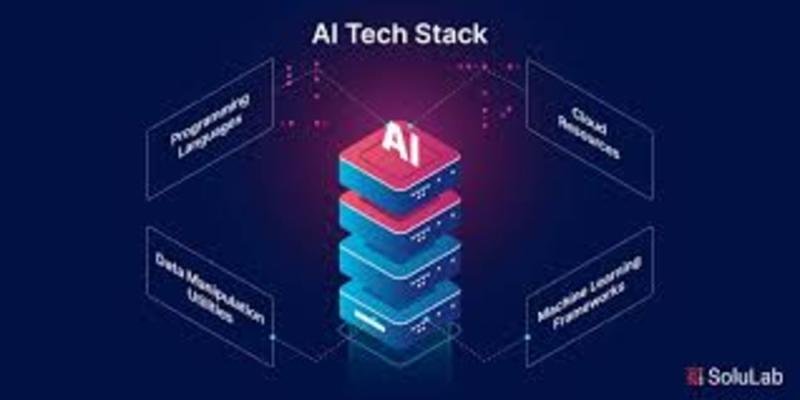
The Smart Stack is not a tool; it is an ecosystem of platforms, frameworks, and services that make up the intelligent development pipeline. They automate repetitive work, reduce the likelihood of errors, mitigate operational risk, and enable data-driven decision-making.
A normal Smart Stack would have:
AI-powered code assistants
Automated testing and QA tools
Predictive DevOps analytics
Automated deployment systems
AI-driven monitoring and incident detection
Self-optimizing infrastructure
Knowledge-based development tools
When put in place, the Smart Stack goes beyond making organizations more efficient; it shifts how businesses approach solution design.
How AI Is Reshaping Core IT Development Practices
1. Smarter Coding Through AI Assistance
AI-powered development assistants can now understand context, suggest optimized code, detect vulnerabilities, and even generate entire functions. These tools reduce cognitive load, allowing engineers to focus on architecture and problem-solving rather than repetitive syntax.
Benefits include:
Faster code generation
Reduced debugging time
More consistent coding patterns
Real-time identification of insecure code blocks
This shift also lowers barriers for junior developers, enabling them to produce high-quality work with guidance built directly into their development environment.
2. AI-Enhanced Testing and Quality Assurance
Testing is often considered one of the most time-consuming stages of IT development. AI is disrupting this stage by identifying points of failure and creating test cases for you.
AI improves QA processes through:
Automated bug detection
Pattern matching for hidden fault discovery
Self-updating test scripts
More coverage with less typing
In highly dynamic systems, AI can analyze patterns of user behavior to suggest in vivo test cases, uncovering issues that often slip through traditional test suites.
That’s in addition to avoiding the dreaded platform event trap (https://coruzant.com/appdev/platform-event-trap/ ), where system events trigger strange loops and misfires when distributed.
3. Predictive DevOps and Intelligent Deployment
AI is playing an increasingly important role in DevOps by analyzing continuous integration/continuous deployment (CI/CD) pipelines and optimizing deployment strategies.
Key advantages include:
Identification of unstable builds before release
Prediction of resource needs during peak usage
Automatic rollback suggestions
Intelligent scheduling of deployments to reduce downtime
Instead of reacting to incidents, teams can predict them before they occur. This minimizes the risk of cascading failures or platform event trap-like behavior, where multiple automated processes unintentionally trigger each other.
4. Automated Monitoring and Incident Response
Traditional monitoring tools detect issues after they happen. AI-enabled monitoring predicts them.
These tools analyze logs, performance metrics, historical incidents, and user behavior to detect anomalies early. Many systems can also trigger automated mitigation workflows.
AI-powered monitoring helps:
Reduce false alerts
Identify root causes faster.
Detect hidden security threats.
Minimize system downtime
This level of intelligence helps teams maintain service reliability in large, distributed systems where manual monitoring is neither efficient nor scalable.
5. The Rise of Self-Optimizing Infrastructure
Infrastructure is no longer static. With AI, modern systems can adjust themselves in real-time based on workload, performance patterns, and resource pressure.
Examples include:
Auto-scaling based on predictive traffic
Dynamic load balancing
Automated tuning of database queries
Real-time cost optimization
This reduces waste, improves reliability, and ensures that applications always run with the right amount of resources.
Why AI-Integrated Tools Are Becoming Essential
AI is no longer an optional enhancement it is becoming an essential component of modern IT development due to several converging factors:
Growing Complexity
Applications today operate across multi-cloud environments, microservices architectures, and distributed databases.
Demand for Faster Delivery
Customers expect rapid updates, fewer errors, and more personalized digital experiences. AI enables teams to meet these expectations without sacrificing quality.
Higher Security Expectations
Threat landscapes evolve faster than manual security reviews can keep up. AI tools help identify vulnerabilities early, monitor threats continuously, and automate security responses.
Data-Driven Engineering
AI provides insights based on real usage patterns, performance metrics, and predictive analytics giving teams a more accurate understanding of system behavior.
Challenges of Adopting AI in IT Development
Despite its value, integrating AI into development workflows is not without obstacles.
Common challenges include:
Data privacy concerns in training AI tools
Model transparency issues when AI makes decisions
Skill gaps among teams unfamiliar with AI-driven workflows
Integration complexity with legacy systems
Dependence on third-party platforms
Organizations must carefully plan their adoption to avoid introducing new risks while eliminating old ones.
Best Practices for Implementing a Smart Stack
To achieve the full benefits of AI-integrated development, teams should follow structured best practices:
Start with small AI-driven components before scaling
Maintain strong documentation to avoid confusion around automated actions.
Conduct regular audits of AI decision-making patterns.
Use AI responsibly with apparent human oversight.
Integrate security at every stage of the development pipeline.
Educate teams on how AI tools work and where their limitations lie.
Successful implementation requires both technical and cultural readiness.
Conclusion
The Smart Stack: The Future of IT Development. The future is about intelligent systems assisting developers, automating complexity, predicting failures, and augmenting creativity. “When tools already working with teams or that can be called through API integration can use AI via TAASTTT, this beast will make us work more smartly, produce more reliable infrastructure, and release value even faster,” Cieckiewicz says.
While the industry progresses to more innovative infrastructure and development pipelines, early adopters of this transformation will pave the way for what will be the next wave of digital evolution.
Whether you are looking to tune for performance, scale, or avoid a platform event trap in the face of AI capabilities developed by adversaries, these systems have become crucial synergistic partners on one’s path to more innovative IT development.
SEO MAVENS LLC
1001 S MAIN ST STE 500
KALISPELL, MT 59901
SEO Mavens is a U.S.-based digital marketing agency specializing in SEO, link building, and content strategy, helping global brands improve online visibility through ethical, data-driven search optimization.
This release was published on openPR.