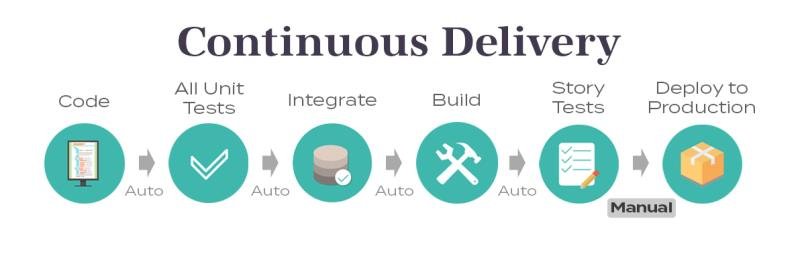
The Continuous Delivery Market was valued at USD 5.28 billion in 2024 and is projected to grow at a CAGR of 17.36% from 2025 to 2030, reaching a market value of USD 13.8 billion by 2030.
Request Sample @ https://virtuemarketresearch.com/report/continuous-delivery-market/request-sample
The continuous delivery market has become an essential part of modern software development, as organizations strive for faster innovation, seamless updates, and improved efficiency. One of the strongest long-term forces driving this market is the ongoing digital transformation across industries. Businesses, regardless of size or sector, are shifting from traditional development methods to agile and DevOps-based models to keep up with rapidly changing customer needs. Continuous delivery enables teams to deploy code automatically, minimize manual errors, and improve software reliability. As cloud computing adoption continues to rise, this technology is gaining even greater importance because it helps companies manage complex systems with flexibility and scalability. The integration of automation tools, containerization technologies like Docker and Kubernetes, and AI-driven testing solutions is further amplifying this long-term market growth.
The outbreak of COVID-19 had a significant impact on how organizations approached software deployment and system reliability. During the pandemic, remote work became the norm, and many companies relied heavily on digital platforms to deliver uninterrupted services to customers. This sudden shift exposed the need for consistent, error-free software updates and a faster development lifecycle. Continuous delivery became a key solution, allowing companies to streamline workflows even when teams were dispersed across different locations. The pandemic accelerated investments in DevOps pipelines, cloud infrastructure, and automated testing, ensuring business continuity in uncertain times. As a result, the market witnessed a surge in adoption from industries like e-commerce, healthcare, and finance that needed to maintain digital stability while adapting to new user behaviors and demand spikes.
In the short term, the growing need for improved deployment speed and reduced release cycles is driving market expansion. Organizations are under constant pressure to deliver features faster without compromising on quality. Continuous delivery enables developers to release smaller, incremental updates rather than waiting for long development cycles. This not only minimizes risks but also ensures quicker feedback loops from users. As businesses seek to maintain competitiveness in an increasingly digital landscape, they are embracing automation and integration tools that help eliminate manual bottlenecks in deployment processes. The trend of combining continuous delivery with artificial intelligence and analytics tools for smarter decision-making is also accelerating short-term growth, as it empowers teams to optimize performance and reduce operational costs.
An important opportunity emerging in the continuous delivery market lies in the growing adoption of cloud-native technologies and microservices architecture. As more enterprises migrate workloads to public, private, or hybrid cloud environments, the need for continuous integration and delivery pipelines that support dynamic and distributed systems is increasing. This creates vast opportunities for vendors offering scalable, secure, and interoperable delivery solutions. The expansion of edge computing and Internet of Things (IoT) ecosystems also demands real-time software updates, further broadening the potential market reach. Startups and large enterprises alike are investing in solutions that ensure agility, transparency, and continuous improvement in deployment workflows.
A clear trend shaping the industry is the rising emphasis on security and compliance automation within continuous delivery pipelines. With cyber threats growing in complexity, organizations are integrating security testing directly into the development and delivery stages. This trend, often referred to as DevSecOps, is transforming how teams approach risk management. It ensures that vulnerabilities are detected and resolved early in the process, reducing potential exposure after release. Moreover, as regulatory frameworks tighten across industries, automated compliance checks are becoming a standard part of the delivery pipeline. The adoption of AI-powered monitoring and predictive analytics tools within continuous delivery frameworks further enhances system resilience and performance.
Segmentation Analysis:
By Deployment Type: On-Premises, Cloud
In the continuous delivery market, deployment type plays a key role in how organizations implement automation and software updates. The largest in this segment is the Cloud category, as it allows businesses to scale operations easily, access real-time deployment environments, and collaborate globally without depending on local infrastructure. Cloud-based delivery solutions enable faster deployment cycles and integrate seamlessly with DevOps tools, making them ideal for organizations focusing on agility and innovation. On the other hand, the On-Premises segment is the fastest-growing during the forecast period, as some enterprises in regulated sectors like banking and government prefer maintaining control over internal systems due to compliance, data privacy, and security considerations. Advancements in hybrid deployment models are further driving interest in on-premises solutions that offer a mix of security and customization while maintaining automation benefits. As data sovereignty and internal policy frameworks evolve, on-premises deployment continues to find renewed importance, especially among organizations balancing strict governance requirements with modern DevOps practices. Both deployment types are evolving in response to increasing software complexity, making adaptability and integration key factors shaping the competitive landscape of the continuous delivery ecosystem.
Enquire Before Buying @ https://virtuemarketresearch.com/report/continuous-delivery-market/enquire
By Industry Vertical: BFSI, IT & Telecom, Retail, Healthcare, Manufacturing
In the continuous delivery market segmented by industry vertical, the IT & Telecom sector is the largest contributor, owing to its early adoption of agile methodologies and its reliance on constant software updates for applications, network management, and digital communication systems. The need for faster releases, reduced downtime, and enhanced customer experience has made continuous delivery a core element of this sector’s digital operations. The Healthcare industry is the fastest-growing during the forecast period, as hospitals and health tech companies increasingly depend on automated software delivery systems to manage electronic health records, telemedicine platforms, and patient management tools securely and efficiently. Regulatory demands and patient data protection have pushed the industry to adopt controlled, traceable deployment pipelines. Meanwhile, the BFSI sector emphasizes secure, low-latency software delivery to support digital banking and fraud detection systems, while retail uses it for omnichannel integration and seamless e-commerce experiences. Manufacturing, too, is integrating continuous delivery within industrial IoT ecosystems to manage predictive maintenance and automation workflows. Each vertical brings distinct operational priorities, but the unifying factor remains the drive toward reduced manual intervention and faster innovation in digital service delivery.
Regional Analysis:
In the regional outlook of the continuous delivery market, North America stands as the largest segment due to its strong concentration of technology-driven enterprises, advanced IT infrastructure, and rapid adoption of cloud-native solutions. The region benefits from the presence of major software vendors, strong investment in automation technologies, and a mature DevOps culture across industries. Companies in the United States and Canada prioritize scalability, flexibility, and system reliability, leading to widespread integration of continuous delivery platforms in sectors such as finance, telecommunications, and retail. The Asia-Pacific region is the fastest-growing region during the forecast period, propelled by accelerated digitalization in countries like India, China, and Japan. Expanding cloud adoption, a rising number of startups, and government-backed digital transformation programs are fueling regional market momentum. Europe maintains steady growth driven by regulatory compliance initiatives, while South America and the Middle East & Africa are gradually adopting continuous delivery as part of their modernization strategies. However, Asia-Pacific’s expansion stands out for its speed and scale, reflecting an ongoing shift toward cloud-based DevOps adoption and innovation-led competitiveness across diverse industry verticals in emerging digital economies.
Latest Industry Developments:
• Security is built into delivery pipelines as a continuous practice (DevSecOps adoption): Organizations are shifting security left by embedding automated security checks, dependency scanning, and policy-as-code directly into CI/CD workflows. Security becomes a continuous gate, not a final hurdle, reducing vulnerabilities before deployment and lowering post-release remediation costs. Integrated pipelines run static analysis, software bill-of-materials checks, and secret detection while builds occur. Regulatory pressure and recent supply-chain incidents push teams to automate compliance and artifact signing. Platform teams and vendors now offer turnkey DevSecOps toolchains that fit into existing delivery flows, helping engineering groups scale secure releases without slowing developer velocity. Automation enables rapid, auditable releases with consistent policy enforcement across environments.
• Platform engineering and GitOps are standardizing developer experience and deployments: Platform teams treat internal developer platforms as products that provide self-service pipelines, environment previews, reusable templates, and policy enforcement to reduce setup time and prevent configuration drift. GitOps uses version control as the single source of truth for both applications and infrastructure, which improves traceability and enables automated rollbacks when needed. Centralized platforms lower cognitive load for developers, speed onboarding, and let organizations measure developer experience as an operational metric. This approach reduces duplicated tooling, enforces consistency across teams, and makes scaling CI/CD practices more repeatable and observable. It scales reliably.
• AI, predictive automation, and tighter observability are optimizing pipelines and reducing outages: Machine learning models and automation analyze historical build, test, and incident data to predict flaky tests, recommend focused test sets, and auto-tune pipeline stages for faster feedback. Observability from delivery runs feeds back into gating and rollback logic, enabling predictive gating and anomaly detection that shortens mean time to repair. Tooling increasingly offers automated remediation suggestions and telemetry-driven deployment decisions so teams can push changes faster with fewer surprises. Organizations combine these capabilities with human oversight and governance to keep quality high while gaining velocity, avoiding the pitfalls of blind automation. This improves speed while protecting system stability globally.
Buy Now @ https://virtuemarketresearch.com/checkout/continuous-delivery-market
About Us:
“Virtue Market Research stands at the forefront of strategic analysis, empowering businesses to navigate complex market landscapes with precision and confidence. Specializing in both syndicated and bespoke consulting services, we offer in-depth insights into the ever-evolving interplay between global demand and supply dynamics. Leveraging our expertise, businesses can identify emerging opportunities, discern critical trends, and make decisions that pave the way for future success.”
103 Kumar Plaza,SRPF Road,
Ramtekadi,Pune,
Maharashtra – 411013
Virtue Market Research stands at the forefront of strategic analysis, empowering businesses to navigate complex market landscapes with precision and confidence. Specializing in both syndicated and bespoke consulting services, we offer in-depth insights into the ever-evolving interplay between global demand and supply dynamics. Leveraging our expertise, businesses can identify emerging opportunities, discern critical trends, and make decisions that pave the way for future success.”
This release was published on openPR.