You don’t need to “learn to love the camera.” You need a different approach entirely.
________________________________________
I have 47 photos on my phone from a headshot session I did three years ago.
I hate every single one of them.
In some, I look like I’m being held hostage. In others, my smile has that weird “I’m pretending to be happy but actually I’m dying inside” energy. You know the one.
The photographer kept saying things like, “Just relax! Be natural!”
Cool. Super helpful. I’ll just be natural while a stranger points a camera at my face and I’m acutely aware of every asymmetrical feature I have.
That was the last time I paid for professional headshots.
But here’s the thing , I still needed one. LinkedIn. Speaker profiles. Company websites. The world demands a photo of your face, whether your face cooperates or not.
So I went down a rabbit hole. Tried every tip. Read every article. Tested weird tricks photographers swear by.
Most of it didn’t work.
But some of it did. And one solution completely blindsided me.
If you’re someone who genuinely doesn’t like being photographed , not in a cute, self-deprecating way, but in an I would rather do my taxes than sit for a headshot way , this is for you.
________________________________________
First, let’s be honest about why this is hard
There’s a term in psychology called the mere-exposure effect.
It basically means we prefer things we see often. And the version of yourself you see most often? It’s your mirror reflection.
Here’s the problem: that’s not what cameras capture.
Cameras flip the image. So the photo version of you looks slightly off from what you expect. Your brain registers it as wrong , even if everyone else thinks you look fine.
This is why you can take a photo, hate it, and then your friend says, “What are you talking about? You look great.”
They’re not lying. They’re just seeing the version of you they’ve always seen.
You’re seeing a stranger.
The discomfort you feel looking at photos isn’t vanity. It’s a neurological glitch.
Once I understood this, I stopped blaming myself for being “bad at photos.”
The game was rigged from the start.
________________________________________
The advice that doesn’t work (but everyone gives anyway)
Let me save you some time.
“Just relax.” If I could relax on command, I wouldn’t need this advice.
“Think of something funny.” Now I’m making a weird face and thinking about that time I tripped in front of my entire office.
“Practice smiling in the mirror.” See above. The mirror lies.
“Find your good side.” I’ve been looking for 30 years. I’ll let you know when I find it.
Most headshot advice is written by people who are naturally photogenic. They don’t understand what it’s like to have your face just… not translate.
So let’s talk about what actually helps.
________________________________________
What actually works (from someone who’s tested it all)
1. Stop trying to smile on command
This was the biggest unlock for me.
Forced smiles activate different muscles than real smiles. Photographers call the real one a “Duchenne smile” , it involves the eyes, not just the mouth.
You can’t fake it.
But you can trigger it.
Here’s what works: Right before the photo, think of something genuinely absurd. Not “happy.” Absurd.
I think about my dog trying to catch a fly and missing. Every time.
It’s stupid. It works.
The trick isn’t to look happy. It’s to be amused for one second. The camera catches the residue.
________________________________________
2. Exhale before the shot
This sounds like wellness nonsense. It’s not.
When you’re tense, you hold your breath. And when you hold your breath, it shows in your face. Your jaw tightens. Your shoulders creep up. You look like you’re bracing for impact.
Take a breath in. Let it out slowly. Have the photo taken at the end of the exhale.
You’ll look 40% more relaxed. I made that number up, but it feels true.
________________________________________
3. Push your forehead toward the camera (slightly)
This is a trick from Peter Hurley, a headshot photographer who’s worked with basically everyone.
Most people pull their head back when a camera points at them. It’s instinctive. It’s also terrible , it creates a double chin and makes you look uncomfortable.
Instead, push your forehead slightly toward the camera and down. Like a turtle coming out of its shell.
It feels ridiculous. It looks great.
[Insert image placeholder: Side-by-side comparison of head pulled back vs. pushed forward]
________________________________________
4. Don’t look directly into the lens
This one’s counterintuitive.
Direct eye contact with a camera can feel confrontational , both for you and the viewer. If you’re already uncomfortable, staring into a glass circle doesn’t help.
Try looking slightly past the camera. Just a few inches to the side.
It reads as confident and thoughtful, not aggressive or frozen.
________________________________________
5. Control the environment
A lot of headshot anxiety comes from the situation, not just the photo.
Bright studio lights. A stranger adjusting your collar. Someone saying “ready?” twelve times.
If you can, choose a photographer who works with natural light. Or do a session outdoors. Or find someone who talks to you like a human and not a subject.
The less it feels like a photoshoot, the better you’ll look.
________________________________________
The part nobody tells you
Here’s the truth: some people will never feel comfortable in front of a camera.
And that’s fine.
Because here’s what I eventually realized , the goal isn’t to become photogenic. The goal is to get a headshot you don’t hate.
Those are two very different things.
You don’t need to transform into someone who loves being photographed. You just need one good photo. One image that looks like you on a good day. One shot where your face isn’t doing something weird.
That’s it.
And once I lowered the bar from “I need to look like a model” to “I need to not cringe,” the whole thing became way easier.
________________________________________
The unexpected solution I didn’t see coming
After years of avoiding headshots , using cropped group photos, outdated images, blurry conference pics , I tried something I was skeptical about.
AI headshots.
I know. I rolled my eyes too.
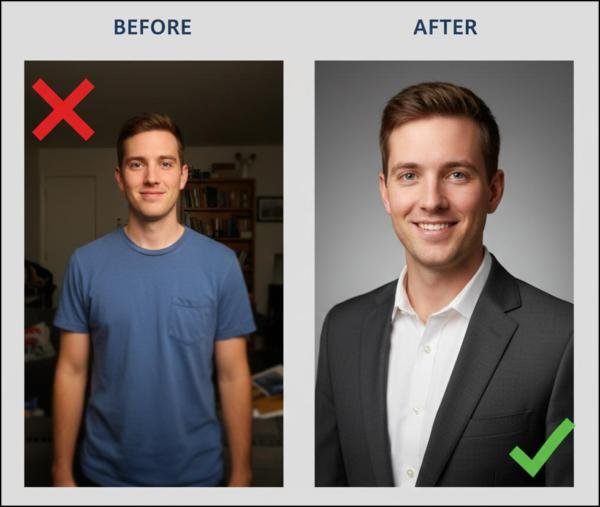
But here’s what I didn’t expect: the process removed everything I hated about traditional headshots.
No photographer staring at me. No studio. No “just relax” nonsense.
I uploaded a handful of casual photos , stuff from my camera roll, nothing professional , and got back polished, high-quality headshots that actually looked like me.
Not some weird AI-generated stranger. Me.
On a good day. In good lighting. With a face that finally cooperated.
For the first time, I had a headshot I didn’t immediately want to delete.
I’m not saying AI headshots are for everyone. If you enjoy the photoshoot experience, go for it.
But if you’ve been avoiding updating your LinkedIn photo for three years because the thought of booking a photographer makes you want to crawl under your desk?
This might be the easiest way to https://www.headshotphoto.io/professional-headshots/linkedin-headshots.
________________________________________
What to look for if you go the AI route
Not all AI headshot tools are created equal.
Some give you that uncanny-valley look , where something’s just off. Others make you look like a completely different person, which defeats the purpose.
Here’s what matters:
● Realism over polish. You want a photo that looks like a great photo of you, not a render of a stock image person.
● Customization. Can you choose backgrounds? Attire styles? Lighting? The more control, the better.
● Fast turnaround. If you need a headshot for a job application tomorrow, waiting three days defeats the purpose.
● Quality output. HD resolution. No weird artifacts. Something you can actually use professionally.
I’ve tested a few. https://www.headshotphoto.io/ among those options.
_______________________________________
The mindset shift that changed everything
For years, I thought my discomfort with photos was a flaw. Something I needed to fix.
But the more I looked into it, the more I realized: millions of people feel this way.
It’s not a personal failing. It’s biology, psychology, and a culture that treats being photogenic like a moral virtue.
You’re not broken. The system just wasn’t designed for you.
So instead of forcing yourself into a process that makes you miserable, find a different path.
Maybe it’s a patient photographer who specializes in camera-shy clients. Maybe it’s a friend with a good phone camera and soft lighting. Maybe it’s AI.
The point is: you have options now.
________________________________________
Final thought
A headshot is a small thing.
It’s also not.
It’s the first impression you make in a lot of contexts. It’s how people picture you before they meet you. It’s the tiny square that represents you in a sea of tiny squares.
You deserve to have one you actually like.
Not one you “settled for.” Not one where you look uncomfortable. Not one that makes you hesitate before clicking “upload.”
One that makes you think, Yeah, that’s me. On a good day.
That version exists. You just have to find the path that gets you there.
And if that path doesn’t involve a stranger telling you to “say cheese”, honestly, that’s a win.
Media Details:
Url: https://www.headshotphoto.io/
Email: hello@headshotphoto.io
__________________________________
About Us:
IQNewswire is a premier global guest posting and press release distribution agency, proudly rooted in Pakistan and serving a growing list of global clients.
We are not just Pakistan’s No.1 Guest Posting Agency. We are recognized internationally for our unmatched reach, editorial credibility, and publisher relationships across top-tier websites worldwide.
Legal Disclaimer: Information contained on this page is provided by an independent third-party content provider. IQNewswire makes no warranties or responsibility or liability for the accuracy, content, images, videos, licenses, completeness, legality, or reliability of the information contained in this article. If you are affiliated with this article or have any complaints or copyright issues related to this article and would like it to be removed, please contact sales@iqnewswire.com
This release was published on openPR.