5G Security
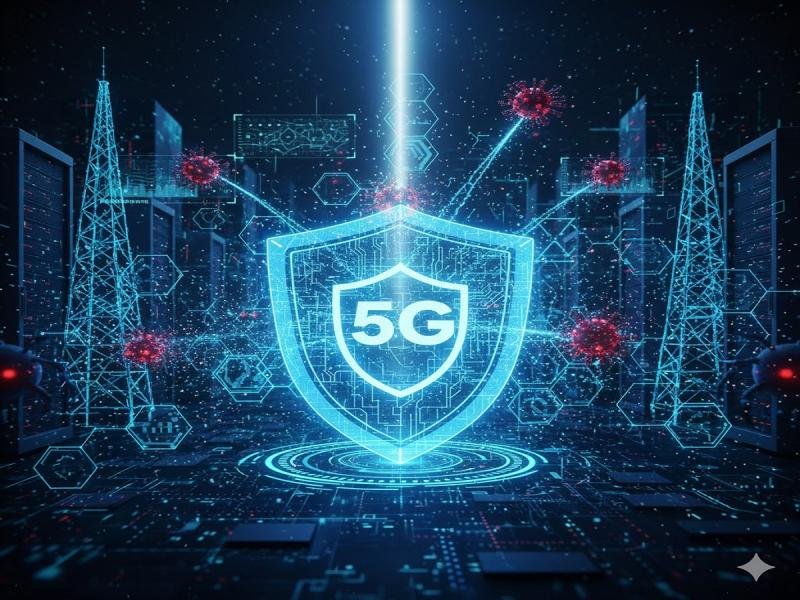
5G Security Market Overview
The global 5G security market reached USD 1.4 billion in 2022 and is projected to grow to USD 21.4 billion by 2030, expanding at a CAGR of 40.7% during 2023-2030. This rapid growth is driven by the increasing adoption of 5G technology worldwide and the rising need to address the unique security challenges associated with these advanced networks.
As 5G networks proliferate, they become prime targets for cyber threats, including DDoS attacks, ransomware, and data breaches, which has intensified demand for robust security solutions. The implementation of secure network architectures, AI-based threat detection, and blockchain-enabled security frameworks is expected to be critical in mitigating risks in 5G environments. Asia-Pacific dominates the global 5G security market with a 54.3% share, fueled by its enormous mobile subscriber base and rapid network expansion. The region contributes the largest number of mobile customers globally, creating substantial demand for advanced 5G security solutions. Additionally, emerging technologies such as edge computing, blockchain, and AI-powered security solutions are expected to drive further growth in the region, presenting lucrative opportunities for vendors and service providers in the 5G security ecosystem.
Get a Free Sample PDF Of This Report (Get Higher Priority for Corporate Email ID):- https://www.datamintelligence.com/download-sample/5g-security-market?Juli
Recent Developments:
✅ September 2025: Cisco Systems launched a new suite of 5G security tools with AI-driven threat analytics and proactive threat management, enhancing security for telecom operators and enterprise users.
✅ August 2025: Nokia announced a strategic partnership with a leading cloud provider to integrate advanced threat detection into its 5G security framework, strengthening defenses for cloud-based infrastructures.
✅ March-April 2025: Singtel, in collaboration with Palo Alto Networks, launched two cybersecurity solutions for 5G environments, including a 5G Security-as-a-Service (SecaaS) offering for real-time monitoring, IoT threat protection, and access control across mobile and enterprise networks.
✅ February 2025: Palo Alto Networks introduced private 5G security solutions in partnership with ecosystem providers to secure radio access, implement Zero Trust access control, and enhance threat detection across private 5G deployments.
✅ June 2025: ZTE launched its 5G‐A AgentGuard solution, aimed at securing next-generation AI-centric 5G services by dynamically managing resource allocation and policy protections for high-performance 5G network functions.
Mergers & Acquisitions:
✅ November 2025: A leading global network security provider acquired a 5G security startup specializing in AI‐driven threat intelligence, strengthening its ability to detect and mitigate advanced 5G cyber threats across enterprise and telecom networks.
✅ September 2025: A major telecom equipment vendor completed the acquisition of a mobile network security software firm, expanding its 5G security portfolio with enhanced encryption, authentication, and secure signaling solutions.
✅ July 2025: A prominent cloud security company acquired a 5G end‐to‐end security services provider, enabling integrated protection for 5G infrastructure, edge computing, and IoT devices.
✅ May 2025: A global cybersecurity consortium acquired a 5G core network security specialist, enhancing its offerings in secure 5G SA (standalone) deployments and slicing security management.
✅ March 2025: A major enterprise firewall and threat management vendor completed the acquisition of a 5G network architecture security startup, enhancing its product suite with advanced 5G protocol security and real‐time intrusion detection technologies.
Buy Now & Unlock 360° Market Intelligence:-https://www.datamintelligence.com/buy-now-page?report=5g-security-market?Juli
Key Players
Ericsson | Palo Alto Networks | Cisco | A10 Networks | Huawei | Nokia | F5 Networks | Juniper Networks | Trend Micro | G+D Mobile Security
Key Highlights:
• Ericsson – Holds an estimated 15% share, offering end-to-end 5G security solutions including network slicing protection, core network security, and AI-driven threat detection.
• Palo Alto Networks – Approximately 14%, specializing in 5G Security-as-a-Service, private 5G security, and Zero Trust frameworks for telecom and enterprise networks.
• Cisco – Around 13%, providing cloud-integrated 5G security platforms, AI-driven analytics, and secure network infrastructure solutions.
• Huawei – Holds 11%, offering 5G network security solutions for operators, including encryption, authentication, and intrusion prevention systems.
• Nokia – Approximately 10%, delivering comprehensive 5G security platforms, threat intelligence, and secure network orchestration services.
• A10 Networks – Around 8%, focusing on 5G application security, DDoS mitigation, and high-performance network security solutions.
• F5 Networks – Holds 7%, providing secure access, traffic encryption, and application layer protection for 5G-enabled services.
• Juniper Networks – Approximately 6%, offering advanced threat protection, firewall, and 5G core security solutions.
• Trend Micro – Around 5%, delivering AI-powered 5G threat detection, endpoint security, and cloud network protection.
• G+D Mobile Security – Holds 4%, specializing in SIM and mobile identity security, encryption, and secure authentication for 5G networks.
Market Segmentation:
➥ By Component:
Solutions dominate with 60% share, including threat detection platforms, encryption services, and secure access frameworks. Services account for 40%, covering managed security, consulting, integration, and incident response for 5G networks.
➥ By Deployment Mode:
Cloud-based deployment leads with 55%, driven by scalability, real-time monitoring, and integration with AI and edge computing. On-premises deployment accounts for 45%, preferred by enterprises and operators requiring full control over network security.
➥ By Architecture:
5G NR Standalone (SA) holds 50%, benefiting from dedicated 5G core networks and advanced security frameworks. 5G NR Non-Standalone (NSA) represents 50%, leveraging existing 4G infrastructure while incorporating enhanced security features.
➥ By Network Component Security:
Radio Access Network (RAN) Security leads with 40%, focusing on protecting base stations, spectrum, and wireless interfaces. Core Network Security accounts for 60%, covering 5G core functions, network slicing, authentication, and encryption for secure end-to-end connectivity.
➥ By Application:
Smart Manufacturing leads with 20%, requiring secure industrial IoT and real-time automation. Connected Automotive holds 18%, including vehicle-to-everything (V2X) security. Smart Cities contribute 17%, ensuring secure public infrastructure and IoT networks. Virtual & Augmented Reality (VR/AR) accounts for 15%, while Wireless eHealth represents 15%, covering secure remote healthcare and telemedicine services. Others make up 15%, including gaming, media, and other IoT applications.
➥ By End-User:
Telecommunication leads with 20%, driven by network operators securing 5G infrastructures. Banking, Financial Services & Insurance (BFSI) holds 15%, protecting sensitive financial data. Healthcare accounts for 12%, Aerospace & Defense 12%, Consumer Goods & Retail 10%, Energy & Utilities 10%, Manufacturing 11%, and Others 10%, including government, education, and logistics sectors.
Regional Insights:
Asia-Pacific dominates the 5G Security Market with a 54.3% share, driven by its enormous mobile subscriber base, rapid network expansion, and early adoption of 5G technology. Countries like China, India, Japan, and South Korea are leading in deploying secure 5G infrastructure. The region’s growth is further supported by advanced technologies such as edge computing, AI, and blockchain, which enhance 5G security solutions for telecom operators and enterprises.
North America holds approximately 20% of the market, led by the U.S. and Canada, where early adoption of 5G networks, stringent regulatory frameworks, and high enterprise cybersecurity investment drive demand for advanced 5G security solutions. Major vendors like Cisco, Palo Alto Networks, and Ericsson are actively deploying AI-enabled security solutions for telecom operators and private 5G networks.
Europe accounts for 15% of the market, with countries such as Germany, the UK, and France focusing on secure 5G deployments to support industrial automation, smart cities, and connected automotive applications. Strong data protection regulations like GDPR further accelerate adoption of advanced 5G security solutions.
Latin America, Middle East & Africa (LAMEA) collectively represent 10.7%, driven by growing 5G infrastructure, increasing mobile adoption, and rising awareness of cybersecurity risks. Key markets include Brazil, Mexico, UAE, and South Africa, where operators are implementing secure 5G solutions for enterprises, government agencies, and emerging smart city projects.
Speak to Our Analyst and Get Customization in the report as per your requirements:- https://www.datamintelligence.com/customize/5g-security-market?Juli
Market Dynamics:
The growth of the 5G security market is primarily driven by the rising frequency and sophistication of cyberattacks. With the rapid integration of IoT devices and automation across industries such as electricity, water, and other critical infrastructure, networks are becoming increasingly vulnerable. Hackers often exploit well-known vulnerabilities, including default usernames, passwords, and backdoors in static code. As a result, telecom operators are investing heavily in securing their carrier networks. For instance, O2 Telefonica in Spain deployed 1,000 security personnel and 650 analysts across seven Security Operations Centers (SOCs) globally to address the surge in network attacks, highlighting the growing need for robust 5G security solutions.
Another significant driver is the presence of stringent regulations. Laws such as the General Data Protection Regulation (GDPR) in the European Union set high standards for data collection, processing, and protection. As 5G networks transmit vast amounts of sensitive personal and enterprise data, compliance with these regulations necessitates advanced security measures, further propelling demand for 5G security solutions.
The market also faces challenges due to irregularities in spectrum allocation. 5G networks rely on high-frequency spectrums, many of which are already assigned to telecommunications, government operations, and other services. Conflicts in spectrum access, delays in allocation, and inconsistent regulatory frameworks create uncertainties in deploying secure 5G infrastructure. For example, the FCC in the U.S. allocated frequencies starting at 24 GHz, Ofcom in the UK suggested the 6 GHz band, and South Korea conducted auctions for 3.5 GHz and 28 GHz bands in 2019. These irregularities complicate the implementation of consistent security measures, increasing network vulnerability and constraining market growth.
📌 Request for 2 Days FREE Trial Access: https://www.datamintelligence.com/reports-subscription
☛ Power your decisions with real-time competitor tracking, strategic forecasts, and global investment insights all in one place.
✅ Competitive Landscape
✅ Sustainability Impact Analysis
✅ KOL / Stakeholder Insights
✅ Unmet Needs & Positioning, Pricing & Market Access Snapshots
✅ Market Volatility & Emerging Risks Analysis
✅ Quarterly Industry Report Updated
✅ Live Market & Pricing Trends
✅ Import-Export Data Monitoring
☛ Have a look at our Subscription Dashboard: https://www.youtube.com/watch?v=x5oEiqEqTWg?Juli
Contact Us –
Company Name: DataM Intelligence
Contact Person: Sai Kiran
Email: Sai.k@datamintelligence.com
Phone: +1 877 441 4866
Website: https://www.datamintelligence.com
About Us –
DataM Intelligence is a Market Research and Consulting firm that provides end-to-end business solutions to organizations from Research to Consulting. We, at DataM Intelligence, leverage our top trademark trends, insights and developments to emancipate swift and astute solutions to clients like you. We encompass a multitude of syndicate reports and customized reports with a robust methodology.
Our research database features countless statistics and in-depth analyses across a wide range of 6300+ reports in 40+ domains creating business solutions for more than 200+ companies across 50+ countries; catering to the key business research needs that influence the growth trajectory of our vast clientele.
This release was published on openPR.