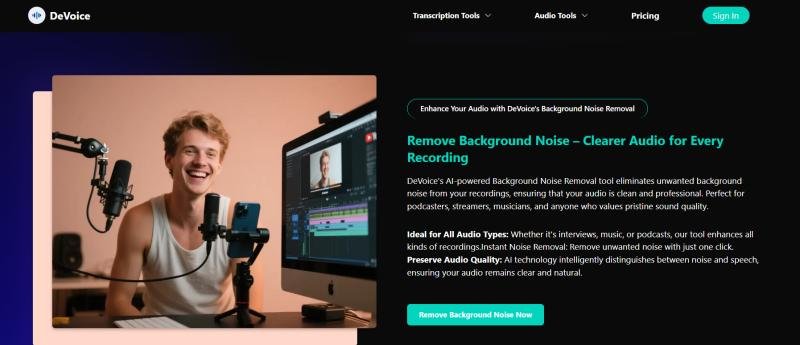
When I first started creating audio content, I thought a good microphone and a quiet room were enough. But as my work grew-podcasts, online meetings, video narrations-I realized that noise was an enemy that crept into every recording. Whether it was the hum of an air conditioner or the faint buzz from my laptop fan, those unwanted sounds made even professional recordings feel amateurish. That’s when I started exploring the world of AI noise reduction tools: https://devoice.io/ai-noise-filter/ and what I discovered has completely changed how I think about sound.
________________________________________
The Rise of AI-Powered Audio Processing
Over the last few years, artificial intelligence has taken over many areas of content creation: from video editing to writing assistants and even music production. Audio, however, is one of the most challenging and fascinating frontiers for AI. Unlike text or images, sound is continuous, complex, and layered. Teaching a machine to recognize what counts as “noise” versus what’s essential-like a human voice-requires massive datasets and sophisticated algorithms.
Yet, the progress has been astounding. A report by Grand View Research (2024) estimated that the AI audio processing market would surpass $6.5 billion by 2030, driven by demand from podcasters, virtual meeting platforms, and video creators. The reason is simple: audiences are less forgiving of bad sound than ever. High-definition visuals mean little if your audio sounds like it was recorded in a tunnel.
________________________________________
Why Traditional Noise Reduction No Longer Works
Before AI, noise reduction was largely rule-based. You’d record a few seconds of “silence,” let the software analyze it, and then subtract that noise profile from your entire file. The problem was that real-world noise isn’t static. A passing car, rustling papers, or a neighbor’s dog doesn’t fit neatly into a single pattern.
Traditional filters often stripped away important frequencies, making voices sound robotic or hollow. For anyone who works in audio storytelling or voiceover production, that loss of warmth and clarity can destroy emotional impact. That’s why AI noise reduction tools have become so revolutionary-they learn dynamically, distinguishing background hums from speech in real time.
Today, advanced AI models use deep learning to separate the human voice from noise layers, adjusting to different environments automatically. The result is not just “cleaner” audio but also more natural and balanced sound, without the plastic distortion that plagued older software.
________________________________________
The New Creative Workflow
For me, the biggest change wasn’t just technical-it was creative. Once background noise was no longer a constant battle, I began to focus more on storytelling and tone. I could record anywhere: a café, a train station, or even outdoors, knowing that the AI would handle the clean-up later.
This shift has opened up a new world for independent creators. According to a Spotify for Podcasters report (2024), over 75% of new podcasters produce content outside of professional studios. AI tools make that possible, democratizing audio creation in the same way smartphone cameras did for photography.
And it’s not limited to podcasts. From YouTubers to journalists and educators, anyone using voice or video benefits from tools that let them sound professional without expensive hardware. I’ve even seen musicians experiment with AI-based filters to create unique vocal textures-turning what was once a “problem” (noise) into part of their artistic process.
________________________________________
The Human Side of Machine Learning
Of course, every new wave of AI raises the question: does automation diminish human creativity? Personally, I see it differently. AI doesn’t replace the human ear-it enhances it. It’s a partner that handles the repetitive, technical parts of editing so we can focus on emotion, message, and connection.
AI-driven sound design still requires human judgment. The best recordings aren’t just silent-they’re alive, textured, and emotionally resonant. The more I use these tools, the more I appreciate the delicate balance between algorithmic precision and human intuition.
That’s why I’ve been impressed by DeVoice.io: http://devoice.io, a platform that merges AI noise reduction with voice transcription and even creative features like AI-powered rap generation. It embodies this balance: automation where you need it, creativity where it counts.
________________________________________
Looking Ahead: The Next Wave of Intelligent Sound
The next generation of AI noise reduction tools won’t just remove noise-they’ll understand context. Imagine software that can detect whether you’re in a live interview or a musical performance and optimize accordingly. Researchers are already working on models that analyze emotional tone, helping speakers sound calmer, warmer, or more authoritative in real time.
In remote work settings, this will be transformative. Studies from Microsoft’s Work Trend Index (2025) show that audio fatigue from virtual meetings is one of the top complaints among professionals. As AI tools integrate directly into conferencing software, they’ll help reduce listener fatigue, sharpen clarity, and even adjust for cross-language communication through real-time transcription.
Platforms like DeVoice.io are already pointing toward that future. Beyond cleaning audio, they combine transcription, creative synthesis, and contextual understanding into one seamless experience-essentially an intelligent studio in your browser.
________________________________________
Sound as the New Frontier of Authenticity
We live in an age of visual overload, where videos, reels, and photos dominate our feeds. Yet, what cuts through the noise-ironically-is good sound. Clean, natural, emotionally resonant audio builds trust. Whether it’s a podcast host, a teacher on Zoom, or a content creator addressing millions, clarity has become synonymous with credibility.
In that sense, AI isn’t replacing human connection; it’s amplifying it. The clearer our voices become, the closer we get to our audiences-no matter where we record from.
So, as someone who once struggled with background buzz and echoing rooms, I can honestly say that adopting an AI noise reduction tool has been more than a technical upgrade-it’s been a creative liberation. And in a digital world full of noise, perhaps that’s exactly what we need: not silence, but clarity.
Media Details:
URL: devoice.io
Email: service@devoice.io
——————————-
About Us:
If you have any questions about our AI tools, please contact us at oscarleo366@gmail.com
This release was published on openPR.