The solar encapsulation market is a vital part of the solar photovoltaic (PV) industry, focused on materials used to protect and insulate solar cells within solar modules. Solar encapsulation involves covering solar cells with protective layers that shield them from moisture, UV radiation, mechanical damage, and environmental stress-ensuring long term performance, electrical insulation, and durability of solar panels.
Encapsulation is essential in PV manufacturing because it directly influences panel reliability and energy output over decades of operation. As global demand for renewable energy and solar installations surges, the solar encapsulation market continues growing in importance as a foundational component of PV modules used in residential, commercial, utility scale, and off grid applications.
Download Sample Report: https://www.acumenresearchandconsulting.com/request-sample/3849
________________________________________
Market Size
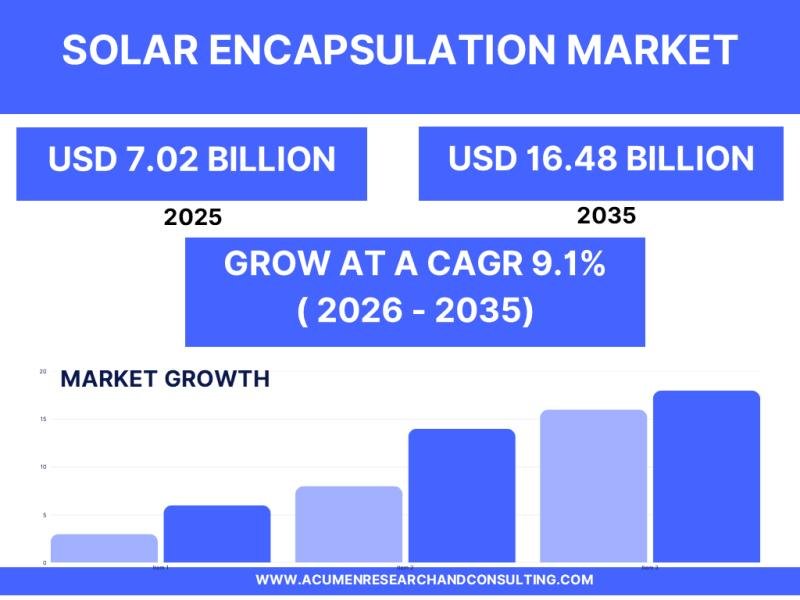
According to Acumen Research and Consulting, the global solar encapsulation market was valued at USD 7.02 billion in 2025 and is projected to surpass USD 16.48 billion by 2035, expanding at a CAGR of 9.1% from 2026 to 2035.
This growth trajectory reflects increased global solar power adoption, expansion of distributed energy resources, and continuous technological advancements in encapsulation materials that help improve PV module lifespan and efficiency.
________________________________________
Current Market Trends
1. Rising Solar Energy Adoption
With the global shift toward low carbon energy and renewable power goals, demand for PV systems is accelerating. Solar encapsulation materials are key to ensuring module longevity and performance, particularly under harsh environmental conditions.
2. Advanced Photovoltaic Technologies
Next generation PV technologies such as bifacial modules, perovskite tandem cells, and high efficiency crystalline silicon variants demand improved encapsulation performance-boosting demand for advanced encapsulants that offer better UV resistance, thermal stability, and optical clarity.
3. Eco Friendly and Next Generation Materials
Innovation in eco friendly encapsulants and recyclable materials is gaining traction as sustainability becomes a priority for manufacturers and policymakers alike. Research focus on lightweight, flexible, and durable materials is expanding market opportunities.
4. Flexible and BIPV Applications
Solar panels are increasingly integrated into building structures (BIPV) and wearable technologies, requiring flexible and lightweight encapsulation materials suitable for non traditional solar installations.
________________________________________
Market Drivers
1. Growth in Solar Installations Globally
The expansion of solar capacity-from utility scale farms to rooftop and off grid systems-is the primary growth driver for solar encapsulation materials, as every module requires reliable protection to operate effectively over 25+ years.
2. Government Incentives for Renewables
Governments across the world are offering subsidies, tax incentives, and renewable energy mandates to encourage solar deployment, indirectly boosting demand for encapsulation materials.
3. Focus on Module Durability and Performance
Longer warranties and performance guarantees by solar module manufacturers are pushing the adoption of high quality encapsulation materials that resist environmental degradation, moisture ingress, and UV damage.
________________________________________
Market Restraints
1. High Manufacturing Costs
Advanced encapsulant materials like ionomers and thermoplastic polyurethane (TPU) can be costly, posing price pressure on manufacturers and end users.
2. Raw Material Price Volatility
Encapsulation material costs can fluctuate due to variations in polymer feedstock prices, affecting overall market stability and pricing strategies.
3. Recyclability Challenges
Encapsulation films can be difficult to recycle at end of life solar decommissioning, posing environmental and regulatory challenges.
________________________________________
Market Opportunities
1. Expansion in Emerging Solar Markets
Rapid solar deployment in regions like Asia Pacific, Latin America, and Middle East & Africa presents substantial growth potential for encapsulation materials.
2. Development of Next Gen Encapsulants
Research into materials that combine high transparency, mechanical strength, and environmental resilience (e.g., POE, PDMS) is opening up opportunities for differentiated products.
3. Adoption in New Solar Formats
As off grid and floating solar technologies grow, encapsulation materials tailored for flexible and rugged applications will gain prominence.
Browse Press Releases: https://www.acumenresearchandconsulting.com/press-releases/solar-encapsulation-market
________________________________________
Market Segmentation
By Material
The market is segmented by encapsulant materials used in PV modules:
• Ethylene Vinyl Acetate (EVA) – Dominates the market due to strong adhesion, optical clarity, and cost effectiveness.
• Thermoplastic Polyurethane (TPU)
• Polyolefin Elastomers (POE)
• Polyvinyl Butyral (PVB)
• Ionomers
• Polydimethylsiloxane (PDMS)
• Others
EVA remains the most widely used encapsulant due to its proven performance and compatibility with traditional crystalline silicon modules.
________________________________________
By Technology
• Crystalline Silicon Solar Technology – Holds the largest share due to extensive PV adoption globally.
• Thin Film Solar Technology
• Others
Crystalline silicon retains dominance due to its high conversion efficiency and broad manufacturing base, encouraging encapsulant production tailored for this segment.
________________________________________
By Application
Solar encapsulation materials are used across multiple applications:
• Construction – Growing use in building integrated photovoltaic (BIPV) systems.
• Electronics
• Automotive
• Others
The construction segment often leads due to rooftop and BIPV installations requiring reliable encapsulation for long term environmental protection.
________________________________________
Regional Market Insights
Asia Pacific
Asia Pacific leads the global solar encapsulation market, supported by large solar installations and robust manufacturing capabilities in China, India, and Japan. Strong solar policies and industrial infrastructure have propelled demand in this region.
Europe
Europe is expanding rapidly due to ambitious renewable energy targets and green energy funding. Countries such as Germany, Spain, and France are significant contributors to market growth.
North America
The U.S. solar encapsulation market is growing, driven by federal incentives, utility scale projects, and state level clean energy mandates that encourage PV deployment and durability requirements.
Latin America & Middle East & Africa
These regions are emerging markets for solar energy. Increasing investment in utility scale and off grid solar projects is boosting encapsulation demand, especially for materials that can withstand extreme environmental conditions.
Get the Full Report@ https://www.acumenresearchandconsulting.com/solar-encapsulation-market
________________________________________
Key Players
Leading companies in the solar encapsulation market include:
• Bridgestone Corporation
• Dow Inc.
• Mitsui Chemicals Inc.
• STR Holdings Inc.
• dnpSolar
• DuPont de Nemours Inc.
• Kuraray Co. Ltd.
• 3M Company
• Eastman Chemical Company
• Mitsubishi Chemical Holdings Corporation
• First Solar Inc.
• RenewSys India Pvt. Ltd.
These players are investing in R&D to innovate advanced encapsulant materials, improve lamination processes, and enhance PV module performance.
________________________________________
Future Market Growth Potential
The solar encapsulation market is expected to continue expanding robustly through the forecast period due to the rapid global adoption of PV technology, continuous improvement in module efficiency, and increasing focus on sustainability and durability of encapsulant materials. High performance, eco friendly materials and regional manufacturing expansion will drive adoption, especially in emerging solar markets.
Key Growth Catalysts:
• Rising solar installations for grid connected and off grid applications
• Technological advancements in encapsulation formulation
• Government support for clean energy transition
• Demand for durable and efficient PV modules
________________________________________
Frequently Asked Questions (FAQ)
1. What is solar encapsulation?
Solar encapsulation is the process of protecting solar cells within a PV module using specialized materials that provide moisture, UV, and mechanical protection while enabling high optical transmission.
2. What was the solar encapsulation market size in 2025?
The market was valued at approximately USD 7.02 billion in 2025.
3. What is the expected CAGR of the market?
The market is projected to grow at a CAGR of 9.1% from 2026 to 2035.
4. Which region leads the global solar encapsulation market?
Asia Pacific holds the dominant position due to extensive solar installations and manufacturing strength.
5. Which encapsulation material is most used?
Ethylene vinyl acetate (EVA) is the most widely used encapsulation material due to its strong adhesion, optical clarity, and cost effectiveness.
________________________________________
Conclusion
The solar encapsulation market is poised for significant growth as global solar energy deployment accelerates. With rising renewable energy investments, stringent longevity requirements, and an increasing shift toward advanced PV technologies, demand for high performance encapsulation materials is expected to soar. Innovations in lightweight, recyclable, and durable materials will reinforce market growth, particularly in Asia Pacific, Europe, and North America.
Purchase this Premium Report@ https://www.acumenresearchandconsulting.com/buy-now/0/3849
201, Vaidehi-Saaket, Baner – Pashan Link Rd, Pashan, Pune, Maharashtra 411021
Acumen Research and Consulting (ARC) is a global provider of market intelligence and consulting services to information technology, investment, telecommunication, manufacturing, and consumer technology markets. ARC helps investment communities, IT professionals, and business executives to make fact based decisions on technology purchases and develop firm growth strategies to sustain market competition. With the team size of 100+ Analysts and collective industry experience of more than 200 years, Acumen Research and Consulting assures to deliver a combination of industry knowledge along with global and country level expertise.
This release was published on openPR.