BOSTON, MA, Feb. 17, 2026 (GLOBE NEWSWIRE) — MedSEO.Agency, a new search optimization firm specializing in both traditional and AI-powered search, today announced its official launch as the first SEO agency dedicated exclusively to the healthcare industry. The company’s debut is driven by a growing shift in patient behavior, with more than 40 million medical queries directed to ChatGPT each day, signaling a major transformation in how patients search for health information. Built on proprietary research analyzing 50,000 healthcare websites, MedSEO.Agency combines Google-first SEO with optimization for AI platforms like ChatGPT, Claude, and Perplexity — helping healthcare providers stay visible in both search engines and large language models.
Med SEO Agency
LEADING 21 RANKING FACTORS FOR HEALTHCARE SEO AGENCY
Source: Proprietary MedSEO analysis of 50,000+ healthcare websites, 2024–2026
Note: Negative correlations indicate that higher values of each factor correspond to better (lower-numbered) rankings.
Ranking Factor Correlation to Higher Rankings Number of Top 100 for the Medical sector
- Shared Factors Used -0.31
- Number of Distinct Entities Used -0.28
- Number of Unique LSI Words Used -0.28
- Variations in HTML Tags -0.26
- Variations in Body Tags -0.25
- Number of Unique Variations Used -0.24
- Variations in Div Tags -0.24
- Variations in H1-H6 Tags -0.23
- Variations in H1, H2, and H3 Tags -0.23
- Variations in P Tags -0.23
- Variations in A Tags -0.22
- Variations in LI Tags -0.22
- Variations in H1 and H2 Tags -0.21
- Term Frequency -0.21
- Variations in Sentences -0.21
- Entities in H2 Tags -0.21
- Entities in H3 Tags -0.20
- Number of HTML Tags -0.20
- Has JSON-LD Schema Markup -0.20
- Variations in H2 Tags -0.20
- Entities in Title Tag -0.19
“What the data makes abundantly clear is that ranking in healthcare is not about stuffing keywords into a page,” said St-Cyr. “The top-performing healthcare websites share a measurable pattern: rich entity coverage, deep semantic variation, structured schema markup, and content architecture that distributes authority across HTML elements. These are engineering decisions, not creative ones — and that is exactly the gap MedSEO was created to fill.”
Introducing MedSEO.Agency: Scientific SEO for Healthcare
MedSEO launches as the only digital marketing firm that combines proprietary ranking factor research with dual-channel optimization: traditional search engine optimization (SEO) for Google and Bing and the emerging discipline of AI SEO and LLM SEO — the practice of optimizing a healthcare provider’s digital presence to appear in answers generated by large language models such as ChatGPT, Claude, Perplexity AI, Google Gemini, and other AI-powered search platforms.
The agency’s methodology is rooted in contextual density analysis, entity optimization, and semantic triple documentation — the same factors identified as dominant in the 50,000-website study. Every engagement begins with competitive benchmarking against the top-ranking sites for a practitioner’s specialty and geography, ensuring that content exceeds, rather than merely matches, the density and structural standards set by current leaders.
Why Healthcare Cannot Afford to Ignore Search and AI Visibility
The urgency behind MedSEO’s launch is supported by a convergence of market data that makes inaction increasingly costly for healthcare providers.
Patients begin their healthcare journey online.
Google processes over 8.5 billion searches per day, and health-related queries account for more than one billion of them daily, according to Google Health Vice President David Feinberg (Becker’s Hospital Review). The CDC’s National Center for Health Statistics reports that 58.5% of U.S. adults used the internet to search for health or medical information in the most recent study period, with 66% specifically researching a disease or medical condition (Pew Research / Trial Facts). Patients who arrive at a healthcare provider’s website through a search engine are three times more likely to schedule a visit compared to those reaching the site through other channels (SagaPixel, 2025).
Ranking position determines who gets the patient.
According to First Page Sage’s 2025 CTR report, the top three organic results on Google capture 68.7% of all clicks. The number-one result alone receives 19 times more clicks than the top paid ad. A Backlinko analysis of four million search results confirms that only 0.4% of users ever navigate to the second page. For healthcare providers, this means that ranking outside the top three positions for a target keyword effectively renders the practice invisible to the vast majority of prospective patients.
AI platforms are now a parallel front door to healthcare.
OpenAI reported in January 2026 that more than 40 million people ask ChatGPT healthcare questions every single day, and over 230 million people globally submit health and wellness queries to the platform every week. Three in five U.S. adults confirm they have used AI tools for health or healthcare in the past three months, with 55% using AI to check symptoms and 44% using it to evaluate treatment options (OpenAI / Healthcare Dive). The American Medical Association reports that 66% of physicians adopted AI for at least one clinical use case in 2024, up from 38% the year before. Meanwhile, a Censuswide survey found that 39% of Americans already trust AI chatbots for navigating healthcare decisions (Rolling Stone, 2025). These numbers confirm that AI search — across ChatGPT, Claude, Perplexity, and Google’s own AI Overviews — is no longer experimental. It is a mainstream patient acquisition channel.
The healthcare advertising market is massive, regulated, and shifting to digital.
Healthcare and pharmaceutical digital advertising in the United States reached $19.66 billion in 2024 and is projected to climb to $24.77 billion in 2025, a 13.3% year-over-year increase (eMarketer). The U.S. healthcare advertising market overall stands at $24.4 billion (Research and Markets). Yet unlike virtually any other industry, healthcare advertising is subject to multi-layered regulatory constraints from the FDA, FTC, HIPAA, and state-level consumer protection agencies — constraints that make organic search visibility and AI discoverability not merely advantageous but essential alternatives to restricted paid channels.
Zero-click search and AI Overviews are reshaping the landscape.
Approximately 58.5% of Google searches in the U.S. now end without a click (SparkToro / Datos, 2024), as users receive answers directly from featured snippets, knowledge panels, and Google’s AI Overviews — which now appear in over 13% of all searches (Keywords Everywhere). For healthcare providers, this means that the content Google and AI models choose to surface at the top of results is more decisive than ever. Practices whose content is not structured for entity recognition, schema markup, and semantic depth will not be selected — regardless of how many pages they publish.
About Eric St-Cyr and MedSEO
Eric St-Cyr is the Founder and Chief Innovation Officer of MedSEO, a data-driven search optimization firm built exclusively for the healthcare sector. His proprietary Contextual Density methodology replaces subjective content strategies with measurable, competitive benchmarking — analyzing the exact entity counts, semantic triple densities, and structural patterns used by top-ranking competitors, then engineering content to exceed them.
MedSEO represents the application of this scientific approach exclusively to the healthcare sector. The agency serves physicians, surgeons, dental practices, dermatologists, ophthalmologists, physiotherapists, mental health practitioners, hospitals, clinics, and all healthcare organizations seeking measurable search visibility on both traditional search engines and AI platforms.
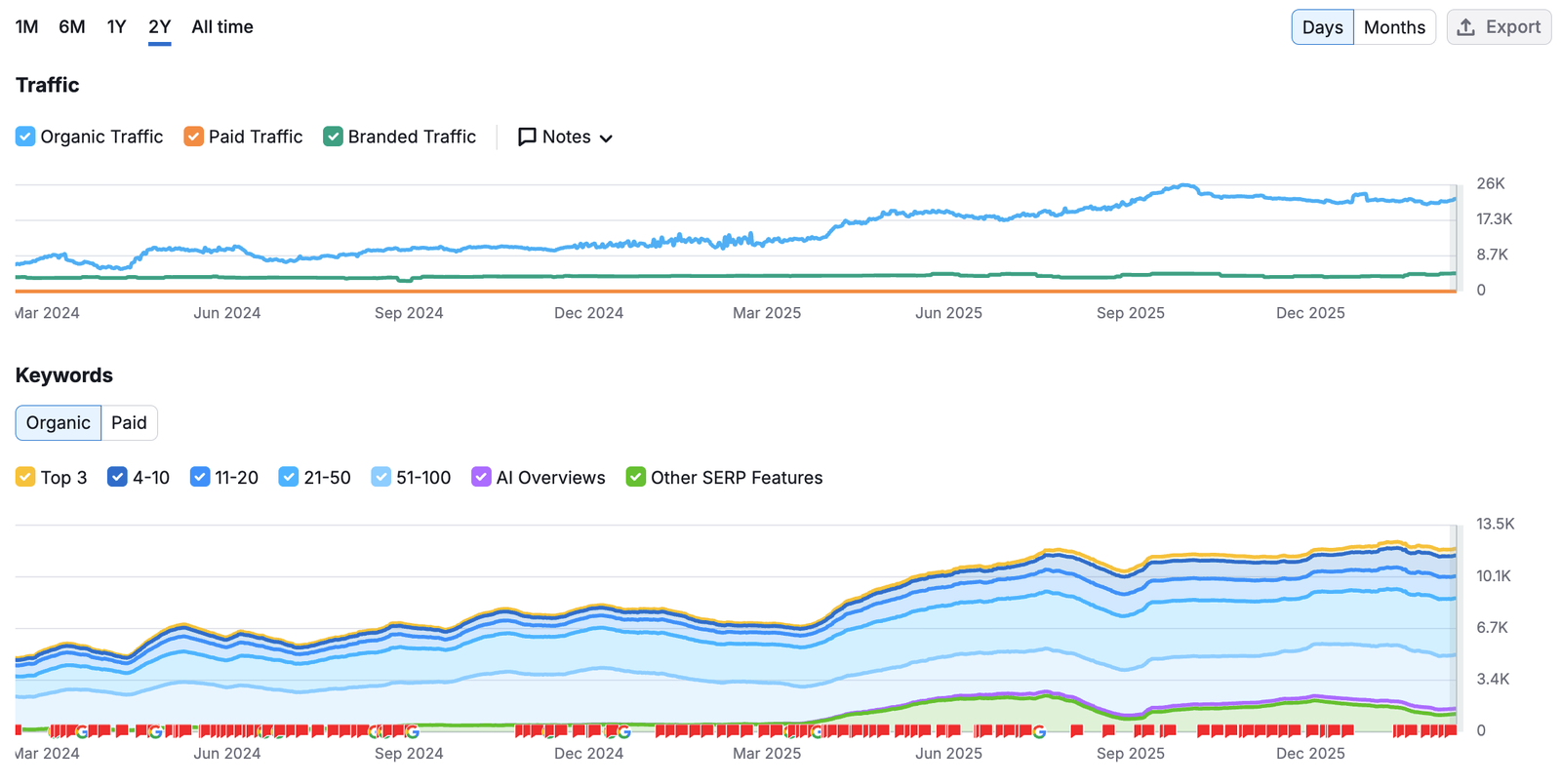
Plastic Surgery SEO results over 2 years
Press Inquiries
Eric St-Cyr – SEO Specialist
info@medseo.agency
5814474376
https://medseo.agency/
One Boston Place, 201 Washington St 26th Floor, Boston, MA 02108