Hidden bottlenecks in furniture content production -and how AI helps brands scale visuals efficiently.
Furniture brands today produce more visual content than ever before. As assortments expand and digital channels multiply, the demand for images, configurations, and product visuals continues to grow. Yet for many brands, content production becomes a bottleneck long before demand is met. These slowdowns are often not caused by lack of ambition, but by structural inefficiencies in how content is created and managed.
One common bottleneck is onboarding. Before visual production can begin, product data must be prepared, validated, and translated into usable formats. For furniture brands with complex products, this process can involve multiple stakeholders, revisions, and handovers. When onboarding relies heavily on manual steps or undocumented processes, timelines stretch and inconsistencies are introduced early in the workflow.
Manual rendering is another frequent constraint. Traditional visual production methods often require individual scene setup, material adjustments, and repeated quality checks for each product or variant. While this approach can deliver strong results for limited collections, it becomes increasingly difficult to sustain as catalogs grow. Repetitive manual work slows output, increases costs, and limits how quickly brands can respond to updates or new launches.
These challenges are particularly visible in marketing environments, where large volumes of visual content are needed for websites, campaigns, catalogs, and digital ads. When content production cannot keep pace, launches are delayed and visual coverage remains incomplete. Furniture brands looking to streamline marketing visualization workflows and scale content production often explore dedicated marketing visualization platforms such as https://en.intiaro.com/use-cases/marketing-solutions, which focus specifically on supporting high-volume image and configuration output across digital channels.
Disconnected teams are another source of friction. Product data, visual assets, and publishing workflows are often handled by separate departments or external partners. When these teams work in isolation, changes made in one area may not be reflected elsewhere. This lack of alignment can result in outdated visuals, duplicated effort, and delays that compound over time.
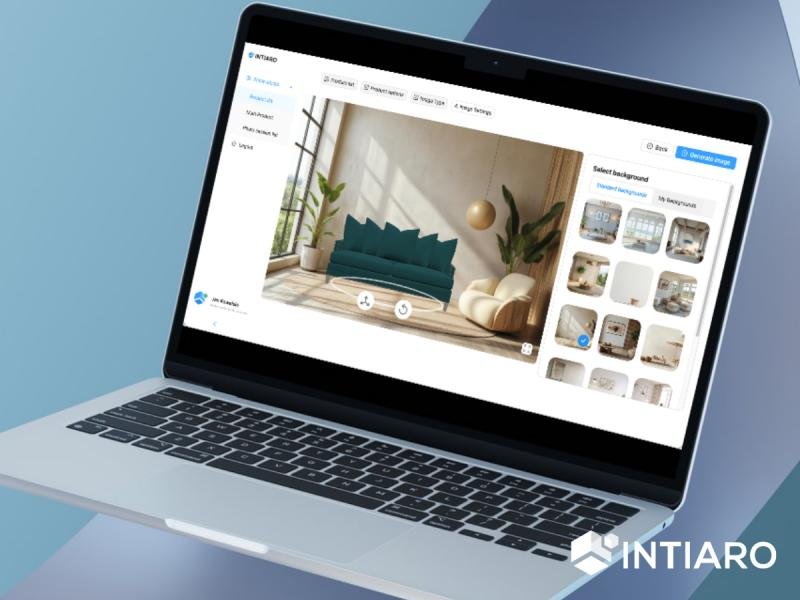
The impact is also visible when brands attempt to scale image production across many products, variants, or scenes. Without automated image production systems or AI-powered furniture image generation tools, creating lifestyle imagery, background variations, or large image sets can become a major constraint on speed and consistency. AI-driven furniture visualization solutions such as https://en.intiaro.com/solutions/ai-photo-studio are designed to automate lifestyle image generation and reduce the need for manual scene setup, enabling brands to produce large volumes of product visuals more efficiently.
As a result, content production timelines tend to expand. What starts as a manageable process for a limited number of products becomes increasingly rigid as more variants, materials, and configurations are introduced. Brands may find themselves prioritizing only a subset of products for full visual coverage, leaving gaps across channels.
To address these bottlenecks, some furniture brands focus on improving how product data, visual assets, and workflows are connected. Rather than treating content creation as a series of isolated tasks, they look for ways to streamline onboarding, reduce manual repetition, and improve collaboration across teams.
In response to these challenges, some brands adopt platform-based approaches that centralize product data, 3D assets, and image generation within a single system. Platforms designed for furniture visualization and digital content production help align marketing, product, and retail teams around shared data, improving both efficiency and consistency at scale.
Ultimately, the hidden bottlenecks in furniture content production are rarely caused by a single issue. They emerge from a combination of slow onboarding, manual processes, and disconnected teams. Addressing these challenges requires not just faster tools, but better structure in how content is planned, produced, and maintained over time.
In response to these challenges, some brands adopt platform-based approaches that centralize visual production and align teams around shared data. Platforms such as Intiaro are designed to support more efficient onboarding, reduce manual rendering effort, and improve coordination across marketing and retail environments.
Ultimately, the hidden bottlenecks in furniture content production are rarely caused by a single issue. They emerge from a combination of slow onboarding, manual processes, and disconnected teams. Addressing these challenges requires not just faster tools, but better structure in how content is planned, produced, and maintained over time.
Intiaro, Inc.
806 Green Valley Road, Suite 200
GREENSBORO
27408, NORTH CAROLINA
UNITED STATES
business@intiaro.com
+1 336 697 6677
Intiaro Inc. is a leading provider of 3D and AI solutions and augmented reality technology, specializing in the home furnishings industry. We partner with furniture brands, retailers and interior designers to integrate cutting-edge technology into their businesses in ways that lead to increased sales, higher efficiencies and more engaged, loyal customers. Based in Greensboro, N.C, we also have technology and support teams in Poland.
This release was published on openPR.